
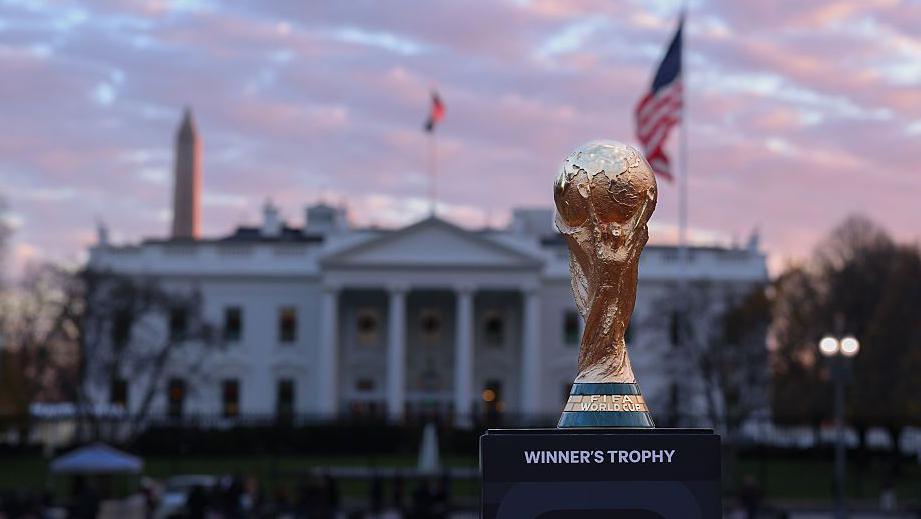
The 2026 World Cup draw is upon us, a pivotal moment that ignites global football fever and maps out the journey for 48 nations vying for glory. Set for December 5, 2025, at Washington D.C.’s iconic Kennedy Center for the Performing Arts, this ceremony transcends mere logistics—it’s a star-studded extravaganza blending high-stakes drama, celebrity flair, and cutting-edge technology. As the first draw for FIFA’s expanded 48-team format, co-hosted by the United States, Canada, and Mexico from June 11 to July 19, 2026, it promises epic rivalries, underdog tales, and knockout intrigue. For football enthusiasts searching 2026 FIFA World Cup groups, this event isn’t just procedural; it’s the spark that fuels dreams of lifting the trophy at MetLife Stadium in New Jersey.
With 42 teams already qualified and six more via March 2026 playoffs, the draw’s complexity—pots, quadrants, and confederation rules—ensures balanced yet thrilling matchups. Expect a 90-minute spectacle starting at 17:00 GMT (12:00 ET), where every reveal could birth a “group of death” or a Cinderella story. Dive into our comprehensive guide to the FIFA World Cup 2026 draw mechanics, from seeding secrets to fixture unveilings, as we decode what lies ahead for powerhouses like Spain and emerging forces like Curaçao.
Star Power and Spectacle: What to Expect from the Ceremony
Picture this: the Kennedy Center’s grand stage, alive with the world’s football elite, under the shadow of the White House. Co-hosted by supermodel Heidi Klum, comedian Kevin Hart, and actor Danny Ramirez, the evening kicks off with soaring performances from Andrea Bocelli, Robbie Williams, and Nicole Scherzinger. FIFA President Gianni Infantino and U.S. President Donald Trump are slated for speeches, highlighting the tournament’s geopolitical weight—Trump’s involvement underscores the event’s economic boost, projected at $22 billion for North America’s economy.
The draw itself, led by Manchester United legend Rio Ferdinand alongside broadcaster Samantha Johnson, features assists from icons like Tom Brady, Wayne Gretzky, Aaron Judge, and Shaquille O’Neal. Video montages of qualified nations build hype, while the Village People’s “YMCA”—a nod to American flair—closes the show. Broadcasters worldwide, from BBC to Telemundo, will stream live, ensuring global accessibility. This isn’t your average lottery; it’s a cultural phenomenon, blending sport’s passion with Hollywood polish, drawing millions to screens for 2026 World Cup draw live updates.
Yet, beneath the glamour lies precision. FIFA’s computer system, refined from past UEFA glitches, navigates constraints in real-time, preventing deadlocks and ensuring fairness. As Infantino noted, “This draw sets the canvas for football’s most inclusive canvas yet.” For fans, it’s the first glimpse of narratives: Will England dodge an early Argentina clash? The anticipation is electric.
Seeding the Stage: Pots, Hosts, and Playoff Placeholders
At the heart of the 2026 FIFA World Cup draw are the four pots of 12 teams each, seeded by the November 19, 2025, FIFA Men’s World Rankings. Pot 1 crowns the elite: hosts United States, Canada, and Mexico join Spain (1st), Argentina (2nd), France (3rd), England (4th), Brazil (5th), Portugal (6th), Netherlands (7th), Belgium (8th), and Germany (9th). These powerhouses anchor groups, with hosts pre-allocated: Mexico to A1 (green ball), Canada to B1 (red), and USA to D1 (blue) for home openers.
Pots descend by ranking: Pot 2 features Croatia (10th), Morocco (11th), Colombia (12th), Uruguay (13th), Switzerland (14th), Japan (15th), Senegal (16th), Iran (17th), South Korea (18th), Ecuador (19th), Austria (20th), and Australia (21st). Pot 3 includes Norway (22nd), Panama (23rd), Egypt (24th), Algeria (25th), Scotland (26th), Paraguay (27th), Tunisia (28th), Côte d’Ivoire (29th), Uzbekistan (30th), Qatar (31st), Saudi Arabia (32nd), and South Africa (33rd).
Pot 4 rounds out with lower seeds: Jordan (34th), Cabo Verde (35th), Ghana (36th), Curaçao (37th), Haiti (38th), and New Zealand (39th), plus six placeholders for March 2026 playoff winners. These include four UEFA paths and two inter-confederation brackets, injecting wildcard drama—Italy (would-be Pot 2) or Denmark (Pot 3) could crash elite groups if victorious.
| Pot Breakdown: Teams and Rankings (November 2025) | Pot 1 (Top Seeds) | Pot 2 (Mid-Tier) | Pot 3 (Balanced) | Pot 4 (Emerging/Playoffs) |
|---|---|---|---|---|
| Teams | Spain, Argentina, France, England, Brazil, Portugal, Netherlands, Belgium, Germany, USA, Mexico, Canada | Croatia, Morocco, Colombia, Uruguay, Switzerland, Japan, Senegal, Iran, South Korea, Ecuador, Austria, Australia | Norway, Panama, Egypt, Algeria, Scotland, Paraguay, Tunisia, Côte d’Ivoire, Uzbekistan, Qatar, Saudi Arabia, South Africa | Jordan, Cabo Verde, Ghana, Curaçao, Haiti, New Zealand + 6 Playoff Winners |
| Key Ranking Insight | Hosts auto-seeded despite lower ranks (USA 16th) | High-potential disruptors like Morocco | Mix of veterans (Egypt) and risers (Uzbekistan) | Debutants like Curaçao; playoffs add unpredictability |
This table spotlights the 2026 World Cup pots balance, ensuring no group overwhelms with talent while fostering intrigue—imagine Brazil with Japan, Egypt, and a playoff wildcard.
Quadrant System: Safeguarding Blockbuster Knockouts
FIFA’s bold innovation, the quadrant system, elevates the 2026 World Cup bracket to chess-like strategy. The top four—Spain, Argentina, France, England—seed into distinct quadrants (A-D green, E-H blue, I-L turquoise/red), conditional on group wins. Spain and Argentina oppose until the final; France and England until semis. Lose top spot? Protection evaporates, risking early clashes.
This “tennis seeding” maximizes late-stage fireworks: a green-quadrant winner (e.g., Spain’s group) faces blue’s runner-up in the last 16, delaying elite collisions. Critics debate favoritism, but FIFA insists it enhances balance—32 teams advance (top two per group + eight best third-placers), with 104 total matches across 16 venues. For England fans, it shields against France pre-semis, but a second-place slide could pit them against Brazil sooner. As Sky Sports’ Kaveh Solhekol analyzed, “It rewards excellence while teasing dream finals.”
Confederation Constraints: Balancing Global Rivalries
Fair play demands diversity: no more than one team per confederation per group, except UEFA’s 16 slots across 12 groups—four will pair two Europeans. Thus, Brazil (CONMEBOL) avoids Uruguay; USA (CONCACAF) skips Panama. The computer enforces this, skipping groups mid-draw to comply.
Playoff paths amplify complexity. UEFA’s four paths—A: Italy/Northern Ireland vs. Wales/Bosnia; B: Ukraine/Sweden vs. Poland/Albania; C: Turkey/Romania vs. Slovakia/Kosovo; D: Denmark/North Macedonia vs. Czech/Ireland—feed Pot 4. Inter-confederation brackets: Path 1 (DR Congo vs. New Caledonia/Jamaica); Path 2 (Iraq vs. Bolivia/Suriname). Constraints apply to all potential winners—Path 1 blocks CONCACAF/AFC teams; Path 2 risks deadlocks with 17 nations, resolved by pre-structuring groups (e.g., two UEFA + one AFC).
Deadlocks? FIFA’s algorithm intervenes, randomizing compliant placements. As BBC’s Dan Roan explained, “It’s a digital referee, ensuring no impossible puzzles.” This safeguards inclusivity, spotlighting debuts like Curaçao while curbing “groups of death.”
The Draw in Action: From Pots to Fixtures
The sequence unfolds pot-by-pot: Pot 1 first, hosts via colored balls to fixed spots, others to quadrants. Subsequent pots allocate to the earliest valid group—alphabetical skips for constraints. No random positions; a pre-set grid assigns (e.g., Pot 3 to A2 plays A1 opener). This streamlines, revealing match order instantly: Day 1 (1v2, 3v4); Day 2 (1v3, 4v2); Day 3 (4v1, 2v3).
Post-draw, December 6 at 17:00 GMT unveils venues/times—hosts pre-assigned (Mexico’s Azteca opener June 11), others flexible for logistics. The result? 104 games across 16 cities, from SoFi Stadium to Estadio Azteca, promising cross-continental epics.
| Playoff Paths: Last Six Spots | UEFA Path A | UEFA Path B | UEFA Path C | UEFA Path D | Inter Path 1 | Inter Path 2 |
|---|---|---|---|---|---|---|
| Teams | Italy, Northern Ireland, Wales, Bosnia | Ukraine, Sweden, Poland, Albania | Turkey, Romania, Slovakia, Kosovo | Denmark, North Macedonia, Czech, Ireland | DR Congo, New Caledonia, Jamaica | Iraq, Bolivia, Suriname |
| Format | Semis: Italy/NI vs Wales/Bos; Final hosts winner | Semis: Ukraine/Sweden vs Poland/Albania | Semis: Turkey/Romania vs Slovakia/Kosovo | Semis: Denmark/NM vs Czech/Ire | Semi: NC vs Jam; Final: DRC vs Winner | Semi: Bol vs Sur; Final: Iraq vs Winner |
| Dates | March 26 semis, 31 final | Same | Same | Same | March 26-31 | March 26-31 |
This table demystifies 2026 World Cup playoffs, highlighting high-stakes drama—Italy vs. Wales potential final?
Beyond the Draw: Tournament Horizons and Legacy
The 2026 World Cup draw isn’t an endpoint—it’s ignition. Expect “groups of death” like USA-Morocco-Norway-Ghana, or dream draws shielding England from Spain pre-semis. For newcomers (Cabo Verde, Curaçao, Jordan, Uzbekistan), it’s validation; for giants, a gauntlet to July 19 glory.
FIFA’s blueprint—expanded format, quadrant protection—ushers inclusivity, with OFC’s guaranteed spot marking equity. As Infantino envisions, “Football’s biggest stage, for more nations than ever.” Tune in December 5; the paths to history await. Will Argentina defend? Can USA shine? The draw decides, but passion conquers all.

