
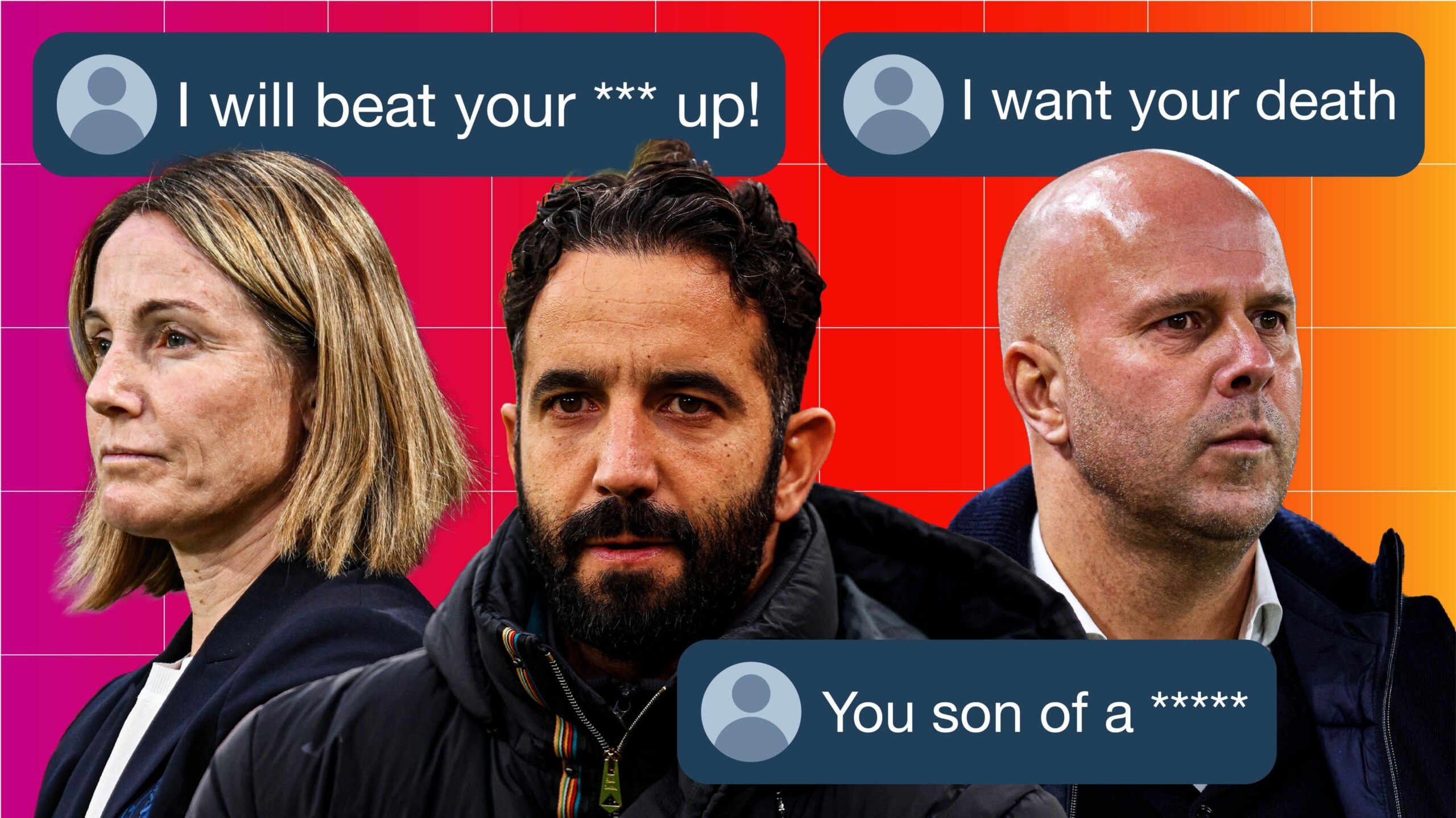
Football, the world’s most beloved sport, thrives on passion, unity, and breathtaking moments that unite millions. Yet, beneath this global celebration lurks a toxic shadow: social media abuse in football. A groundbreaking BBC investigation, partnering with data science firm Signify, has exposed the harrowing scale of online harassment targeting Premier League and Women’s Super League (WSL) stars. Over a single weekend in November 2025—spanning 10 Premier League and six WSL matches—more than 2,000 verified extreme abusive posts flooded platforms like X, Instagram, Facebook, and TikTok. These included chilling death threats, rape threats, racist slurs, homophobic attacks, and violent rhetoric, revealing social media abuse in football as an epidemic demanding immediate action.
This isn’t isolated vitriol; it’s a symptom of a rising tide. Signify’s AI tool, Threat Matrix, scanned over 500,000 posts, flagging 22,389 for potential harm before human moderators verified 2,015 as extreme violations of platform rules. As online abuse in football escalates—up 25% year-on-year according to Signify CEO Jonathan Hirshler—the sport’s guardians, from managers to players, face psychological warfare from behind anonymous screens. For fans and analysts tracking social media abuse in football, this report isn’t just data; it’s a wake-up call to reclaim the game’s integrity.
The Anatomy of a Toxic Weekend: Patterns in Abuse
The investigation zeroed in on November 8-9, 2025, capturing real-time fury around high-stakes fixtures. Surprisingly, managers absorbed 82% of the onslaught, outpacing players as primary targets. In the Premier League, Manchester United’s Ruben Amorim led the grim tally with over 160 posts, followed by Liverpool’s Arne Slot and Newcastle’s Eddie Howe. Their offenses? Tactical decisions, match outcomes—everyday scrutiny twisted into malice.
The WSL painted an equally stark picture. Chelsea and manager Sonia Bompastor shouldered 50% of the league’s abuse, ignited by their 1-1 draw at Arsenal. Bompastor endured violent threats and a homophobic slur, underscoring how social media abuse in football disproportionately hits women’s game figures. Across both leagues, 82% of posts originated on X, with 61% traced to UK and Republic of Ireland accounts—evidence that much of this poison brews domestically.
Geographic and platform breakdowns reveal deeper online abuse in football trends:
| Abuse Category | Premier League Share | WSL Share | Total Verified Posts |
|---|---|---|---|
| Death/Rape Threats | 45% | 30% | 615 |
| Racist Slurs (e.g., Monkey Emojis) | 25% | 20% | 505 |
| Homophobic Attacks | 15% | 35% | 302 |
| Violent Rhetoric | 15% | 15% | 303 |
This table highlights not just volume but venom, with surges tied to dramatic moments—like Tottenham’s 2-2 thriller against Manchester United, where stoppage-time drama unleashed a barrage against both benches.
Voices from the Frontline: The Human Cost
The numbers stun, but the stories scar. Arne Slot, reflecting on his exposure, admitted, “Abuse is never a good thing… I do not have social media so I don’t see it, but I’m not stupid, I know it’s there.” Eddie Howe echoed the exhaustion: “It comes with the territory now… My advice is always to try and shelter yourself from it and become psychologically strong enough to not need to read it.” Yet, as Howe notes, evasion is futile—staff or “well-meaning” fans often thrust the poison forward.
Sonia Bompastor’s plea cuts deepest, blending fear with resolve: “People think they can say anything they want from behind a screen. It’s scary – I want to raise my voice against that. I have a family, including kids. They don’t want to see those comments online.” In the WSL, where security lags behind the men’s game, such threats amplify vulnerability. Ex-Chelsea defender Jess Carter, targeted with racism during Euro 2025, amplifies this: women’s football, still building its fortress, faces amplified social media abuse in football.
Ruben Amorim, shielding his family, avoids social media entirely: “I don’t read it; I protect myself… Nowadays, it’s really normal to have that abuse, so it’s the only way to survive.” These confessions humanize the crisis, transforming abstract stats into a chorus of resilience amid relentless hate.
Platform Accountability: Impunity in the Digital Shadows
The most infuriating revelation? Platforms’ tepid response. Of 37 posts flagged to X, some vanished, others merely saw reduced visibility—lingering online. Meta (Facebook and Instagram) removed just one, leaving dozens “under investigation” a month later. Professional Footballers’ Association CEO Maheta Molango fumed: “If this happened on the street, this would have criminal consequences… So why is it that online people have got this sense of impunity?”
Hirshler challenges free speech defenses: “We’ve seen around a 25% year-on-year increase… The sheer egregiousness of the content—really nasty death threats and really horrible, violent content—should override such arguments.” The UK’s Online Safety Act (OSA), enforced since October 2023, mandates proactive removal of illegal content like threats and hate speech, with Ofcom as regulator. Yet, as 2025 unfolds, enforcement lags—codes for illegal harms finalize in March, but platforms’ reluctance persists. Only one of 39 severe posts met police thresholds for action, exposing a chasm between digital harm and legal bite.
Fighting Back: Clubs, Leagues, and the Path Forward
Amid frustration, football fights intelligently. Arsenal’s three-year Signify partnership slashed affiliated fan abuse by 90% through education, bans, and proactive monitoring. Chelsea Women now follow suit, while Tottenham probes season-ticket holders for offenses. The Premier League, via director Tim Cooper, has investigated over 4,000 discriminatory cases since 2020, pushing for algorithm tweaks to curb amplification.
Broader initiatives shine: FIFA’s Social Media Protection Service monitored 5.9 million posts during 2025 competitions, blocking 20,587 abusive messages and referring 11 cases to law enforcement. The EFL reports doubled abuse in 2024-25, affecting 900 players, fueling calls for OSA acceleration. Campaigns like “No Room for Racism”—with players taking the knee—signal unity, but experts demand more: verifiable accounts, priority codes for hate speech, and resourced enforcement.
As social media abuse in football evolves, so must safeguards. Clubs moderating comments, leagues collaborating with authorities, and fans rejecting toxicity form a bulwark. The OSA offers teeth, but only collective will bites deep.
Reclaiming the Pitch: A Call to Unity
Social media abuse in football isn’t inevitable—it’s intolerable. From Amorim’s self-imposed exile to Bompastor’s family fears, these stories demand we dismantle the shield of anonymity fueling cowards. Platforms must prioritize safety over speech; regulators, swift enforcement; and communities, empathy over enmity. Football’s beauty lies in its bridge-building—let’s ensure online abuse in football doesn’t burn it down.
For those touched by this shadow, support abounds through resources like the BBC Action Line. The game endures because its spirit does. Together, we can silence the hate, letting passion prevail.
