
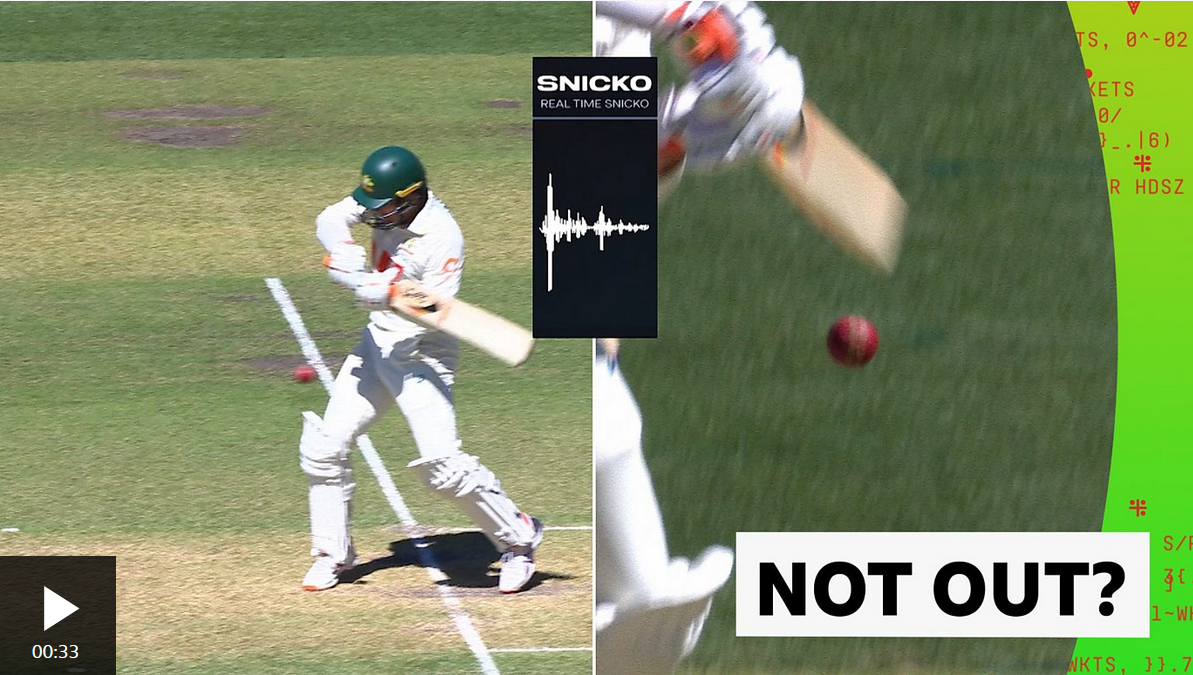
- Human error in Snicko operation allowed Alex Carey to survive a caught-behind appeal on 72 during day one.
- Carey admitted edging Josh Tongue’s delivery but benefited from mismatched audio-video sync.
- BBG Sports accepted full responsibility, citing selection of the wrong stump microphone.
- Carey scored maiden Ashes century (106), helping Australia to 371 all out.
- On day two (December 18, 2025), England closed at 213-8, trailing by 158 runs with Ben Stokes (45*) and Jofra Archer (30*) fighting.
The 2025-26 Ashes third Test at Adelaide Oval sparked intense debate after a Snicko malfunction reprieved Australia’s Alex Carey on day one. The wicketkeeper-batter, on 72, edged a delivery from Josh Tongue only for the Decision Review System (DRS) to fail due to operator error. Carey capitalized with an emotional maiden Ashes century, underscoring technology’s pivotal—and occasionally flawed—role in modern cricket.
The Incident Explained
Australia stood at 245-6 when Tongue induced an edge off Carey’s cut shot, cleanly caught by Jamie Smith. On-field umpire Ahsan Raza ruled not out, prompting England’s immediate review. Snicko displayed a prominent spike, but it appeared before the ball reached the bat, leading third umpire Chris Gaffaney to uphold the decision.
Post-play, Carey acknowledged contact: “I thought there was a feather… a nice sound as it passed the bat.” BBG Sports, providers of Real-Time Snicko (RTS) used in Australia, confirmed the error stemmed from selecting audio from the bowler’s-end stump mic instead of the striker’s end, desynchronizing sound and visuals.
| Aspect | Details | Impact |
|---|---|---|
| Score at Incident | Australia 245-6 | Potential 245-7 |
| Carey’s Score | 72 | Went on to 106 |
| Technology Used | Real-Time Snicko (RTS) | Differs from Ultra-Edge in other nations |
| Error Cause | Wrong stump mic selected | Spike misaligned with visuals |
| Response | BBG takes full responsibility | Review reinstated for England |
Series Context and Fallout
Australia, leading 2-0, posted 371, with Carey’s 106—his third Test ton and first against England—proving decisive. Jofra Archer claimed 5-53, but lower-order resistance frustrated England.
Day two saw Australia dominate: Nathan Lyon (surpassing Glenn McGrath’s wicket tally) and Pat Cummins dismantled England’s top order. The visitors slumped to 213-8, trailing significantly despite Stokes’ resilient knock amid cramps in extreme heat.
England expressed frustration, with bowling consultant David Saker noting ongoing Snicko concerns throughout the series. Discussions with match referee Jeff Crowe followed, highlighting discrepancies between Australia’s RTS and systems like Ultra-Edge used elsewhere.
Carey, no stranger to Ashes scrutiny after the 2023 Bairstow stumping, reflected philosophically: “Sometimes you have a bit of luck.” He declined to call himself a “walker,” humorously responding “clearly not.”
The Ashes 2025-26 third Test has blended thrilling cricket with technological intrigue at Adelaide Oval. Australia’s recovery on day one, anchored by Carey’s century, positioned them strongly despite early collapses and Steve Smith’s illness-forced absence.
The Snicko controversy emerged in the 63rd over. Tongue’s delivery deviated late, brushing Carey’s edge en route to Smith. England’s confident appeal met rejection, and the review—intended to clarify—compounded confusion. The premature spike misled Gaffaney, preserving Carey’s innings.
BBG Sports’ swift admission prevented escalation, promising internal review and preventive measures. Unlike Ultra-Edge’s higher frame rates and dedicated cameras, RTS relies on broadcast feeds, occasionally prone to such sync issues—exacerbated here by human error.
Series-wide Snicko debates persisted: earlier incidents, including Jamie Smith’s Perth dismissal with a delayed spike, fueled England’s unease. The ICC reinstated their lost review as compensation, but the 34 runs Carey added post-reprieve proved costly.
Carey’s knock carried personal weight. At his home ground, following his father’s recent passing, he batted resiliently, accelerating post-lifeline with fluent strokes. His skyward celebration upon reaching three figures moved a record 56,298 crowd, marking Adelaide Oval’s highest single-day Test attendance.
Australia’s tail wagged effectively on day two morning, adding vital runs to reach 371. Archer’s five-for highlighted England’s threat, yet batting woes resurfaced. Lyon struck twice in an over, overtaking McGrath, while Cummins’ pace exploited conditions.
England’s response faltered: early wickets exposed fragility on a benign pitch. Stokes anchored defiantly, partnering Archer in a crucial stand, but the deficit looms large heading into day three.
| Day Two Bowling Highlights | Bowler | Figures | Key Victims |
|---|---|---|---|
| Pat Cummins | 3-47 | Top order | |
| Nathan Lyon | 2-51 | Middle order | Passed McGrath’s record |
| Scott Boland | 2-31 | Support |
Technology’s evolution—from rudimentary replays in the 1990s to DRS since 2008—has enhanced accuracy but not eliminated rare glitches. Host broadcasters supply tools, leading to variations: Australia’s RTS contrasts Ultra-Edge’s precision.
This incident, while isolated, reignites calls for standardized global systems. Carey embraced fortune: luck balanced prior misfortunes. For England, trailing heavily, resilience remains key in a series demanding perfection.
Adelaide’s sweltering conditions and high stakes amplify drama. Australia’s control tightens, but cricket’s unpredictability endures—Stokes’ fight emblematic of England’s spirit.
As day three approaches under forecasted heat, the contest balances finely. Technology aids, but human elements—errors, admissions, resolve—define Ashes lore.

