Is Pep Guardiola Right About Manchester City’s Lower Net Spend in the Premier League?
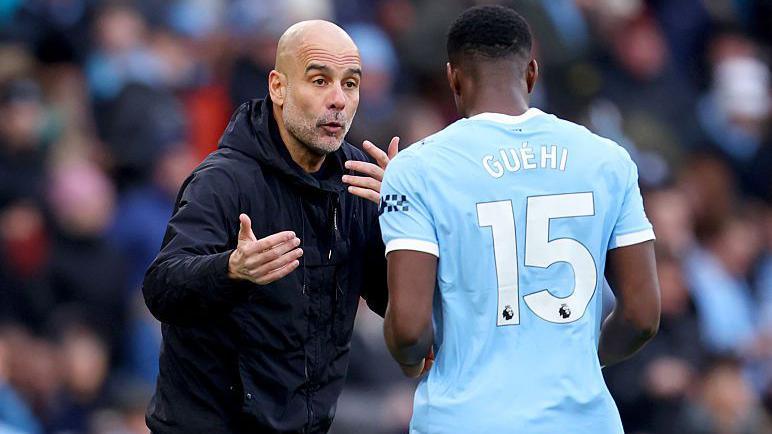
Transfer windows always spark debate, but few topics divide opinion like net spend. In early 2026, Manchester City manager Pep Guardiola pushed back against narratives surrounding his club’s January activity, insisting their net transfer spend over the previous five years ranked a modest seventh in the Premier League. While exact rankings vary slightly by source, data from Transfermarkt, Football365, and other analysts confirm Guardiola’s broader point: City are far from the league’s biggest net spenders, despite consistent high-profile investments.
Understanding Guardiola’s Claim
Guardiola’s comments came amid scrutiny of City’s January 2026 window, where they emerged as the top gross spenders. Acquisitions including forward Antoine Semenyo for £64 million and defender Marc Guehi for £20 million contributed to a league-leading outlay. Yet the manager highlighted long-term context: “Net spend over five years? Seventh. I’m upset. I want us first.” This reframing targets perceptions that City’s success stems solely from unchecked spending, pointing instead to rivals outspending them on net terms.
Recent figures support this. Over the five seasons from 2021-22 to 2025-26, Manchester United, Arsenal, and Chelsea typically lead net spend tables with figures exceeding £600-700 million each. City, by contrast, hover around £300-400 million—often sixth or seventh—thanks to robust transfer income.
The Power of Player Sales and Academy Profits
A closer look reveals why City’s net spend appears restrained. Gross expenditure places them near the top, second only to Chelsea in many periods (around £960-970 million over five years). However, sales generate substantial revenue, exceeding £600 million in the same timeframe.
Much of this income comes from academy graduates, counted as pure profit under accounting rules. Notable examples include Cole Palmer’s £40.9 million move to Chelsea, James McAtee to Nottingham Forest for £22.2 million, and Taylor Harwood-Bellis to Southampton for £20 million. These players made minimal first-team appearances for City yet delivered significant returns. This model—developing talent and monetizing it effectively—operates as a smart, sustainable academy strategy rather than a loophole.
Chelsea employ a similar approach on a larger scale, leading both gross spend (£1.57 billion) and sales (£862 million) over five years. The result? A high but balanced net figure. In contrast, clubs like Manchester United (£920 million spent, £246 million received) and Arsenal (£743 million spent, £184 million received) show higher net spends despite strong on-pitch results for the latter.
Here’s a snapshot of approximate five-year net spend (2021-2026) based on aggregated data from Transfermarkt and Football365:
| Rank | Club | Gross Spend (approx.) | Sales Income (approx.) | Net Spend (approx.) |
|---|---|---|---|---|
| 1 | Manchester United | £920m | £246m | £674m |
| 2 | Arsenal | £743m | £184m | £610m |
| 3 | Chelsea | £1,570m | £862m | £662m |
| 4 | Tottenham | £834m | Variable | £572m |
| 5-6 | Newcastle/Nottingham Forest | Variable | Variable | £300-400m |
| 6-7 | Manchester City | £970m | £637m | £324-346m |
These figures illustrate City’s efficiency: second in gross spend but mid-table in net due to sales prowess.
A Longer View: 10-Year Trends
Extending to the past decade reinforces the pattern. Chelsea top gross spending (£2.35 billion), followed by City (£1.82 billion) and Manchester United (£1.62 billion). On net spend, Manchester United lead (£1.18 billion), with Chelsea (£993 million) and Arsenal (£893 million) ahead of City (£890 million). City’s sales (£934 million) trail only Chelsea’s, highlighting sustained revenue generation.
January 2026: Leading the Winter Spending
Despite lower long-term net spend, City dominated the January 2026 window with £84 million gross outlay—ahead of Crystal Palace (£83 million), Tottenham (£47.8 million), and West Ham (£47 million). This activity reflects targeted reinforcement amid a competitive season, even as Guardiola humorously lamented not spending more.
What It All Means for Premier League Finances
Guardiola’s grievance holds merit: over five and 10 years, City consistently rank outside the top net spenders. Their success stems from smart recruitment, academy development, and effective sales rather than unchecked outlay. Rivals like Manchester United demonstrate that high net spend does not guarantee results, while Arsenal show efficient spending can yield title challenges.
This debate underscores the Premier League’s financial complexity. Net spend offers one lens, but gross investment, wage bills, and scouting efficiency paint the fuller picture. For City fans, Guardiola’s point provides vindication; for critics, January windows keep the spending conversation alive.
As the 2025-26 season progresses, transfer strategies will continue evolving under financial regulations. City’s model—balancing ambition with sustainability—positions them well, proving that lower net spend can coexist with elite competition.
Follow for real-time match analysis! 
Discover more from DeeplyticAI
Subscribe to get the latest posts sent to your email.