Chaos at Villa Park: Refereeing Controversies Highlight VAR Debate in FA Cup Clash
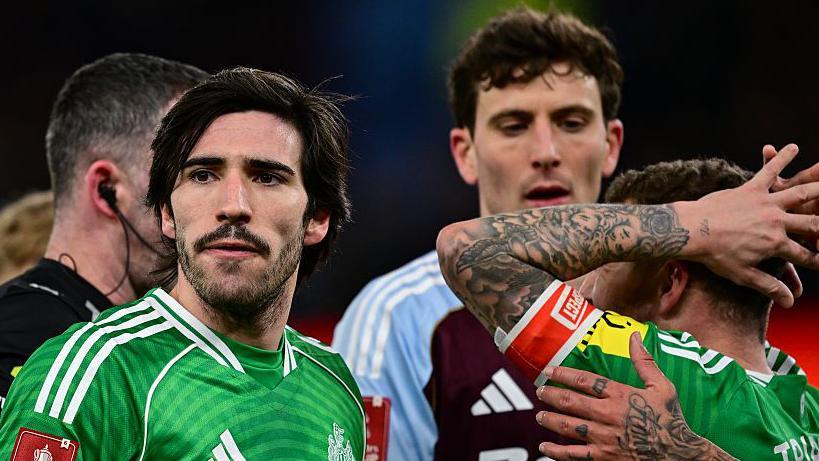
The FA Cup fourth round tie between Aston Villa and Newcastle United on January 25, 2026, delivered drama on the pitch—and even more off it. Newcastle’s 3-1 victory secured progression to the fifth round, but referee Chris Kavanagh’s decisions sparked intense debate, reigniting discussions on VAR’s role in football. Without video assistance—absent in early FA Cup rounds—the match featured multiple contentious calls, leading pundits and managers to question officiating standards and technology’s impact.
A Catalogue of Controversial Calls
Newcastle dominated much of the contest yet faced adversity from refereeing. Tammy Abraham’s opener for Villa was clearly offside, yet allowed to stand—a decision VAR would likely overturn quickly.
The most glaring error involved Lucas Digne’s handball: at least a yard inside the penalty area, but awarded as a free-kick outside. From the resulting set-piece, Sandro Tonali equalized, but the initial call baffled observers.
Digne escaped potential red for a reckless challenge on Jacob Murphy, while Villa goalkeeper Marco Bizot received straight red in first-half stoppage time for denying a goalscoring opportunity.
Dan Burn’s positioning for Newcastle’s equalizer raised offside queries, potentially disallowable under VAR scrutiny.
These incidents—five major debates—left Newcastle on the wrong end of most, yet resilient enough to prevail.
| Decision | Description | Likely VAR Outcome |
|---|---|---|
| Abraham Goal | Offside in build-up | Disallowed |
| Digne Handball | Clear penalty inside box | Penalty awarded |
| Digne Challenge | Reckless on Murphy | Possible red (review dependent) |
| Bizot Red Card | Denied goalscoring opportunity | Upheld or debated (DOGSO/SFP) |
| Burn Offside | Marginal for equalizer | Potential disallowance |
Eddie Howe’s Balanced View on VAR
Newcastle manager Eddie Howe, whose side progressed despite controversies, offered nuanced thoughts: “I’m torn… The game is better without VAR for excitement, but it gives accurate results.” He wished for review on Villa’s goal but valued raw emotion when decisions stand live.
Howe’s comments reflect broader sentiment: VAR ensures precision but dilutes spontaneity. The match’s chaos—without technology’s safety net—exposed referees appearing “petrified,” per Alan Shearer.
Pundits Criticize Officiating Standards
Alan Shearer lambasted the Digne handball: “No excuse for the assistant… That’s easy.” He argued prolonged VAR reliance has dulled on-field decision-making, leaving officials hesitant without the “comfort blanket.”
Wayne Rooney called it “one of the worst decisions I’ve seen,” emphasizing visibility. Consensus: human error amplified without review, harming fairness.
Why No VAR in Early FA Cup Rounds?
VAR operates from the fifth round onward, preserving tradition and reducing costs for lower-tier clubs. This policy—consistent since 2024-25—aims for “pure” football but invites scrutiny when errors impact progression.
The Villa Park tie exemplified risks: high-profile mismatches potentially altering outcomes.
Implications for Football Governance
This controversy fuels calls for VAR expansion or improved training. Premier League’s frequent reviews contrast FA Cup’s approach, creating inconsistency.
For Newcastle, progression offers respite amid league struggles. Villa reflect on missed opportunities despite early lead.
Ultimately, the match entertained but exposed flaws. As cups progress with VAR, early-round “chaos” may prompt reevaluation—balancing tradition with accuracy.
Football thrives on passion, but fairness remains paramount. Villa Park’s events remind stakeholders: technology divides opinion, yet human judgment’s fallibility demands ongoing debate.
Follow for real-time match analysis! 
Discover more from DeeplyticAI
Subscribe to get the latest posts sent to your email.