
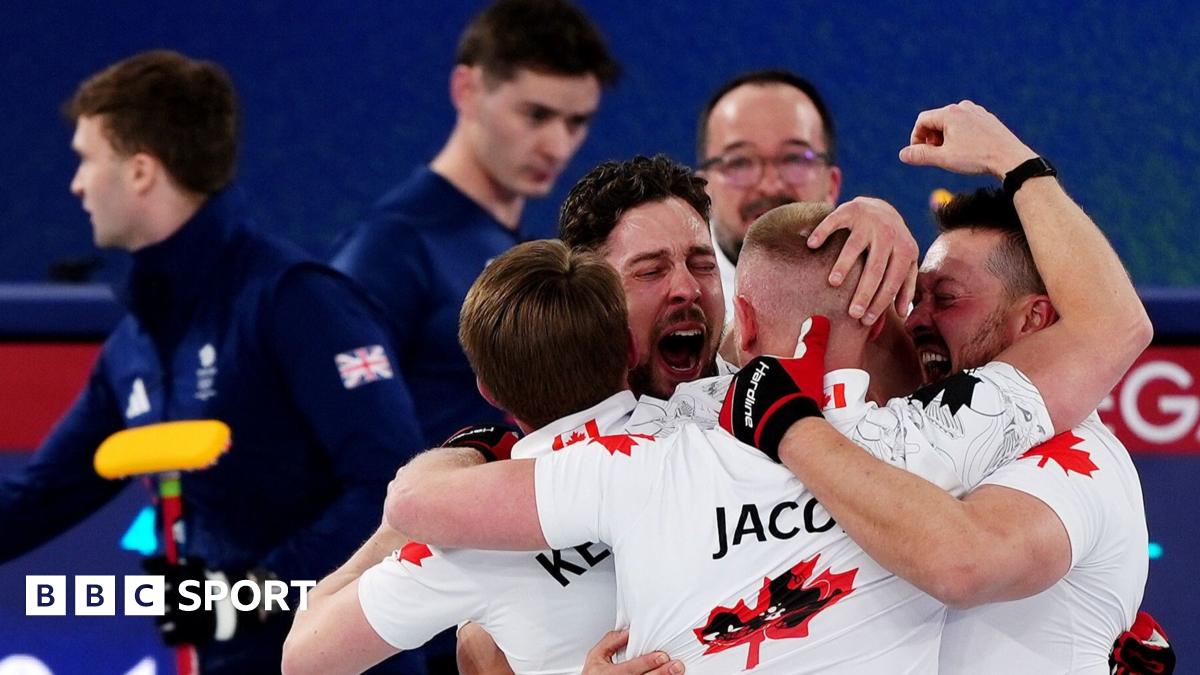
A 102-Year Wait Continues for Great Britain’s Men
The agonizing wait for a Great Britain men’s curling gold medal will extend beyond a century. In a dramatic and emotionally charged final at the 2026 Winter Olympics in Milano-Cortina, Bruce Mouat’s rink suffered a devastating 9-6 defeat to Canada. For the second consecutive Winter Games, the Scottish quartet of Mouat, Grant Hardie, Hammy McMillan, and Bobby Lammie—supported by alternate Kyle Waddell—stood on the podium to receive silver, a colour that offered little consolation to a team that arrived in Italy as undisputed favourites.
Four years after a crushing loss to Sweden in the Beijing 2022 final, Team GB looked poised to exorcise those demons. They arrived in Cortina d’Ampezzo not just as contenders, but as the dominant force in world curling, holding World and European titles. Yet, history repeated itself in the cruelest fashion against a resilient Canadian side skipped by 2014 gold medalist Brad Jacobs.
The Match: A Tactical Battle on the Ice
The final was billed as a clash of titans, and for the first half of the contest, the standard of play matched the occasion. The teams traded blows in a tense, high-stakes chess match on ice. Mouat, widely regarded as one of the world’s premier shot-makers, appeared to have the upper hand early on. A spectacular double-takeout in the sixth end showcased his precision, edging Great Britain into a 5-4 lead. At that moment, the gold medal seemed within reach.
However, the momentum shifted during a pivotal and cagey second half. Canada, who had already defeated GB during the round-robin stage, refused to buckle under the pressure. The match remained deadlocked as the teams exchanged points, with Canada drawing level after seven ends.
The turning point came in the closing stages. Despite Great Britain holding the advantage of the hammer—the final stone—in two of the last three ends, they were unable to capitalize on their tactical superiority. A single point in the eighth end gave Canada a glimmer of hope, which they seized ruthlessly in the ninth. Capitalizing on uncharacteristic slack stones from the British rink, Canada maneuvered into a commanding 8-6 lead heading into the final end.
The Final End: Pressure and Heartbreak
The equation in the tenth end was difficult but not impossible: Bruce Mouat needed to score two points to force an extra end and keep the dream alive. The tension inside the arena was palpable as Mouat lined up for the decisive shots. However, against a crowded house and a flawless Canadian defense, the miracle shot failed to materialize.
Mouat was unable to deliver the magic required to salvage the game, confirming a 9-6 victory for Canada and leaving Team GB bereft. The loss marked the second time in five days that Jacobs’ team had gotten the better of the Scots, proving to be the one puzzle Mouat could not solve in Italy.
“I’m in Shock”: Reaction from the Ice
The immediate aftermath was a scene of devastation for the British team. Having dominated the curling circuit between Olympics—winning 12 Grand Slam titles and multiple major championships—finishing second was a bitter pill to swallow.
“I’m a bit in shock. I think we felt like we were the better team. I don’t know what to say,” a tearful Bruce Mouat told reporters shortly after the final stone came to rest. His visible distress mirrored the feelings of a squad that had dedicated four years to upgrading their Beijing silver to Cortina gold.
Grant Hardie, equally emotional, highlighted the bond within the team and the driving force behind their campaign. “We wanted to win it for each other,” Hardie explained. “The pain from four years ago was so much that we wanted to give it another go. We gave ourselves a chance but unfortunately, we’ve not got there again.”
Canada’s Resilience and Redemption
While the narrative for Great Britain is one of missed opportunity, credit must be given to the Canadian rink. Their path to gold was far from smooth. Amidst a tumultuous week that included external distractions and claims of controversy, Brad Jacobs marshaled his team with the experience of a veteran champion.
Jacobs, who previously won gold at the Sochi 2014 Games, utilized his vast experience to navigate the high-pressure moments that ultimately unraveled the British challenge. By seizing on minor errors in the ninth end, Canada demonstrated the ruthless efficiency required to win Olympic titles.
The Legacy of the “Mouat Era”
Despite the heartbreak in Cortina, the achievements of Bruce Mouat’s rink cannot be understated. To reach back-to-back Olympic finals is a feat of immense consistency in a sport where margins are measured in millimeters. They remain one of the finest teams to ever play the roaring game, having elevated British curling to new heights over the last Olympiad.
However, the drought goes on. Not since the inaugural Winter Olympics in Chamonix in 1924 has a Great Britain men’s team claimed gold. For Mouat and his men, the silver medal will eventually be recognized as a remarkable achievement, but in the cold light of the Italian Alps, it serves only as a reminder of the one prize that continues to elude them.
As the curtain falls on the curling events at the 2026 Winter Olympics, Team GB returns home as silver medalists once more. They battled with courage and skill, but on the day that mattered most, the ruthless precision of Canada proved to be the difference.

