
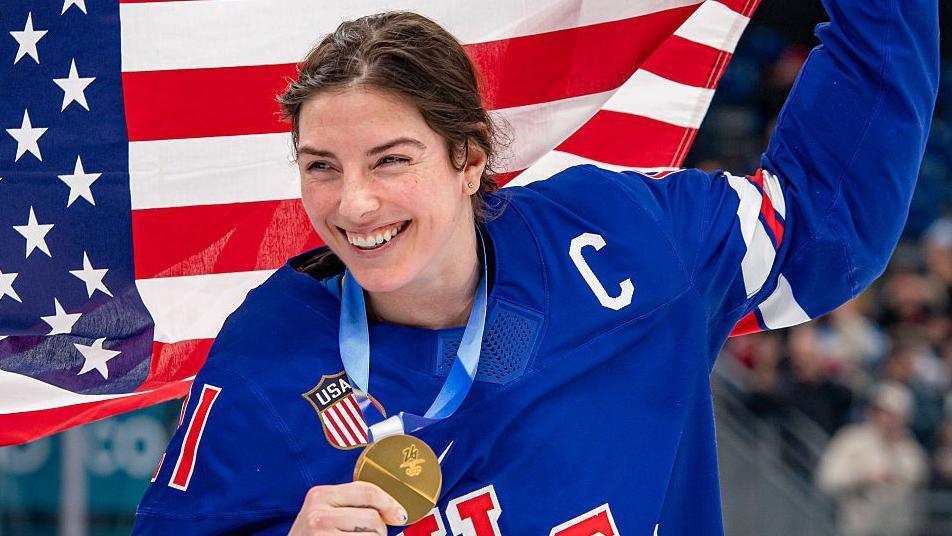
The 2026 Milan-Cortina Winter Olympics will be remembered as a breakthrough for United States ice hockey, where both the men’s and women’s national teams claimed gold medals for the first time in the same Games. This unprecedented double victory highlighted the depth of American talent and the parallel excellence across genders in a sport long dominated by international rivals. Yet, shortly after the triumphs, a single comment from President Donald Trump during a phone call with the men’s team briefly drew media attention away from these feats, prompting USA women’s ice hockey captain Hilary Knight to speak out on the need to prioritize athletic achievement.
In a widely circulated conversation following the men’s overtime win on February 22, Trump extended an invitation to the State of the Union address and quipped that he would need to include the women’s squad as well, or risk impeachment. The remark, delivered amid locker-room celebrations, elicited laughter from some players. While many interpreted it as casual banter, it quickly became a flashpoint that, according to Knight, risked diminishing the spotlight on the women’s remarkable journey. Speaking on ESPN’s SportsCenter just days later, the 36-year-old veteran articulated a balanced perspective that resonated widely among fans of women’s sports.
Historic Achievements Define the 2026 Games
The women’s team delivered a masterclass in resilience during their gold-medal clash against Canada on February 19. Trailing 1-0 late in the third period, they mounted a comeback capped by Knight’s game-tying redirection—her 15th career Olympic goal, which established her as the all-time leading scorer in U.S. Olympic hockey history for both men and women. Megan Keller then sealed the 2-1 overtime victory, completing an undefeated campaign in which the Americans outscored opponents 33-2 overall. This marked their third Olympic gold since women’s ice hockey debuted in 1998, following titles in Nagano and Pyeongchang.
Meanwhile, the men’s squad ended a 46-year drought by defeating Canada 2-1 in overtime on February 22, with Jack Hughes netting the golden goal. The victory echoed the Miracle on Ice legacy from 1980 and completed a sweep that no prior U.S. delegation had accomplished. For online readers passionate about Olympic hockey and gender equity in athletics, these results represent more than medals—they signal progress in program investment, player development, and cross-team inspiration.
To illustrate the significance:
U.S. Olympic Ice Hockey Gold Medals by Gender
| Olympics Year | Men’s Result | Women’s Result | Notes |
|---|---|---|---|
| 1980 | Gold | N/A | Miracle on Ice |
| 1998 | N/A | Gold | First women’s Olympic tournament |
| 2018 | N/A | Gold | Pyeongchang triumph |
| 2026 | Gold | Gold | First double gold sweep |
This table underscores the rarity and impact of the 2026 milestone, achieved through years of dedication at youth, collegiate, and professional levels.
Knight’s Response Shifts Focus to Empowerment
Knight, concluding her fifth and final Olympic appearance, addressed the situation with poise and clarity. “I thought it was sort of a distasteful joke, and unfortunately that is overshadowing a lot of the success, the success of just women at the Olympics carrying for Team USA and having amazing gold medal feats,” she told ESPN. She further noted the moment as “a really good learning point, to really focus on how we talk about women, not only in sport but in industry.” Her core message—that “women aren’t less than, and their achievements shouldn’t be overshadowed by anything else other than how great they are”—struck a chord with audiences invested in elevating female athletes.
Importantly, Knight also defended the inter-team bond. She described “a genuine level of support there and respect” between the men’s and women’s squads, attributing any awkward laughter to the high-pressure setting rather than disregard. Several men’s players later echoed this, with goaltender Jeremy Swayman admitting they “should have reacted differently” while praising the shared gold experience, and forward Jack Hughes emphasizing late-night celebrations and mutual pride in the Olympic Village. The women’s team ultimately declined the State of the Union invitation due to scheduling and professional commitments, issuing a gracious statement thanking the recognition while citing prior obligations.
Legacy of a Record-Breaking Career
Knight’s contributions extend far beyond one tournament. Across five Olympics spanning 2010 to 2026, she amassed 15 goals and 33 points—records that surpass all other American skaters, male or female. Her late-game heroics in Milan provided a storybook ending to a career that also includes three silver medals and leadership in multiple IIHF World Championships. Announced months earlier as her Olympic farewell, the 2026 campaign allowed Knight to exit on her terms, reinforcing themes of perseverance and excellence that inspire the next generation of girls in hockey.
Broader Lessons for Sports and Society
The episode, while fleeting, underscores ongoing conversations about media narratives and representation. When external commentary enters the conversation around women’s athletic success, it can inadvertently shift emphasis from on-ice dominance to off-ice drama. Knight’s insistence on recentering the dialogue—celebrating three program golds, the historic double sweep, and the unbreakable team spirit—serves as a powerful reminder. Fans and followers of US women’s Olympic ice hockey success can draw motivation from this: achievements earned through sweat, strategy, and solidarity deserve unfiltered celebration.
Furthermore, the strong rapport between the U.S. men’s and women’s programs, evidenced by shared training camps, village interactions, and post-victory camaraderie, exemplifies how mutual respect strengthens the entire sport. As the athletes return to their NHL, PWHL, and collegiate routines, the 2026 experience will fuel continued growth. Initiatives like upcoming celebratory events for female Olympians further amplify these accomplishments, ensuring the spotlight remains where it belongs—on the ice.
In reflecting on Milan-Cortina 2026, the narrative ultimately belongs to the players who skated, scored, and sacrificed. Hilary Knight’s leadership not only secured hardware but also modeled thoughtful advocacy, reminding everyone that US women’s Olympic ice hockey success stands tall on its own merits. As conversations evolve, the focus returns to the gold medals, the records, and the enduring legacy of athletes who refuse to let any single moment define their extraordinary journey.
This chapter in Olympic history encourages deeper appreciation for women’s contributions across all levels of competition. By prioritizing facts over fleeting headlines, supporters help sustain momentum for future generations, ensuring that every gold medal—whether men’s or women’s—receives the full recognition it deserves. The double triumph of 2026 thus becomes not just a sporting milestone, but a testament to unity, excellence, and the power of refocusing on what truly shines: the athletes themselves.

