
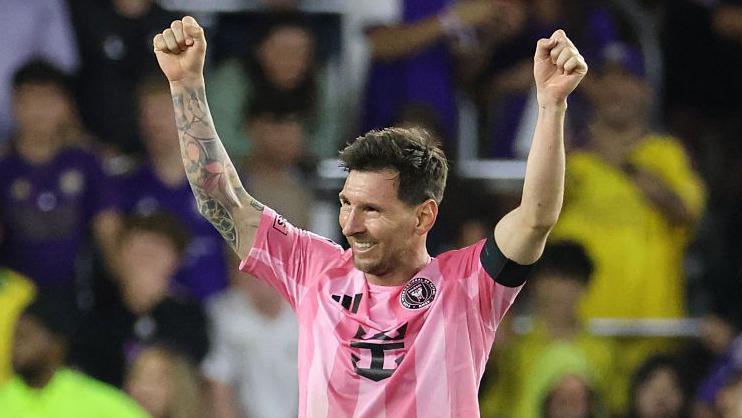
Lionel Messi became only the second player in football history to reach 900 official top-level career goals when he scored after just seven minutes for Inter Miami against Nashville SC in the Concacaf Champions Cup last-16 second leg on March 12, 2026, at Geodis Park in Nashville, Tennessee.
The 38-year-old Argentina international now sits on exactly 900 goals across his club and international career. He joins longtime rival Cristiano Ronaldo (currently on 959 goals) as the only players to achieve this landmark in the men’s game. The goal also extended Messi’s extraordinary scoring record since joining Inter Miami in June 2023, where he has now netted 81 times in 92 appearances.
From Record-Breaking Teenager to Global Icon
Messi’s scoring journey began at an astonishing pace. At 17 years, 10 months and 7 days old, he became Barcelona’s youngest-ever goalscorer when he came off the bench to score against Albacete in La Liga on May 1, 2005—just three minutes after replacing Samuel Eto’o.
Over the next 17 years with Barcelona, Messi scored 672 goals in 778 appearances, winning 10 La Liga titles, seven Copa del Rey trophies, four UEFA Champions Leagues, three UEFA Super Cups, and three FIFA Club World Cups. His time at Paris Saint-Germain (2021–2023) produced 32 goals in 75 matches, forming part of a formidable attacking trio alongside Neymar and Kylian Mbappé.
Since moving to Major League Soccer with Inter Miami, Messi has continued his prolific output. He has helped the club win the Leagues Cup and the MLS Supporters’ Shield, while his international record stands at 115 goals in 196 appearances for Argentina, including the decisive strike in the 2022 World Cup final.
The Numbers Behind 900 Goals
Opta statistics highlight the remarkable consistency and quality of Messi’s finishing:
- 755 goals with his left foot
- 111 goals with his right foot
- 30 headed goals
- 4 goals classified as “other”
- 724 goals from inside the penalty area
- 176 goals from outside the box
- 112 penalties converted
- 70 free-kicks scored
Messi has scored most frequently against:
- Sevilla (25 goals)
- Athletic Club (24)
- Atlético Madrid (23)
- Valencia (18)
- Real Madrid (17)
- Levante (16)
His 91 goals in calendar year 2012 remain the all-time record, with 79 for Barcelona and 12 for Argentina. He also became the fastest player to reach 100 UEFA Champions League goals, achieving the milestone in just 123 appearances.
Messi Joins an Elite Club
Only Cristiano Ronaldo (959 goals) and Messi (900) have reached the 900-goal mark in official top-level matches. Pelé claimed more than 1,000 career goals, but Rec.Sport.Soccer Statistics Foundation records credit him with 778 official strikes. Romário’s official tally stands at 785.
Inter Miami head coach Javier Mascherano, who played alongside Messi at Barcelona and for Argentina, described the achievement as “insane.” Mascherano said: “I’ve been lucky enough to see most, or many, of the goals he’s scored, much closer than you all, and that’s a privilege. The number we’re talking about is insane, and that’s why Leo is one of a kind.”
Legacy and Continued Impact
Messi’s 900th goal arrived during a crucial Concacaf Champions Cup knockout tie, underscoring his ability to deliver in high-stakes matches even at 38. His influence extends far beyond numbers: eight Ballon d’Or awards, a World Cup triumph in 2022, and a transformative effect on Inter Miami since his arrival in 2023.
As Messi continues his career in Major League Soccer, the 900-goal milestone stands as another testament to his longevity, consistency, and unparalleled quality. For fans and analysts alike, it reaffirms why Lionel Messi remains widely regarded as one of the greatest footballers of all time.

