England’s Unprecedented Era: Why the Three Lions Are Built for World Cup Glory in 2026
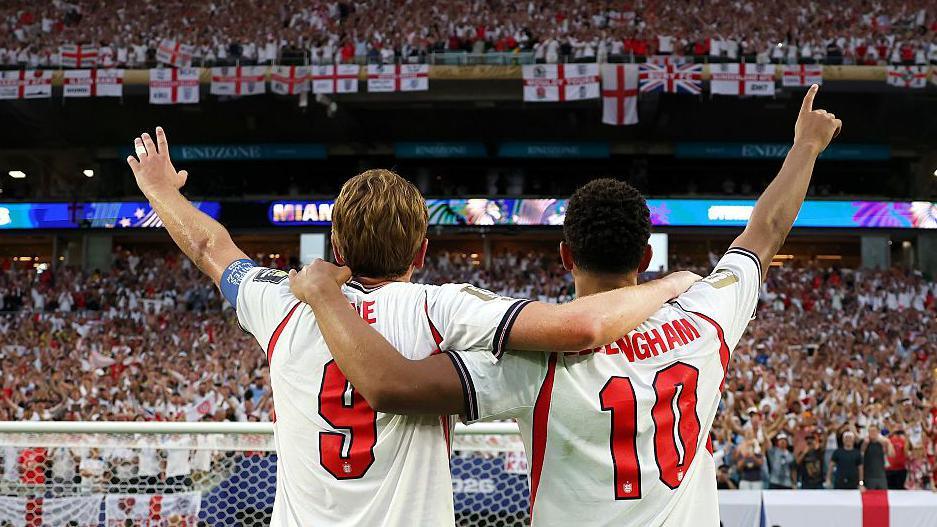
A decade ago, the suggestion that the England men’s national team could become serial contenders in major international tournaments would have been met with widespread skepticism. Following a dismal group-stage exit at the 2014 World Cup and a shocking last-16 defeat to Iceland at Euro 2016, the narrative surrounding the Three Lions was one of inevitable underachievement. Today, however, the landscape of international football has fundamentally shifted. Spearheaded by the brilliance of Jude Bellingham and the enduring leadership of Harry Kane, England now firmly belongs in the conversation as legitimate champions.
A Historic Shift: From Tournament Heartbreak to Consistent Contenders
We are currently witnessing unprecedented times for the England football team. Since the heartbreak of Euro 2016, England has reached at least the semi-finals in four out of five major tournaments. This remarkable consistency is a record only surpassed by global powerhouses Argentina and France, who possess the ultimate validation of World Cup and Copa America titles to accompany their deep runs.
Breaking the Cycle of Disappointment
Historically, the idea that England fans expected success was rarely backed by reality. After reaching the semi-finals of Euro 1968, the nation endured a 22-year wait to reach the last four again at the 1990 World Cup. Following the euphoria of Euro 1996, another 22-year drought ensued, littered with painful exits. Iconic moments of despair, such as David Beckham’s red card in 1998, Wayne Rooney’s dismissal in 2006, and David Seaman’s helplessness against Ronaldinho’s free-kick in 2002, defined an era of fragility. In the 68 years preceding the 2018 World Cup, England had reached only one final and three semi-finals, two of which were achieved as host nations.
Now, everything is different. An extended period of excellence has become the new normal. A teenage England fan today knows nothing other than deep, competitive runs into major tournaments, including two European Championship finals under Gareth Southgate. Furthermore, this remarkable era extends to the women’s game, with the Lionesses securing back-to-back European Championships and finishing as runners-up at the 2023 Women’s World Cup.
The Blueprint for Success: Structural Reforms and Elite Development
This incredible transformation is not a happy accident; it is the direct result of strategic, long-term investment. In 2013, shortly after becoming chairman of the Football Association, Greg Dyke fiercely criticized the structure of English football, highlighting an alarming lack of homegrown talent. He set ambitious targets: reach the semi-finals of Euro 2020 and win the 2022 World Cup. While many scoffed at the time, Dyke knew that two foundational building blocks were already in place.
The Impact of St George’s Park and the EPPP
First, the £340 million Elite Player Performance Plan (EPPP) was voted through in 2011, funding a massive overhaul of elite academies. Second, St George’s Park finally opened its doors in 2012 after years of planning and delays. This state-of-the-art facility became the definitive destination for coaching and development across all England teams.
The EPPP was never intended as a quick fix. Instead, it represented a generational investment in coaching, facilities, and sports science. Today, academy players train on pristine pitches alongside elite backroom staff before seamlessly transitioning into the England development setup. While the pathway is not perfect—with over 12,000 boys in the academy system and a high attrition rate—it has undeniably created a relentless production line of talent that powers the modern England World Cup 2026 campaign.
Squad Depth and the Tuchel Factor
The depth of options currently available to head coach Thomas Tuchel is a testament to this systemic success. Star names like Jude Bellingham, Declan Rice, Bukayo Saka, and Elliot Anderson are all direct products of the EPPP framework. Consequently, the squad possesses such profound quality that world-class players like Trent Alexander-Arnold, Cole Palmer, and Phil Foden can be omitted from the roster, yet the team still comfortably navigates its way to the final four of a World Cup.
A Production Line of Elite Talent
Moreover, the production line shows no signs of slowing down. Emerging prospects such as Alex Scott, Josh King, Ethan Nwaneri, and Rio Ngumoha were integral parts of the pre-tournament training squad. Meanwhile, 16-year-old Arsenal sensation Max Dowman has already broken age-related records in the Premier League and Champions League, destined for the senior setup. This continuous influx of talent ensures that the England football team remains dynamically competitive for years to come.
The Final Hurdle: Facing Messi and Argentina in the Semi-Finals
Following a nail-biting 2-1 extra-time victory over Norway, England now faces a monumental semi-final clash against Argentina and the legendary Lionel Messi. Thomas Tuchel is tasked with taking the definitive next step. Even if England were to fall short, this is a squad built to compete consistently, not merely enjoy a brief dalliance with success.
Embracing a New Footballing Identity
Culturally, the team has also evolved. The traditional anthem “Three Lions,” with its underlying tone of “hope over lived experience,” has largely been cast aside. In its place, tracks like Reverend & The Makers’ “Silence Is Talking” and Oasis’s “Wonderwall” have become the unifying terrace anthems, signaling a fanbase ready to embrace success rather than fear past failures.
This resilience was perfectly illustrated during the 3-2 victory over co-hosts Mexico. Reduced to ten men following Jarell Quansah’s red card, the “old script” would have predicted a heroic but futile exit, likely on penalties. Not this England team. They adapted, survived, and advanced.
Ultimately, it is time to accept that this is where the Three Lions belong: at the pinnacle of world football, driven by sheer ability rather than historical anomalies. Thomas Tuchel must now guide his squad past Argentina to reach the World Cup final in New Jersey. For Harry Kane and this golden generation, semi-finals and finals are only part of the story. One thing now remains: lifting the ultimate trophy to write the final, glorious line of this unprecedented era.
Follow for real-time match analysis!🚀
Discover more from DeeplyticAI
Subscribe to get the latest posts sent to your email.