‘I’ll Get Better’ – How Alcaraz Looked on Winning Singles Return
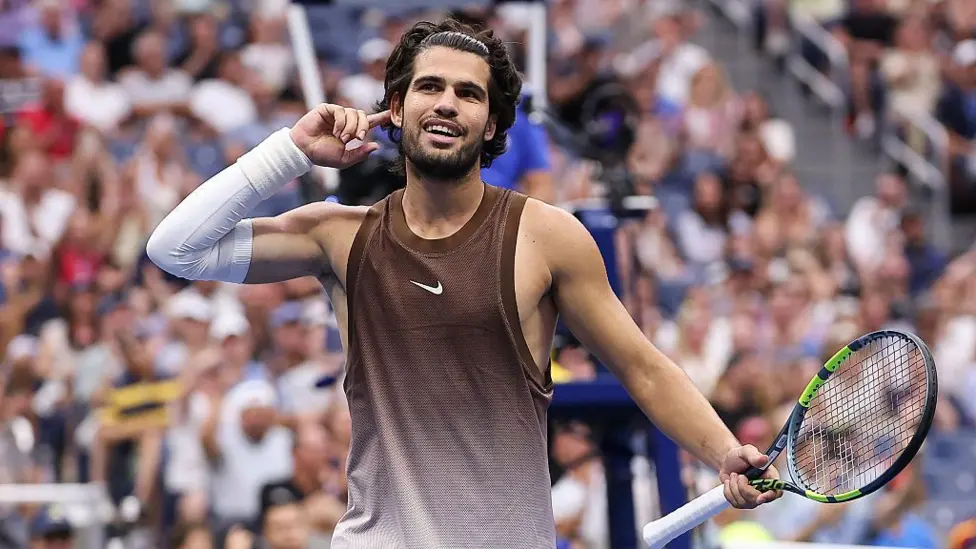
Carlos Alcaraz stepped back onto Arthur Ashe Stadium and reminded everyone why he remains one of the most compelling players in tennis. After more than four months on the sidelines with a right wrist injury, the defending US Open champion produced a confident 6-4, 6-4, 6-4 victory over Russia’s Roman Safiullin in the first round. The performance answered the biggest immediate question surrounding his return while leaving room for further improvement.
Alcaraz had not played a singles match since the Barcelona Open in April. The layoff cost him appearances at the French Open and Wimbledon. He used a mixed-doubles outing alongside Serena Williams the previous week as a competitive warm-up. On Monday night the 23-year-old looked largely free of rust and clearly enjoyed being back under the lights in New York.
A Performance Full of Familiar Qualities
From the early stages Alcaraz displayed the hallmarks of his game. His forehand generated significant pace and angles, producing a high number of winners. Movement across the baseline appeared sharp, and he showed the same willingness to finish points at the net that has defined many of his best performances. Drop shots, sharp changes of direction and the occasional spectacular recovery all featured.
The Spaniard celebrated with characteristic energy. Each important winner brought a clenched fist and a shout of “vamos” toward his team. He smiled after extended rallies and at one change of ends was seen singing along to the stadium music. When he produced a delicate drop shot to help close out the match, he raised his fist, pointed to his ear and encouraged the crowd to increase the volume.
Safiullin, ranked outside the top 50, competed solidly and forced Alcaraz to solve problems. Yet the Russian was unable to disrupt the rhythm for long. Alcaraz converted break points at key moments and maintained control across the three sets. The match lasted just over two hours, a manageable workload for a player returning from extended absence.
Honesty About Doubts and the Road Ahead
Alcaraz was open about the mental side of the comeback. He admitted entering the match with questions about his ability to last the distance in best-of-five-set tennis after such a long break. “There were some doubts in the match, I’m not going to lie,” he said. “I’ve been thinking about ‘am I going to last the best of five, am I going to last playing four sets, five sets?’”
Those concerns did not prevent a straight-sets win. Still, Alcaraz emphasised that one solid performance is only the beginning. “I need more matches under the belt to get again into the rhythm of the tournament. I’m pretty sure I’m going to get better and better every day.”
On the physical front the news was encouraging. Alcaraz reported that the wrist and arm felt normal and pain-free during the match. He intends to continue managing the recovery carefully between matches while gradually increasing intensity. The fact that he could play his natural game without obvious restriction represented a significant step forward after months of rehabilitation.
Crowd Connection and Emotional Lift
The reception on Arthur Ashe provided an emotional boost. Alcaraz spoke of feeling the love from the New York crowd and of how much he had missed the atmosphere, the competition and the energy of tournament play. “It’s been a really tough five months for me,” he said. “I missed the crowd, the energy, I missed competition, I missed everything.”
Choosing the US Open for his singles return carried symbolic weight. New York has been a happy hunting ground, and the defending champion clearly drew motivation from the setting. The support appeared to help him manage any residual nerves and settle into the contest.
What the Result Means for the Fortnight
A first-round victory in straight sets offers the ideal platform. Alcaraz now faces Portugal’s Jaime Faria in the second round. Further matches will test his stamina and timing more rigorously, yet the foundation looks solid. The explosive forehand is working. The competitive spark is present. The wrist has come through its first serious examination without complaint.
At 23 Alcaraz already owns seven major titles and has completed a career Grand Slam. The interruption to his season was unwelcome, but the manner of his return suggests the core of his game remains intact. He is realistic about the need for match sharpness. At the same time he projects confidence that the level will rise with each outing.
For the rest of the field the message is clear. A dangerous player is back and already producing the kind of tennis that wins matches at this level. Alcaraz himself is focused on incremental progress. “I’ll get better,” he essentially promised. On the evidence of the first night, few would bet against him.
Follow for real-time match analysis!🚀
Discover more from DeeplyticAI
Subscribe to get the latest posts sent to your email.