
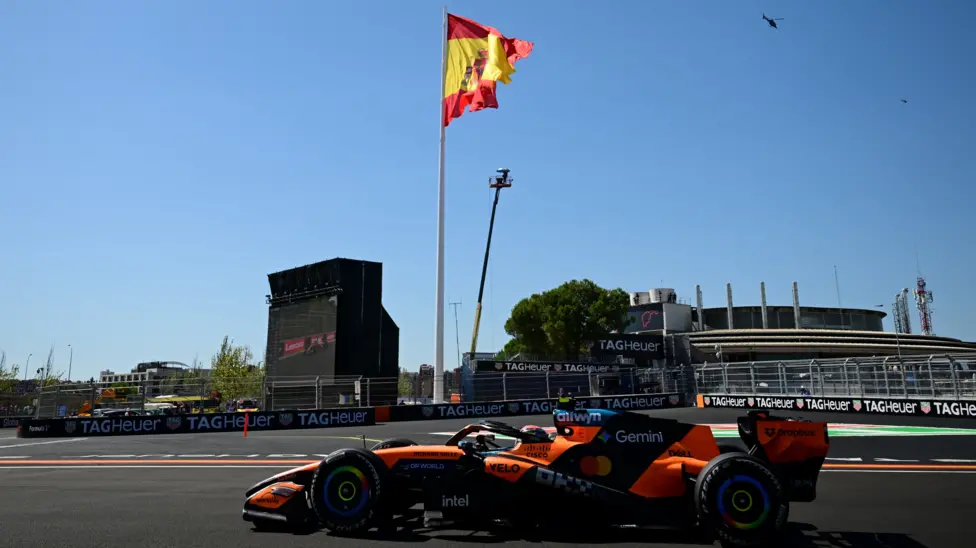
The new Madring circuit in Madrid has already sparked intense debate just days after hosting its first Formula 1 race. Organisers of the Spanish Grand Prix have confirmed they stand ready to modify the layout following widespread criticism of the lack of overtaking during the inaugural event. Drivers described the race as processional and even dull, while praising the track’s challenge over a single lap. As a result, concrete plans are now emerging to improve racing for 2027 and beyond.
This hybrid venue, built around the IFEMA exhibition centre near Madrid’s Barajas airport, marked Formula 1’s return to the Spanish capital after a 45-year absence. The last Grand Prix in the Madrid area took place at Jarama in 1981. With a ten-year contract in place running through 2035, the stakes remain high for the Madring to deliver more exciting races in the future.
Why the Inaugural Race Drew Sharp Criticism
The 5.4-kilometre circuit features 22 corners and combines temporary public-road sections with purpose-built permanent stretches. Its standout feature is La Monumental, the long banked right-hander at Turn 12. Rising with a steep gradient and subjecting drivers to high lateral forces, the corner was widely expected to become an iconic image of the Spanish Grand Prix. Qualifying sessions confirmed that the layout rewards precision and commitment. Several drivers noted that a flying lap felt engaging and technical.
However, race day told a different story. Overtaking opportunities proved extremely limited. Williams driver Alex Albon called the Grand Prix “pretty boring,” while Audi’s Gabriel Bortoleto admitted he “almost fell asleep.” Reigning world champion Lando Norris was equally direct, labelling certain sections “useless” and stating the circuit was “not a great racetrack” for racing. Max Verstappen and others pointed out that the narrow layout and awkward braking zones made clean passes difficult and risky.
Team principals offered a more balanced view. Ferrari’s Frederic Vasseur described the overall event as “mega” while acknowledging that overtaking needed discussion. Facilities around the IFEMA complex received consistent praise, and the atmosphere generated by the return of Formula 1 to Madrid was widely regarded as positive. Still, the on-track product left both drivers and many spectators wanting more action.
Key Layout Shortcomings Identified
Several specific sections attracted the most feedback. The chicane complex around Turns 5 and 6 was frequently criticised for its narrow entry and high kerbs, which discouraged drivers from attempting moves. After the high-speed sweep of La Monumental, the medium-speed left-hander at Turn 13 offered little chance for a car that had gained a tow to attack. Further around the lap, the tight Turn 20 acted as a pinch point, with barriers limiting room for two cars side by side.
Drivers also highlighted the final sector. Norris suggested removing Turns 18 and 19 entirely to create a longer straight leading into a wider hairpin-style corner, similar to successful overtaking zones at the Circuit of the Americas. Others called for straighter braking zones earlier in the lap so that following cars could more easily close up and attempt a pass.
Organisers Confirm Willingness to Redesign
Event managing director Luis García Abad has been clear that the circuit will not remain static. Speaking after the race, he confirmed that the FIA had already outlined ways to improve the track layout. Because the Madring includes temporary elements that must be reinstalled each year, organisers have flexibility to implement changes relatively quickly.
“The FIA defined clearly which is the way to improve the track layout, and we will be open because we will have to reinstall the track for the next year,” Abad explained. He added that the venue has the space, facilities and capacity required to make meaningful adjustments. Discussions involving the FIA, drivers and teams are expected to refine the details in the coming weeks.
Reports indicate that three priority areas have already been identified for modification ahead of the 2027 Spanish Grand Prix. First, the approach to the Turn 5/6 chicane is set to be widened and altered so cars can contest positions more effectively. Second, the profile of Turn 13 after La Monumental may be tightened to create a stronger braking zone. Third, the track will be widened around Turn 20 to reduce the current pinch-point effect of the barriers.
These targeted revisions aim to increase overtaking without fundamentally altering the circuit’s character or the challenge of La Monumental. Safety considerations that influenced the original design, particularly around the tunnel section and approach angles, will continue to guide any updates.
Balancing Spectacle, Safety and Spectacle
Modern Formula 1 circuits must satisfy multiple demands. They need to provide a demanding driving experience, ensure high safety standards, accommodate large crowds and, crucially, enable wheel-to-wheel racing. Street and hybrid circuits often struggle with the last requirement because of limited space and existing infrastructure constraints. The Madring was conceived as a hybrid solution that could offer more interesting geometry than pure street tracks while remaining close to a major city.
The inaugural weekend demonstrated both the potential and the limitations of that approach. Qualifying produced competitive sessions and highlighted the technical nature of the layout. The support categories, Formula 2 and Formula 3, delivered more chaotic and overtaking-rich races, suggesting the track can produce action under the right conditions. Yet the main Formula 1 event remained largely processional, with strategy and tyre management playing larger roles than on-track battles.
Positive elements should not be overlooked. The proximity to Madrid, excellent transport links via the nearby airport, and the existing exhibition infrastructure create a strong foundation for a major event. Capacity currently stands at around 110,000 spectators, with room for further expansion. Sustainability features and the use of existing buildings were also prioritised during construction.
Looking Ahead to 2027 and Beyond
With nine more years remaining on the current hosting agreement, the pressure to deliver better racing is significant. Circuit officials have already shown they are listening. The fact that the track must be partially rebuilt each season provides a practical advantage that permanent venues do not always enjoy. Changes can therefore be trialled and refined without the same level of permanent construction cost or disruption.
Drivers have expressed cautious optimism. Norris noted that the circuit can still become “a track that’s good for racing” and said he looked forward to returning if meaningful improvements are made. Carlos Sainz, a Madrid native and circuit ambassador, has also indicated that collaborative work between drivers, the FIA and organisers can elevate the race.
The coming months will see detailed consultations and, almost certainly, simulations of revised layouts. Any final modifications will need FIA homologation before the 2027 season. If the planned alterations to the Turn 5/6 complex, Turn 13 and Turn 20 succeed in creating clearer overtaking opportunities, the Madring could quickly shed its reputation as a processional venue.
Madrid’s return to the Formula 1 calendar was always going to attract scrutiny. The combination of high expectations, a brand-new hybrid circuit and the realities of modern car performance produced a first race that fell short on excitement. Yet the rapid acknowledgement of the problem and the concrete plans for change suggest organisers understand what is required. For fans of the Spanish Grand Prix, the hope is that the Madring of 2027 will retain its unique character while finally delivering the on-track battles the sport demands.
