Austin Track Bumps Out of Control – Verstappen Issues Stark Warning
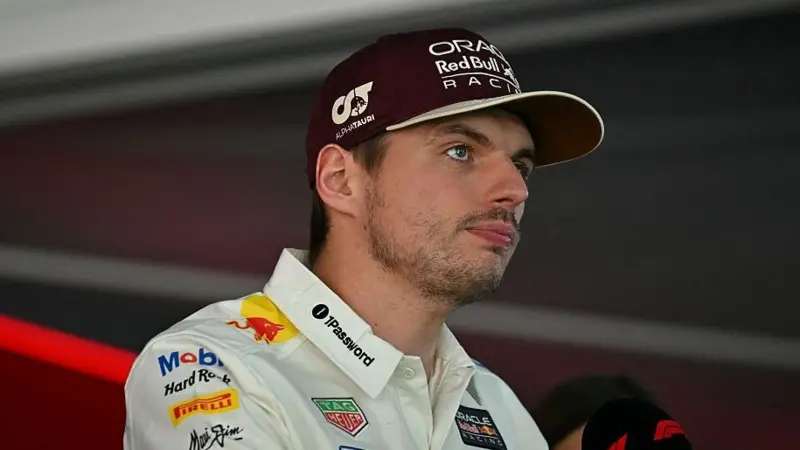
Max Verstappen has delivered a blunt assessment of the Circuit of the Americas ahead of this weekend’s United States Grand Prix. The four-time Formula 1 world champion described the track’s notorious bumps as “unacceptable” and “out of control,” raising serious concerns about long-term spinal damage for drivers.
Speaking on media day in Austin, the Red Bull driver made clear that while he admires the layout and the venue, the surface condition has reached a critical point. “I love this track, I love this place. It’s one of the best layouts ever and it’s one of the best venues, best city to be at,” Verstappen said. “But for me the bumps are unacceptable.”
A Long-Standing Problem That Keeps Returning
Drivers and riders across multiple series have complained about the bumps at COTA for years. The circuit sits on Texas high-plasticity clay, which expands and contracts with changing weather. That movement creates undulations, particularly in heavy braking zones where the asphalt takes the greatest stress.
Organisers have responded with partial resurfacing and grinding in previous seasons. Ahead of the 2026 event, work was carried out from the entry of Turn 9 to the entry of Turn 11, with additional smoothing at the entries to Turns 12 and 19. Verstappen, however, dismissed these measures as insufficient. “Over time they’ve been grinding a little bit here and there but it’s just putting a plaster on the big problem,” he explained. “That’s just what’s coming underneath. That’s what you need to actually tackle in the first place.”
He argued that only a comprehensive solution would work. “That of course means you need to really fully open up the track. That costs a lot of money and time but that’s the only way to get rid of it because these bumps are not natural and they are out of control.”
Personal Health Concerns
Verstappen’s comments carry extra weight because of his own medical findings. He revealed that recent checks on his spine showed the lower section “doesn’t look that great.” Last year he recorded vertical loads exceeding 9G on his spine in places where cornering forces normally sit between 5G and 6G. “I can tell you is really not fun,” he said, “and especially the older you get, you think about that more and more.”
He had joked after the Singapore Grand Prix that he might need to “order a new spine” or become like RoboCop for the Austin weekend. On Thursday he stressed the remark was no longer light-hearted. Watching the World Endurance Championship race at COTA the previous month had reinforced his unease. “From what I saw in WEC, it was extremely badly bumpy. So I’m not really looking forward to that, to be honest, for your spine.”
Why the Issue May Be Worse in 2026
Current car regulations compound the problem. Although the 2022-2025 generation of cars ran lower overall, the latest aerodynamic and suspension set-ups mean the cars sit even lower in corners this season. That increases the chance of the chassis and floor striking the bumps hard.
Verstappen noted that finding the right set-up compromise will be difficult. Drivers must balance mechanical grip and aerodynamic performance while protecting themselves from the repeated impacts. Going slightly offline can expose the car to bumps that are rarely driven, making the experience unpredictable.
A Wider Conversation for Formula 1
While COTA represents an extreme case, Verstappen suggested the sport needs to take track surface quality more seriously across the calendar. Repeated high vertical loads add to the cumulative physical stress drivers already face from the stiff, high-downforce cars of recent years. Continuing to accept such conditions, he warned, will only increase the long-term toll on drivers’ bodies.
Other drivers have voiced similar frustrations in the past, yet meaningful structural change has proved elusive. The combination of soil characteristics, cost and the short windows available between events has left organisers relying on surface-level repairs.
Looking Ahead to the Race
Despite his criticism, Verstappen remains positive about the overall experience of racing in Austin. The Circuit of the Americas continues to deliver one of the most popular weekends on the Formula 1 calendar, with strong crowds and a challenging, flowing layout. Yet the physical cost of competing there is now firmly in the spotlight.
Whether organisers respond with more substantial investment remains to be seen. For this weekend, teams and drivers will once again attempt to manage the bumps through set-up choices and careful driving lines. Verstappen’s message, however, is unambiguous: the current situation is no longer sustainable.
The four-time champion arrives in Texas on the back of consecutive victories in Malaysia and Singapore. His focus will stay on maximising points, but the condition of the track has clearly moved beyond a simple inconvenience. For Verstappen and his fellow drivers, the bumps at Austin have become a genuine health concern that the sport can no longer ignore.
Follow for real-time match analysis!🚀
Discover more from DeeplyticAI
Subscribe to get the latest posts sent to your email.