
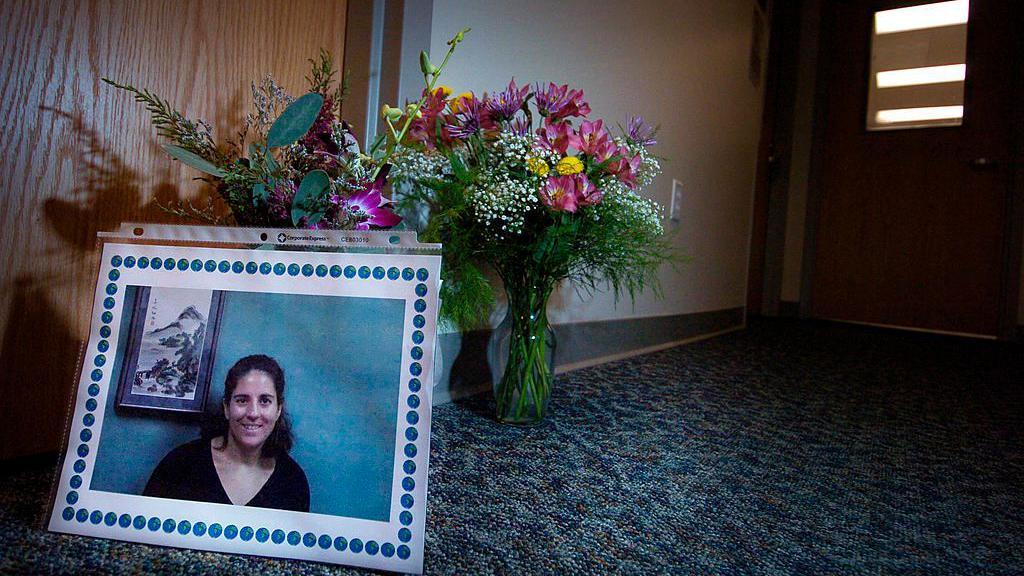
Becky Zerlentes’ Tragic Fight – The Shocking First Female Boxing Fatality
Professional boxing has long been known for its brutality, but the risks became tragically clear on April 3, 2005, when Becky Zerlentes became the first woman in U.S. history to die in a sanctioned boxing match. Her story remains a heartbreaking reminder of the dangers of combat sports—not just for fighters but for those who love them.
The Night That Changed Boxing History
At 2:00 a.m. in Washington, Stephan Weiler received the phone call no one ever wants to hear. A voice on the other end asked, Is Becky Zerlentes your wife? With those words, Weiler’s life was forever altered. The woman he loved—a passionate boxer, respected professor, and beloved community figure—had suffered a catastrophic injury in the ring. Rushed to Denver Health Medical Center, her condition was dire.
Just hours earlier, Zerlentes had been competing in the Colorado State Boxing Senior Female Championships at the Denver Coliseum. Despite wearing protective headgear, a single punch to her left temple in the third round sent her collapsing to the canvas. Unconscious before she even hit the mat, she never woke again.
A Life Beyond the Ring
Becky Zerlentes was more than a fighter. At 34, she balanced her passion for combat sports with an accomplished academic career, holding a master’s degree and a PhD in geography and economics. She taught at Front Range Community College, where colleagues and students admired her sharp intellect and unwavering kindness.
But inside the ring, she thrived on the adrenaline of competition. Boxing was more than a hobby—it was part of her identity. Three years before her death, she had won a regional title, proving herself as a formidable athlete. Yet on that April night, the sport she loved took everything from her.
The Aftermath: Grief, Guilt, and a Media Frenzy
For Weiler, the pain was unbearable. Doctors explained that Zerlentes had likely suffered fatal brain trauma immediately upon impact. The injury was devastating despite the punch not appearing particularly brutal. By noon that same day, Weiler made the agonizing decision to remove life support.
Meanwhile, Heather Schmitz, the opponent who had landed the fatal blow, faced her own torment. Investigators questioned her as part of a homicide inquiry, though charges were eventually dropped. Schmitz, just in her twenties, reached out to Weiler with tearful apologies. He offered forgiveness, assuring her that blame had no place in tragedy—yet the emotional scars remained.
Outside the hospital, the media swarmed. The release of Million Dollar Baby, a film about a female boxer’s fatal injury, made Zerlentes’ death a sensational story. Weiler refused interviews, retreating from the spotlight to grieve in silence.
A Shared Pain: The Unseen Toll of Boxing
Years later, Weiler found rare solace in Amy Lavelle, who lost her husband, Australian boxer Davey Browne Jr., in 2015 under eerily similar circumstances. With mere seconds left in his match, Browne collapsed and never regained consciousness. Like Weiler, Lavelle was left to raise children alone while grappling with grief.
Together, they realized how little support exists for boxing widows and widowers. No governing body reached out. No formal resources were offered to families reeling from ring fatalities. The silence from boxing’s power structures was deafening.
The Harsh Reality of Combat Sports
The dangers of repeated head trauma in boxing and MMA are well-documented. Chronic Traumatic Encephalopathy (CTE)—a degenerative brain disease linked to concussions—has ended careers and lives. Fighters like Heather Hardy have retired due to severe symptoms, while studies show even three concussions can cause lasting damage.
Weiler and Lavelle now advocate for better education on these risks. It’s all bravado and toughness, Lavelle says. Athletes need real information before they step into the ring.
A Call for Change
While combat sports will always carry risk, fighters and their families deserve transparency, stricter safety protocols, and aftercare for tragedies. More than a decade after Becky Zerlentes’ death, the boxing world has yet to fully reckon with the cost of its spectacle.
For Weiler, the message is simple: Boxing is a brutal sport. By all means, train—but think twice before competing. The price can be too high.
