
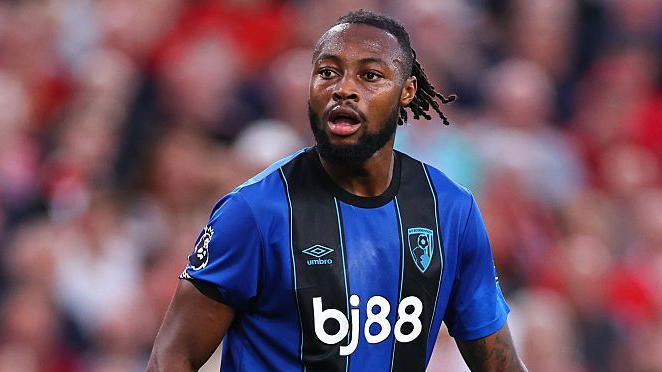
League Opener Halted After Antoine Semenyo Reports Racist Abuse
The Premier League’s highly anticipated opening match between Liverpool and Bournemouth was marred by a disturbing incident when Antoine Semenyo, the Cherries’ dynamic forward, reported being targeted by racist abuse from a spectator. The match was temporarily halted in the 29th minute, with the scoreline still at 0-0, as referee Anthony Taylor took decisive action following Semenyo’s complaint.
After consulting with both managers, Taylor gathered Liverpool captain Virgil van Dijk and Bournemouth’s Adam Smith for an on-field discussion, underlining the seriousness of the situation. Play resumed four minutes later, but the incident overshadowed the game. At halftime, a powerful anti-discrimination announcement echoed through Anfield, reinforcing the league’s zero-tolerance stance against racism.
Premier League’s Swift Response to Racist Abuse Against Antoine Semenyo
The Premier League acted quickly to address the incident, releasing an official statement on X (formerly Twitter) through its Match Centre:
> “Tonight’s match between Liverpool and AFC Bournemouth was temporarily paused during the first half following a report of discriminatory abuse aimed at Bournemouth’s Antoine Semenyo. This action reflects the league’s on-field anti-discrimination protocols. The matter will be thoroughly investigated, and we offer our full support to the player and both clubs. Racism has no place in football or society. We remain committed to working with authorities to ensure all stadiums are inclusive and welcoming.”
The league’s immediate response highlights ongoing efforts to combat racism, but the recurrence of such incidents underscores the deep-seated challenges football still faces.
A Disturbing Pattern: Racism in Football Persists
The abuse directed at Antoine Semenyo is sadly not an isolated case. Just days before this incident, Tottenham’s Mathys Tel faced racist attacks on social media after missing a penalty in the club’s Super Cup defeat. England defender Jess Carter also endured racial slurs during the Women’s Euro 2025 qualifiers last month.
Perhaps one of the most high-profile incidents occurred after the Euro 2020 final, when England’s Marcus Rashford, Jadon Sancho, and Bukayo Saka were subjected to torrents of racist abuse after their penalty misses. These repeated episodes reveal a troubling reality: despite progress in awareness and condemnation, discrimination remains a persistent issue in stadiums and online spaces.
The Fight Against Racism in Football: Are Measures Enough?
Clubs, leagues, and governing bodies have introduced various measures to tackle racism, including reporting systems, education programs, and harsh penalties for offenders. Yet enforcement remains inconsistent, and players continue to suffer abuse.
For Antoine Semenyo and others, such incidents can leave lasting emotional scars. Many athletes have spoken about the psychological impact, with some advocating for lifetime stadium bans, better surveillance technology, and stricter accountability for perpetrators. Social media platforms also face mounting criticism for failing to curb online hate, prompting organizations like Kick It Out and the FA to push for stronger digital protections.
Moving Forward: Education and Enforcement
Education is a vital tool in the ongoing fight against racism. Clubs frequently partner with anti-discrimination organizations to promote tolerance and understanding among fans. However, as the abuse against Antoine Semenyo demonstrates, progress is slow.
The Premier League’s protocols—such as pausing matches—are steps in the right direction. But long-term change requires sustained action:
– Stronger punishments for offenders, including lifetime bans.
– Better stadium surveillance to identify and prosecute abusers.
– Mandatory education programs for fans, players, and staff.
– Collaboration with social media companies to eliminate online abuse.
Standing With Antoine Semenyo: A Call for Unity
As investigations into the Anfield incident continue, the football community must reaffirm its commitment to eradicating racism. Supporting players like Antoine Semenyo, fostering inclusivity, and holding perpetrators accountable are crucial steps toward a future free from discrimination.
The hope remains that through collective efforts—from grassroots initiatives to policy changes—football can become a true reflection of respect and equality. Only then can we ensure such incidents become a distant memory.
The message is clear: racism has no place in the beautiful game, and standing united is the only way forward.
