
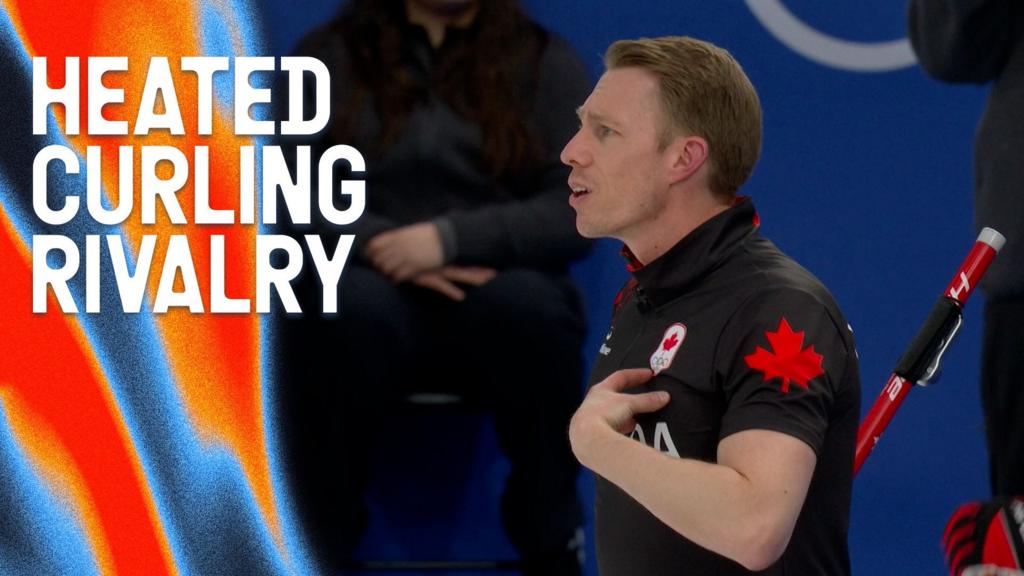
The serene precision of curling was shattered by rare on-ice drama during the Milano Cortina 2026 Winter Olympics men’s round-robin match between Canada and Sweden on February 13. Sweden’s Oskar Eriksson accused Canada’s vice-skip Marc Kennedy of illegally “double-touching” the stone—contacting it after release before the hog line—sparking a profanity-filled exchange that drew global attention. Despite the tension, Canada prevailed 8-6, but the incident highlighted curling’s strict rules, etiquette, and the intense pressure of Olympic competition.
The Heated Exchange Unfolds
The dispute arose mid-game when Eriksson claimed Kennedy’s delivery violated rules by touching the stone body post-release. Kennedy, a four-time Olympian, reacted strongly with expletives directed at Eriksson, escalating the confrontation.
Umpires intervened, issuing warnings and triggering spot checks. Footage circulated widely, showing Kennedy’s finger appearing to brush the stone, though officials ruled it handle contact only—permitted.
Kennedy later defended: “I don’t like being accused of cheating after 25 years on tour.” Eriksson maintained his observation but emphasized respect for opponents.
Canada’s win improved their record to 3-0, while Sweden sought recovery in subsequent matches.
Curling Rules on Double-Touch Explained
Curling demands clean deliveries: stones must be released before the hog line, with no subsequent body contact (handle touches allowed for stabilization).
| Rule Aspect | Permitted | Violation |
|---|---|---|
| Handle Contact | Multiple touches pre-hog line | None if only handle |
| Stone Body Contact | None after release | Removal of stone; potential penalty |
| Intent/Outcome | Stabilization aid | Deemed unfair advantage |
World Curling’s clarification post-incident reaffirmed: “A double touch by the deliverer prior to the hog line is not a violation if only the handle is touched.” No sanctions followed, but the row prompted broader etiquette discussions.
Impact on Teams and Tournament
Canada, led by skip Brad Gushue, maintained focus to secure victory with late scoring. The distraction did not derail their strong start.
Sweden, with Eriksson as vice-skip under Niklas Edin, faced setback but showed resilience in group play.
The controversy—rare in curling’s “spirit of the game” culture—drew mixed reactions: praise for passion, concern over tone. It amplified Olympic stakes, where margins decide medals.
Historical Context in Curling Disputes
Curling prides itself on self-officiation and sportsmanship, making public rows uncommon. Past incidents, like delivery violations or measuring debates, rarely escalate verbally.
This event echoes occasional tensions but stands out for profanity and accusations in the Olympic spotlight.
Looking Ahead in Milano Cortina 2026 Curling
Men’s round-robin continues, with playoffs looming. Canada and Sweden remain contenders for medals, their clash adding narrative intrigue.
The incident reinforces curling’s appeal: technical mastery meets human emotion. As competition intensifies to February 22 finals, respect and precision will define champions.
This “double-touch” drama reminds fans why curling captivates: quiet intensity occasionally erupting into unforgettable moments.

