
Legal Case Sparks Seismic Confrontation Between Players and FIFA
The Battle Over Transfer Rules and Player Rights
A landmark legal case has erupted between professional footballers and FIFA, with experts calling it a seismic confrontation that could reshape the global football industry. The dispute centers on FIFA’s transfer regulations, which a Dutch foundation claims have unlawfully restricted players’ earnings for over two decades.
On Monday, Justice for Players (JFP) announced it had filed a class-action lawsuit against FIFA and several European football associations, including those of France, Germany, the Netherlands, Belgium, and Denmark. The claim argues that up to 100,000 players in Europe since 2002 may have suffered financial losses due to restrictive transfer rules, with potential damages amounting to billions of pounds.
The Diarra Ruling: A Turning Point in Football Law
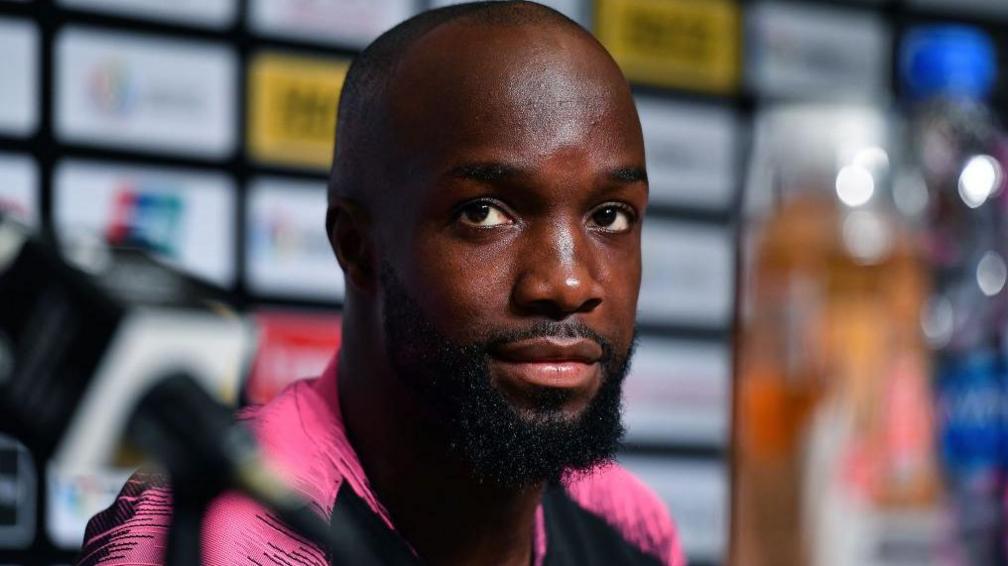
This legal battle follows a critical ruling by the European Court of Justice (CJEU) in October last year, which found FIFA’s transfer regulations in breach of EU competition laws. The case involved former Chelsea and Arsenal midfielder Lassana Diarra, who sued FIFA after his 2015 move to Belgian side Charleroi was blocked. FIFA had withheld his International Transfer Certificate (ITC) due to an earlier contract dispute with Lokomotiv Moscow, for which he was ordered to pay £8.4 million in compensation and suspended.
The court ruled that FIFA’s rules unfairly restricted player mobility by penalizing clubs that signed players in contractual disputes and allowing associations to withhold ITCs. This decision laid the groundwork for the current legal challenge, which could have far-reaching consequences for how players move between clubs.
Could This Be the Next Bosman Ruling?
Legal experts are drawing parallels between this case and the historic 1995 Bosman ruling, which revolutionized football by allowing out-of-contract players to move freely without transfer fees. Remarkably, Diarra’s lawyer, Jean-Louis Dupont, also represented Jean-Marc Bosman in that landmark case.
Udo Onwere, a former Fulham midfielder turned lawyer, believes this new case could be just as transformative:
This class action could rewrite the rules governing player mobility across the global football industry. What distinguishes this case is its sheer scale—potentially affecting tens of thousands of players. If successful, it may usher in a new era of transfer regulations where contractual stability is balanced with player autonomy.
If JFP prevails, players could gain the right to terminate contracts early without compensation—a move that would shift power dynamics in football and challenge long-standing FIFA policies.
Financial Fallout for FIFA
JFP estimates that affected players have lost approximately 8% of their career earnings due to FIFA’s regulations. Should the case succeed, the financial repercussions for FIFA could be staggering.
Lucia Melcherts, JFP’s chair, emphasized the disparity between football and other professions:
In any other job, people can change employers voluntarily. Footballers, whose careers average just eight years, should have the same freedom. These unlawful restrictions have deprived them of fair earnings for too long.
Legal analysts suggest FIFA faces an uphill battle. Arbitration lawyer Daniel Gore noted:
FIFA will struggle to defend these claims following the CJEU’s clear ruling on anti-competitive behavior. A wave of lawsuits could hit their finances hard—especially after their revenue highs from the 2026 World Cup and expanded Club World Cup.
FIFA’s Response and Future Implications
FIFA maintains that its transfer system has been continuously updated to balance player rights and competition integrity. After the Diarra ruling, it introduced interim changes but acknowledged these could face further challenges.
FIFPro, the global players’ union, has signaled support for the lawsuit, calling it a necessary response to the CJEU’s decision. In a statement, FIFPro Europe said it would evaluate the legal action while advocating for long-term reforms in football governance:
We will always support fair compensation for players whose rights were violated while pushing for inclusive governance that protects future generations from arbitrary restrictions on workers’ rights.
Conclusion: A Watershed Moment in Football History
This legal battle represents more than just a dispute over transfer rules—it’s a fight for players’ rights on an unprecedented scale. A victory against FIFA could redefine contract freedom, alter transfer market dynamics, and set a new precedent for labor rights in football.
As FIFA prepares its response, the eyes of the football world remain fixed on what could become the most transformative legal case since Bosman. The outcome may well determine whether the sport enters a new era of fairness—or doubles down on a system players say has unfairly held them back.
For now, one thing is certain: The seismic confrontation between players and FIFA has only just begun.
