
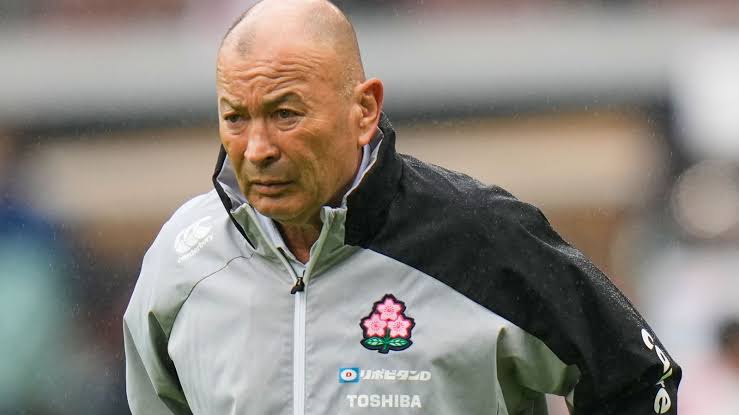
Eddie Jones has once again shown his unconventional approach to coaching by turning to nature for inspiration. The Japan head coach revealed that his Brave Blossoms squad has been studying videos of geese flying in formation as they prepare for the second Test against Australia in Townsville on Saturday.
Japan fell narrowly 35-32 to the Wallabies in the opening match of the two-Test series in Osaka last weekend. That result gave new Australia coach Les Kiss a winning start in charge. Jones believes sharper support play will be crucial if his side is to bounce back and challenge for a historic first victory over Australia on Australian soil.
Why Geese Are Inspiring the Brave Blossoms
Jones explained the thinking behind the unusual training tool in clear terms. He wants his players to treat the ball-carrier like the lead goose in a flock.
“The reason we watch videos of geese is that the head of the flock is like the ball-carrier,” Jones said. “The ball carrier is king, and then everyone else has got to follow after that. The geese fly hundreds, thousands of miles in formation and they follow the one goose in front, and it’s the responsibility of the support players to respond to what the ball-carrier does.”
The Australian coach felt Japan’s support play lacked sharpness during the first Test. By showing the players footage of geese maintaining tight, responsive formations over long distances, Jones hopes to embed a simple but powerful principle: every player must react instantly and intelligently to the movement of the ball-carrier.
This method fits Jones’s well-known preference for vivid, memorable coaching messages. During his first spell in charge of Japan between 2012 and 2015, he became famous for using clear analogies and repeated phrases that players could carry onto the field. The geese videos continue that tradition in a visual form that transcends language barriers within a multicultural squad.
Team Changes for the Townsville Test
Jones has made five changes to his starting lineup for the return fixture at North Queensland Stadium. University student Yoshitaka Yazaki comes onto the wing, while Shunsuke Uenobo earns his first start at centre. Other adjustments include Haruto Kida on the opposite wing, Australia-born lock Harry Hockings joining captain Warner Dearns in the second row, and Tiennan Costley at openside flanker.
Fly-half Ryunosuke Ito, another university student who impressed in only his fourth international appearance in Osaka, retains his place. Jones has kept faith with the young playmaker despite the narrow defeat, signalling confidence in the emerging generation of Japanese talent.
The second Test presents different conditions from the humid heat of Osaka. Jones expects a faster game on the firmer Townsville surface and has selected players he believes can thrive in that environment. The Brave Blossoms will look to use their speed and support play to stretch the Wallabies, especially with Australia making significant changes of their own, including several to the forward pack.
Context of the Series and Jones’s Second Stint
This two-Test series marks the first home-and-away contest between Australia and Japan in many years. The first match in Osaka was tightly contested. Japan led at times and capitalised on an early red card for Wallabies lock Miles Amatosero, yet Australia held on for a hard-fought three-point win.
Jones returned for a second period as Japan head coach in early 2024. His earlier tenure produced one of rugby’s greatest upsets when Japan defeated South Africa at the 2015 Rugby World Cup. That result transformed expectations for Japanese rugby and remains a landmark achievement. In his current role, Jones has set ambitious targets, including a deep run at the 2027 World Cup to be hosted in Australia.
The current squad features a blend of experienced players such as Michael Leitch on the bench and younger talents coming through the university and domestic systems. Jones has repeatedly emphasised the need for physical development and sharper decision-making if Japan is to close the gap on the traditional powers.
Looking Ahead to Saturday’s Challenge
Jones has made it clear that the focus is now entirely on the Townsville match. “We’ve set ourselves the task of really taking it to Australia this week,” he said. “We’re very disappointed to lose the last game, so the most important thing now is how we take on this game.”
Australia will be without key attacking threat Joseph-Aukuso Suaalii through injury and have rotated heavily in the forwards. Les Kiss’s side will start as favourites on home soil, yet Japan’s ability to score points quickly and maintain pressure through accurate support play could create opportunities.
The geese analogy offers a simple lens through which to view Japan’s intentions. If the Brave Blossoms can maintain formation around the ball-carrier with the consistency of a flock travelling long distances, they may force Australia into uncomfortable defensive situations. Success will depend on whether the visual message translates into on-field habits under the intensity of Test match rugby.
Jones’s willingness to draw lessons from the natural world underscores his creative approach. For fans of international rugby, it provides an intriguing subplot to an already compelling series. Whether the geese videos help Japan level the series or simply reinforce good habits for future campaigns, the method itself has already captured attention and added colour to the buildup.
As the Brave Blossoms prepare to face the Wallabies once more, the emphasis remains on collective responsiveness. In Jones’s eyes, the ball-carrier leads, and the rest of the flock must follow with purpose and precision. That principle will be tested under the lights in Townsville on Saturday.
