Faster Than F1: The Extreme Motorsport Where Women Keep Winning
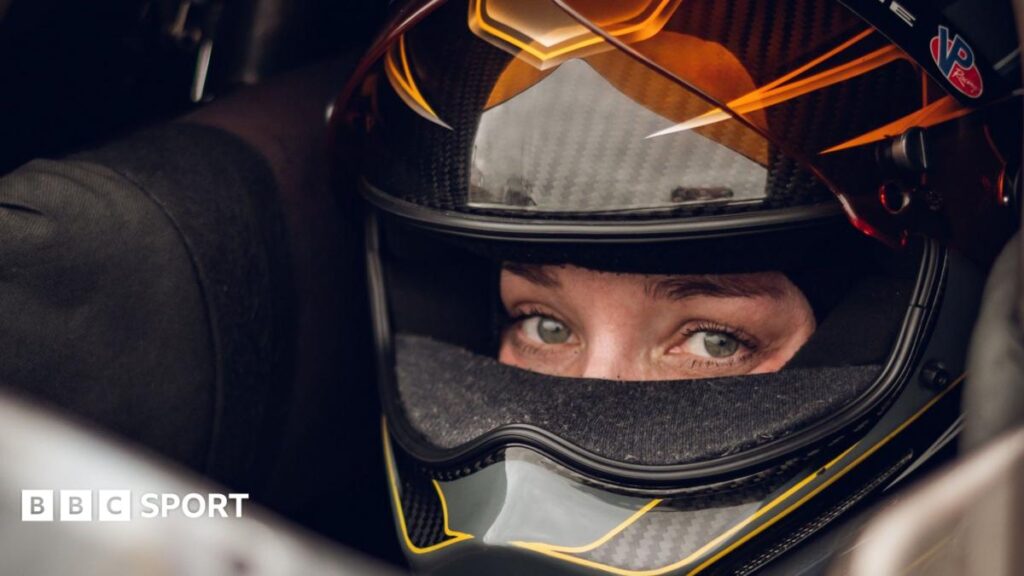
Top Fuel drag racing delivers thrills that make Formula 1 look almost leisurely. Cars explode off the line, accelerating past 300 mph in roughly four seconds while drivers endure greater g-forces than astronauts during a rocket launch. Flames belch from exhausts, the ground shakes, and the noise rivals a fighter jet taking off. Spectators wear ear defenders for good reason. This is the fastest form of motorsport on the planet, and it stands out for another reason: women keep winning major titles.
Swedish driver Susanne Callin, a two-time European champion, describes the sensation as the closest thing to being shot out of a cannon. In mid-September 2026 she secured her second successive European Top Fuel title at Santa Pod Raceway near Northampton. It marked the fourth consecutive year a female driver has claimed the European crown. Women have won seven of the past nine European Championships. Across the Atlantic, American driver Brittany Force previously held the world speed record and captured the US National Hot Rod Association (NHRA) Top Fuel championship in both 2017 and 2022.
Why Top Fuel Stands Apart
In most elite motorsport categories, female participation remains strikingly low. Campaign group More Than Equal reports that women make up about 10 percent of all motorsport participants and just 4 percent of elite drivers. Formula 1 has not seen a woman compete in a Grand Prix for half a century. Yet in this year’s US and European Top Fuel seasons, women accounted for roughly 20 percent of the drivers. More Than Equal has called drag racing the most gender-equal motorsport in the world.
Top Fuel cars run on powerful nitromethane fuel and race on a straight 1,000-foot (305-metre) strip. Two cars typically face off. The first second delivers a brutal surge from stationary to 100 mph. A second intense hit follows as the clutch fully engages. Precision, lightning reactions and raw courage are essential. Constant micro-adjustments keep the car straight at extreme speed. Brakes alone cannot stop the machines, so parachutes deploy at the finish line. Callin likens the abrupt deceleration to being kicked in the chest.
The highest official Top Fuel speed exceeds 346 mph, far beyond the 231 mph recorded in a Formula 1 Grand Prix. Safety has improved dramatically after fatal crashes in the mid-2000s, with race distances shortened and cockpits heavily protected. Drivers wear fire-resistant suits and sit in reinforced structures. Serious incidents remain rare, though the inherent risks demand deep respect for the machinery.
A Culture That Normalises Success
Experts point to culture rather than biology as the key reason women thrive. Fran Longstaff of More Than Equal highlights a continuous stream of visible female role models, accessible grassroots pathways, open pits and a family-oriented, collaborative atmosphere. Success by women has become normalised rather than treated as exceptional.
Shirley Muldowney paved the way decades ago. The first woman to earn a Top Fuel licence, she won the NHRA championship in 1977 and became the first driver of either gender to claim three titles, adding further victories in 1980 and 1982. She faced hostility yet persevered, earning lasting respect.
Many current stars come from racing families. Callin’s father and uncle raced competitively; her husband runs Santa Pod Raceway. Her daughters began in junior dragsters. Swiss rival Jndia Erbacher’s father is a three-time European champion and now manages her team. Brittany Force is the daughter of 16-time NHRA title winner John Force. The competitive edge coexists with mutual support. At one championship, Erbacher offered Callin spare parts after damage to her car. “We hate each other at the starting line, but we love each other at the finish line,” Erbacher has said.
Women have also returned successfully after career breaks for family. Callin stepped away for more than a decade to raise children and flourished after returning at 35. Finnish driver Anita Mäkelä has won the European title four times, three of them after a six-year pause focused on family and a chicken farm.
Lower Barriers and Global Reach
Financial barriers, while still significant, are lower than in single-seater formulas that demand multi-million-pound sponsorship packages. Track days allow newcomers to compete in ordinary cars. The European series features four events with limited prize money that mainly offsets costs. The larger US NHRA championship offers more substantial purses, including around $500,000 for the overall winner.
Beyond Europe and the United States, women continue to break ground. In India, Uvashri Kannadasan Balajeyanthi has defeated male rivals in the Valley Run series across multiple categories. Brazilian and South African scenes also feature rising female talent, while Middle Eastern events have raised profiles through popular media.
Callin has never felt underestimated because of her gender. She describes winning consecutive European titles as a massive achievement and already targets a historic third in a row—the first for any driver, male or female. In a sport defined by extreme speed and raw power, Top Fuel drag racing demonstrates that when culture, opportunity and role models align, women do not merely compete. They win, repeatedly, at the absolute limit of performance.
Follow for real-time match analysis!🚀
Discover more from DeeplyticAI
Subscribe to get the latest posts sent to your email.