
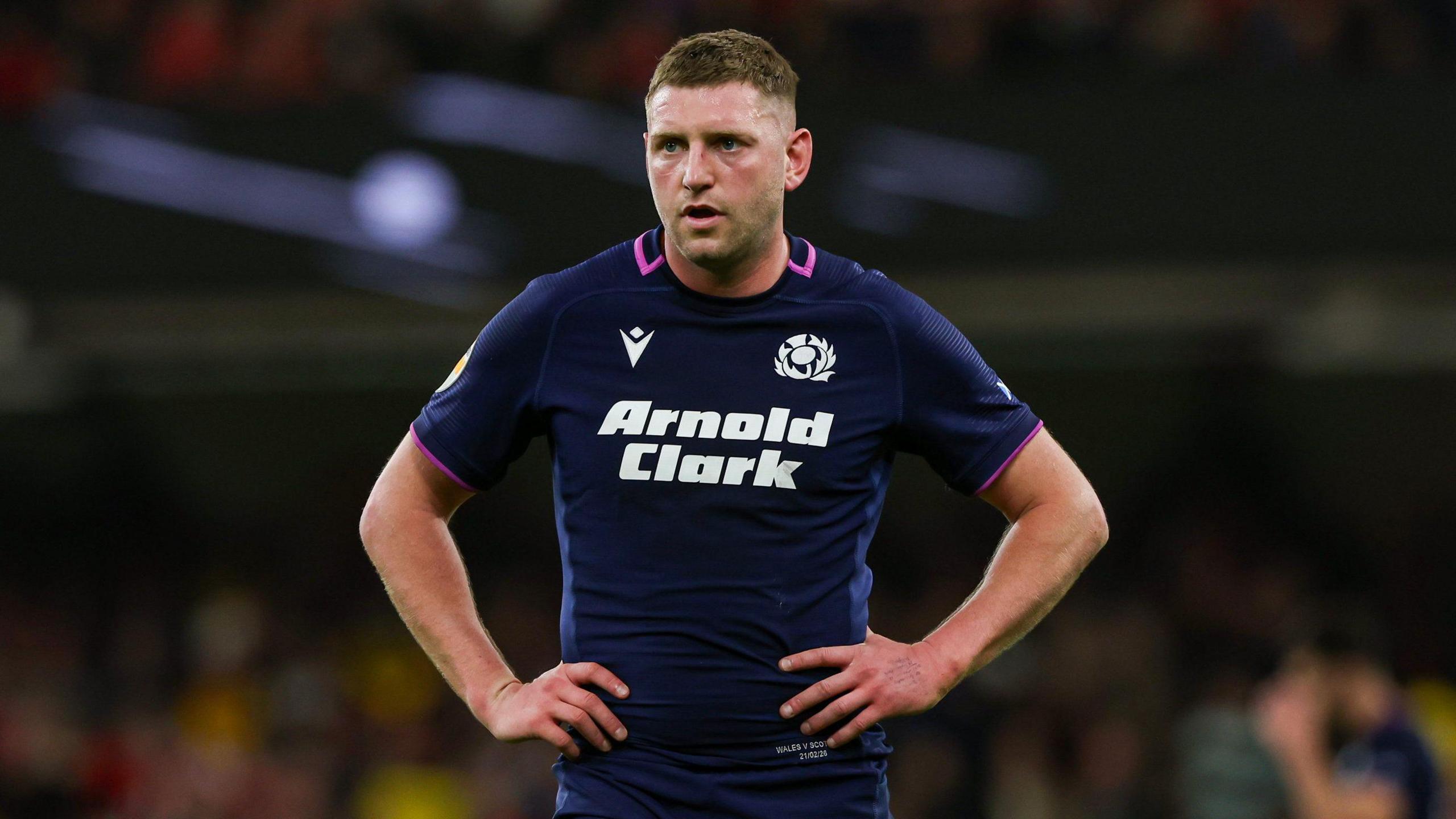
As Scotland prepare to host France in a defining Guinness Men’s Six Nations clash at Scottish Gas Murrayfield on March 7, 2026, all eyes turn to fly-half Finn Russell. At 33, the Bath playmaker stands on the cusp of his 100th cap for Scotland—currently on 92 or 93 depending on the latest count—and his legacy as one of the nation’s finest continues to grow. With Scotland second in the table after three rounds (two wins, one loss), trailing unbeaten France by four points, a victory could propel Russell toward a long-awaited title shot in the final round against Ireland in Dublin.
This fixture carries immense weight. France, the reigning champions chasing a potential Grand Slam, need only a bonus-point win to secure the crown with a game to spare. For Russell and Scotland, it’s a now-or-never moment in a campaign that has already delivered drama.
From Humble Beginnings to Test Stardom
Russell’s international journey began modestly. In spring 2015, at just 22 with five caps, he made his Six Nations debut at the Stade de France. Twenty-eight minutes in, with Scotland trailing 6-3, he lined up a straightforward drop-goal in the pocket—only to shank it wide. The Parisian crowd’s jeers marked a tough introduction to elite rugby.
Yet that early setback defined the resilience that has become Russell’s hallmark. Fast-forward to 2026, and he approaches his 14th encounter with France (four wins, nine losses). His record against them blends frustration and brilliance: early injuries, a red card in the historic 2021 Paris win (Scotland’s first there in 18 years), an intercept in 2023 followed by a masterclass recovery, and countless moments of magic during his Racing 92 years.
These clashes highlight Russell’s evolution—from a raw talent prone to risks to a calculated orchestrator who thrives under pressure.
What Teammates Say About Russell’s Unique Genius
Those who’ve shared the pitch with Russell praise his unflappable mindset. Winger Kyle Steyn notes, “Nothing ever flusters Finn. More than any player I’ve played with, he just has time on the ball.” Former teammate Duncan Weir adds that Russell “flushes” errors instantly, staying locked in the present.
Hooker Fraser Brown, who played alongside him for nine seasons at Glasgow and Scotland, highlights the hard work behind the flair: exceptional passing range, speed of pass, short and long kicking, and goal-kicking precision. “Some of it is natural, but other elements he’s worked incredibly hard at,” Brown says. The lazy “flashy and carefree” label ignores Russell’s intelligence, vision, and clear game understanding.
Above all, teammates emphasize his dual drive: to win while enjoying the process. “Everything he does is about winning and enjoying it while you’re doing it,” Brown explains. This philosophy excites fans and elevates performances.
Transforming Scotland’s Attack Era
Before Russell’s emergence, Scotland’s Six Nations attack struggled. From 2000 to 2015, they rarely reached double figures in tries across a tournament, averaging under six per campaign. Crossing the try line felt Herculean.
Russell’s arrival changed everything. In his second Six Nations, Scotland scored 11 tries; subsequent tournaments hit 14, 11, and 14 again. A dip to seven occurred during a 2020 estrangement with coach Gregor Townsend, but restoration brought 18 the next year. Nowadays, Scotland average around 14.5 tries per tournament, with 10 already in 2026’s first three games.
Credit extends to wingers like Darcy Graham, Duhan van der Merwe, and Kyle Steyn, centres Huw Jones and Sione Tuipulotu, full-back Blair Kinghorn, and scrum-halves Ben White and George Horne. However, Russell remains the conductor, drawing opposition focus and creating space. His presence has made Scotland far more potent and entertaining.
Recent Heroics and Leadership
Scotland’s 2026 campaign started with a loss to Italy, but rebounds followed: a 31-20 win over England and a thrilling 26-23 comeback in Wales. Russell’s fingerprints were everywhere—flicks, bursts, chips, and restarts that sparked momentum.
Post-Italy, his behind-the-scenes leadership helped reset the squad. On the field, he delivered magic: a flick to Jones against England, an impromptu burst and chip for Ben White’s try, and a quick-thinking restart for Graham in Cardiff.
Former Scotland full-back Chris Paterson observes Russell’s blend of knowledge and instinct: “He likes to make out that it all comes easily… but he does the work. One of his best attributes is his bravery in trusting his instincts.” Assistant coach Pete Horne recalls the “flow state” where time slows for truly dialed-in players like Russell.
The Ultimate Test Awaits
Saturday’s showdown demands Russell at his gobsmacking best—poking defenses, controlling tempo, surprising with vision, and accumulating points. France, with their potent attack, will target him relentlessly. Yet Russell relishes such battles.
Whether this becomes the Finn Russell Six Nations—propelling Scotland to glory—hinges on his performance. Win, and the title dream lives; lose, and an opportunity slips away at 33.
Regardless of the outcome, Russell’s case as Scotland’s greatest strengthens. Brave under pressure, brilliant in execution, and beloved for thrilling rugby, he has elevated the team and captivated fans like few others. As Murrayfield awaits, one thing is certain: when Finn Russell plays, excitement follows.

