
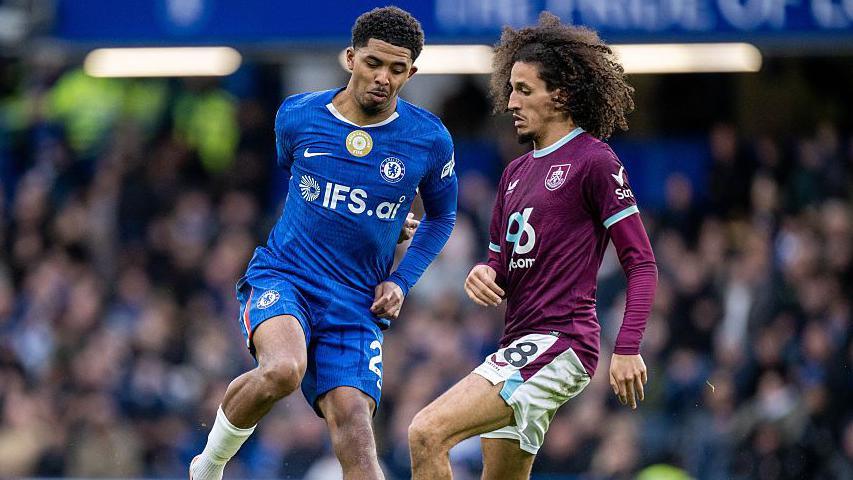
The football community has been forced to confront another stark reminder of racism’s persistent presence in the sport after Chelsea defender Wesley Fofana and Burnley midfielder Hannibal Mejbri were subjected to racist abuse on social media following their Premier League clash on Saturday, February 22, 2026. The disturbing incidents have reignited urgent conversations about accountability, education, and the effectiveness of anti-racism campaigns in football.
Players Share Evidence of Abuse on Social Media
Following Chelsea’s 1-1 draw with Burnley at Stamford Bridge, both players took to Instagram to expose the vile messages they received. Fofana, who was sent off for a second yellow card during the match, shared multiple screenshots of racist private messages sent to his Instagram account. The French defender accompanied the evidence with a powerful statement expressing his frustration with the lack of progress in combating racism.
“2026, it’s still the same thing, nothing changes. These people are never punished,” Fofana wrote. His words carried particular weight as he questioned the effectiveness of high-profile anti-racism campaigns, adding, “You create big campaigns against racism, but nobody actually does anything.”
Tunisia international Mejbri similarly shared evidence of offensive messages he received, posting an image of the abuse along with a plea for education. “It’s 2026 and there are still people like that. Educate yourself and your kids, please,” the Burnley midfielder wrote, emphasizing the role of education in breaking cycles of discrimination.
Club Responses: Chelsea and Burnley Stand United Against Racism
Both Premier League clubs responded swiftly and forcefully to support their players. Chelsea issued a comprehensive statement declaring they were “appalled and disgusted” by the “vile” abuse directed at Fofana. The London club emphasized that such behavior is “abhorrent and will not be tolerated” and runs contrary to everything the club represents.
“We stand unequivocally with Wes. He has our full support, as do all our players who are too often forced to endure this hatred simply for doing their job,” Chelsea stated. The club committed to working with relevant authorities and social media platforms to identify perpetrators and pursue the strongest possible action against them.
Burnley matched Chelsea’s condemnation with equal vigor, describing themselves as “disgusted” by the abuse targeting Mejbri. The Lancashire club confirmed they had reported the posts to Meta, Instagram’s parent company, and expressed expectations for strong support from the social media giant, the Premier League, and law enforcement authorities.
“There is no place for this in our society and we condemn it unreservedly,” Burnley’s statement read. The club reaffirmed its zero-tolerance approach to discrimination and assured that Mejbri would receive full backing from both the club and Burnley supporters, many of whom had already condemned the abuse publicly.
The Premier League’s Position and Promised Action
The Premier League added its voice to the chorus of condemnation, promising that individuals identified and found guilty of discrimination would face the “strongest possible consequences.” These consequences include lifetime stadium bans and potential criminal prosecution, highlighting the severity with which football’s governing bodies are treating online abuse.
The league’s response underscores the ongoing challenge of translating anti-racism rhetoric into effective action—a concern explicitly raised by Fofana in his social media post.
A Wider Pattern: Recent Incidents of Racial Abuse in Football
The abuse directed at Fofana and Mejbri represents just the latest in a troubling series of racist incidents plaguing football at all levels. Earlier in the week, UEFA launched an investigation into alleged racial abuse of Real Madrid winger Vinicius Jr during a Champions League match against Benfica, demonstrating that the problem extends beyond English football.
A BBC investigation conducted in November 2025 revealed the shocking scale of online abuse, documenting more than 2,000 extremely abusive social media posts—including death and rape threats—directed at managers and players in the Premier League and Women’s Super League during a single weekend.
The 2025-26 season has already witnessed several high-profile incidents. In August, the season-opening Premier League match between Liverpool and Bournemouth was halted in the first half after then-Cherries forward Antoine Semenyo reported racial abuse from someone in the Anfield crowd. A Liverpool man has denied the allegations, with his trial scheduled for April 2026.
In January 2026, Newcastle United contacted police after midfielder Joe Willock received what the club described as “disgusting” racial abuse and “deeply disturbing threats” on social media. Similar incidents have affected Tottenham forward Mathys Tel following the Super Cup penalty shootout defeat to Paris St-Germain in August, and England defender Jess Carter during Euro 2025 in July.
The Challenge of Accountability and Prevention
The recurring nature of these incidents raises critical questions about the effectiveness of current measures to combat racism in football. Despite high-profile campaigns, mandatory education programs, and promises of severe consequences, players continue to face abuse both in stadiums and online.
Social media platforms face particular scrutiny for their role in facilitating anonymous abuse. While companies like Meta have implemented reporting mechanisms and claim to remove hateful content, the ease with which abusers can create new accounts or send private messages continues to challenge enforcement efforts.
The involvement of law enforcement agencies represents an escalation in the fight against online racism, with clubs increasingly willing to pursue criminal prosecution rather than relying solely on platform moderation or stadium bans.
Moving Forward: Education and Systemic Change
Mejbri’s call to “educate yourself and your kids” highlights a crucial element in combating racism—the need for generational change through education. While punitive measures remain important for accountability, many within football recognize that lasting change requires addressing the root causes of discriminatory behavior.
As football continues to grapple with these challenges in 2026, the experiences of Fofana and Mejbri serve as a sobering reminder that despite progress in some areas, the sport still has significant work ahead in creating an environment free from racial abuse. The test now lies in whether the strong words of condemnation from clubs and governing bodies will translate into meaningful action that protects players and holds perpetrators accountable.

