Formula 1 Q&A: Verstappen’s McLaren Future, Spa-Francorchamps, and the 2026 Championship Battle
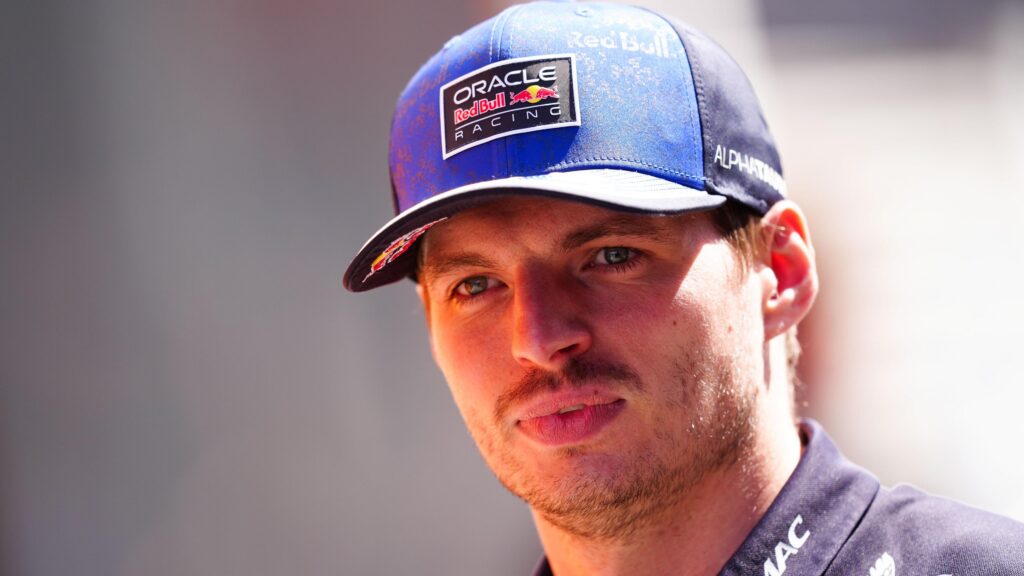
As Formula 1 prepares for this weekend’s Belgian Grand Prix, the 2026 drivers’ championship has tightened significantly. Mercedes’ Kimi Antonelli currently holds a 25-point lead over his teammate George Russell, while Ferrari’s Lewis Hamilton trails a further seven points behind. With the season reaching its critical midpoint, BBC Sport F1 correspondent Andrew Benson addresses the most pressing questions from fans regarding driver markets, legendary longevity, iconic circuits, and calendar uncertainties.
Could Max Verstappen Really Move to McLaren?
A common question among fans is whether Max Verstappen could ever thrive at McLaren, given the team’s strict policy of driver equality. McLaren Racing CEO Zak Brown has publicly dismissed the notion, stating that recent talks with Verstappen’s management “didn’t go anywhere” and emphasizing his satisfaction with current drivers Lando Norris and Oscar Piastri.
However, sources indicate that Verstappen and his representatives are actively exploring their options, and McLaren remains a viable consideration. Although Verstappen is under contract with Red Bull until the end of 2028, a performance clause is expected to allow him an exit at the conclusion of this season, though this clause does not activate until October.
If McLaren were to pursue Verstappen, they would first need to part ways with one of their current drivers. The fundamental hurdle remains McLaren’s philosophy of fairness, which allows drivers to race freely unless specific, pre-determined circumstances arise. While this contrasts with Red Bull’s traditional hierarchy, it mirrors the approach used by Mercedes, another team with which Verstappen has held discussions. Ultimately, any team signing Verstappen must accept a high-stress, no-compromise environment. Yet, for a team like McLaren, which is currently navigating the inherent disadvantages of being a customer engine outfit, securing a driver who guarantees the highest possible performance on a consistent basis could be an irresistible proposition.
The Remarkable Longevity of Hamilton and Alonso
With Lewis Hamilton, now 41, recently securing a victory for Ferrari, and 44-year-old Fernando Alonso consistently outperforming younger teammates, fans wonder if modern cars are simply easier to drive. The reality is nuanced. While modern Grands Prix are undeniably less physically punishing than the mid-2000s era of refueling and flat-out racing, piloting an F1 car remains a highly demanding physical experience. Both veterans maintain exceptional physical conditioning.
The true limiting factor for aging drivers is mental, not physical. Sustaining the absolute commitment and desire required to push a machine to its limit in a dangerous environment is incredibly rare. Hamilton and Alonso continue to deliver because they remain deeply in love with the sport, combining this unwavering mental fortitude with their historically exceptional baseline talent. The fact that so few drivers manage to replicate this longevity only highlights how extraordinary their current achievements truly are.
Why Spa-Francorchamps Remains the Ultimate F1 Challenge
Spa-Francorchamps is widely revered as one of the all-time great circuits, and for good reason. Whether in its original eight-mile configuration or the modern 4.3-mile layout, it offers a unique combination of flowing, high- and medium-speed corners that few tracks can match. On the current calendar, only Japan’s Suzuka presents a comparable challenge.
The circuit’s most famous sequence, Eau Rouge and Raidillon, remains a daunting 200mph test of courage, even if modern aerodynamics have made it “easy flat” in dry qualifying conditions. Furthermore, the high-speed downhill double left-hander at Pouhon continues to demand absolute precision. As former driver Mark Webber famously noted, a lap of Spa “feels like you are going somewhere,” evoking the organic flow of classic road courses.
Crucially, Spa retains a genuine jeopardy factor. The inherent dangers, particularly in the wet Ardennes conditions, are well documented and deeply respected by the drivers. It is no coincidence that Spa is Max Verstappen’s favorite circuit, nor is it surprising that Mercedes boss Toto Wolff describes racing there as a reminder that Formula 1 remains a “gladiators’ sport.”
Geopolitical Uncertainty and the 2026 F1 Calendar
Recent escalations in Middle Eastern tensions have raised concerns about the viability of the season-ending races in Qatar and Abu Dhabi. Currently, Formula 1 management remains relatively relaxed about these events. The logistical pinch point for freight departure to the region does not occur until late September or early October, providing a window for the situation to stabilize.
A more immediate scheduling challenge involves the potential rescheduling of the Bahrain Grand Prix into the gap between the Azerbaijan Grand Prix (September 24-26) and the Singapore Grand Prix (October 9-11). For this to materialize, the FIA and Formula 1 would need to be entirely comfortable with regional security by the end of July. At present, such a rearrangement appears highly unlikely.
Unpacking Kimi Antonelli’s Silverstone Setback
Finally, fans have asked for clarity regarding Kimi Antonelli’s mechanical failure at the British Grand Prix. Antonelli’s victory hopes unraveled when his front-left wheel shield—a carbon component designed to shape airflow for cooling and aerodynamics—failed and became lodged in the wheel assembly.
While the Mercedes pit crew managed to clear the obstruction during his second stop, the car had already lost a significant amount of downforce, severely compromising its performance. The team has since determined that the failure was primarily caused by the aggressive kerb-riding speeds characteristic of the Silverstone circuit.
Although it was a stroke of bad luck that cost Antonelli a likely victory over Ferrari’s Charles Leclerc, teammate George Russell rightly pointed out that the incident effectively balanced the reliability issues both Mercedes drivers have faced this season. Consequently, Antonelli’s current 25-point championship lead remains a fair and accurate reflection of their respective campaigns thus far.
Follow for real-time match analysis!🚀
Discover more from DeeplyticAI
Subscribe to get the latest posts sent to your email.