France Cruise into Semi-Finals: Could This Be the Best Les Bleus Team Ever?
France have once again showcased their dominance on the global stage by advancing to the semi-finals of the 2026 FIFA World Cup. With a convincing 2-0 victory over Morocco on Thursday, Les Bleus became the first team to reach the last four, reinforcing their status as strong favorites to lift the trophy on July 19. This performance builds on their successes in 1998 and 2018, prompting discussions about whether Didier Deschamps has assembled the finest French squad in history.
As the tournament progresses, France’s blend of attacking talent and defensive solidity continues to impress observers worldwide.
Dominant Display Against Morocco Secures Semi-Final Spot
In Boston, France controlled proceedings from the outset, registering 22 attempts compared to Morocco’s five. Goals from Kylian Mbappé and Ousmane Dembélé in a six-minute second-half spell sealed the win. Mbappé, who had a first-half penalty saved, now sits level with Lionel Messi as the tournament’s top scorer with eight goals, leading the Golden Boot race due to superior assists. Dembélé added his fifth strike of the competition.
This result marked France’s sixth clean sheet in the tournament, with only two goals conceded overall. Their attacking output stands unmatched, as they have netted 16 times—more than any other side. Such efficiency underscores a well-balanced team capable of controlling matches through multiple phases of play.
Attacking Depth Defines a Historic Generation
France’s squad features an extraordinary array of forward options. Alongside Mbappé and Dembélé, players like Michael Olise, Bradley Barcola, Désiré Doué, Rayan Cherki, and Jean-Philippe Mateta provide immense creativity and goal threat. This depth allows for fluid rotations and tactical flexibility, making Les Bleus difficult to contain.
Former Arsenal and France midfielder Patrick Vieira highlighted this richness. Speaking after the Morocco win, he described the current group as potentially one of the strongest attacking units ever assembled for Les Bleus. The variety of threats creates constant problems for opponents, who struggle to mark multiple danger men simultaneously.
This attacking prowess complements a solid defensive foundation. Goalkeeper and backline organization have limited concessions, providing a platform for forward players to express themselves. Such harmony between lines has been a hallmark of successful French teams across eras.
Deschamps’ Final Tournament and Legacy Building
Didier Deschamps, in his last campaign as manager since taking charge in 2012, has guided France to another deep run. Victories in the 2018 World Cup and near-misses in subsequent finals demonstrate sustained excellence. A third World Cup title would cement this squad’s place among the nation’s greatest.
Deschamps’ tactical acumen shines through consistent results. France began the tournament ranked third globally, behind Argentina and Spain, yet have outperformed expectations with ruthless efficiency. Their path included strong showings against Senegal, Iraq, Norway, Sweden, Paraguay, and now Morocco.
Ian Wright and Roy Keane, among others, have praised the side’s quality. Wright called them one of the clearest favorites he has witnessed, while Keane noted their multiple gears and ability to punish transitions. This combination of individual brilliance and collective strength positions France favorably.
Semi-Final Outlook and Potential Challenges
France await the winner of Spain versus Belgium in the semi-finals on Tuesday in Dallas. Spain, unbeaten and yet to concede, represent a stylistic contrast with their possession game. However, experts like Vieira believe Les Bleus hold the edge, citing superior current form compared to Spain’s trajectory.
Potential vulnerabilities exist, as Pat Nevin observed occasional lapses when cruising. Complacency could prove costly against technically gifted opponents. Nevertheless, France’s depth and experience provide buffers against such risks.
Reaching the final would mark a third consecutive appearance, an extraordinary feat. Two more wins separate them from history, with the final in New Jersey offering a stage for crowning achievement.
Why This Team Stands Out Historically
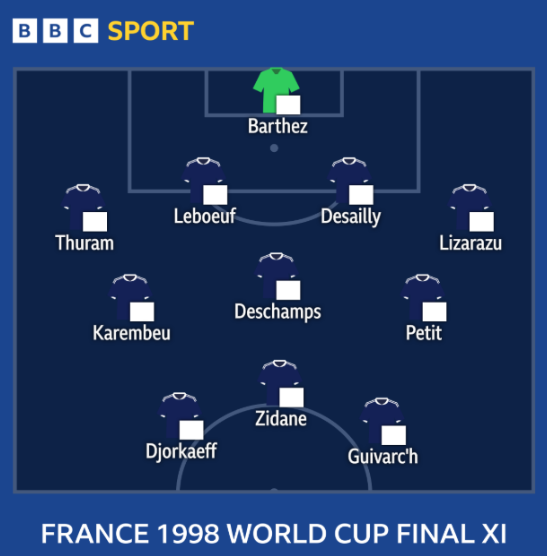
Comparisons to past French sides are inevitable. The 1998 winners featured icons like Zinedine Zidane, while 2018 blended youth and experience. The current iteration combines star power with tactical maturity, potentially surpassing predecessors in attacking options and balance.
Vieira’s assessment resonates widely. A squad this talented, performing at this level, justifies claims of greatness. Success would validate years of development under Deschamps and inspire future generations.
For fans of international football, France’s campaign offers compelling viewing. Their progression through the 2026 World Cup exemplifies excellence, resilience, and ambition. As semi-finals loom, anticipation builds around whether this group can etch their names alongside the legends.
The tournament’s remaining stages promise drama. France enter as favorites, yet football’s unpredictability ensures no outcome is guaranteed. Their journey thus far, marked by flair and efficiency, has already enriched the competition and captivated audiences globally.
Follow for real-time match analysis!🚀
Discover more from DeeplyticAI
Subscribe to get the latest posts sent to your email.