Gianni Infantino and the FIFA Controversy: Why the Balogun Decision Won’t Cost Him the Presidency
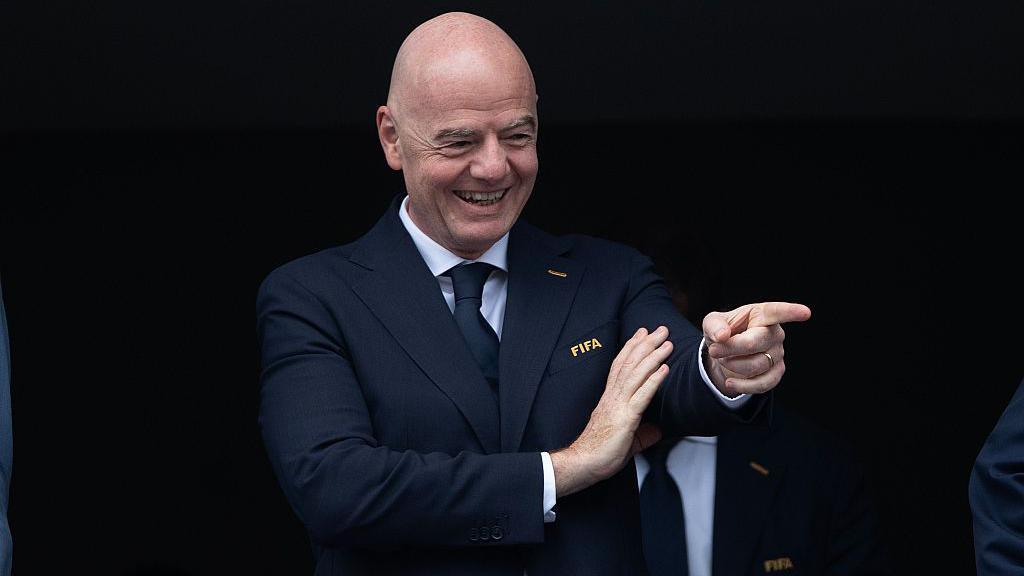
Gianni Infantino has served as the FIFA president for a decade, and as he approaches next year’s re-election, his tenure has become increasingly defined by debate. From the introduction of the heavily criticized FIFA Peace Prize to the vastly inflated ticket prices at the 2026 World Cup, the governing body has faced relentless scrutiny. However, the unprecedented decision to cancel Folarin Balogun’s red-card suspension for the United States’ last-16 tie against Belgium has arguably become the most significant FIFA controversy of the tournament.
The Balogun Red Card Cancellation Sparks Outrage
Folarin Balogun has been the standout star for the co-hosts, scoring three goals during the tournament. After being sent off against Bosnia-Herzegovina, standard World Cup rules dictated he would miss the crucial knockout match. Astonishingly, despite the strict no-appeal policy for red cards, FIFA lifted the suspension.
Following a baffling 871-word statement that offered little transparency, the true catalyst was revealed. US President Donald Trump publicly confirmed that he personally asked Infantino to review the situation. While Infantino vehemently rejected any suggestions of political interference, the perception of a “presidential pardon” has sent shockwaves through the footballing world. Consequently, this FIFA controversy has ignited a fierce debate regarding the integrity of the sport’s governing body.
European Backlash and the Threat of Political Interference
A Deepening Institutional Rift
The fallout from the Balogun decision has created immense pressure, particularly from Europe. UEFA strongly opposed the move, stating that FIFA had “crossed a red line” by making an unjustifiable decision. Furthermore, prominent football figures have voiced their disgust. Former Liverpool manager Jurgen Klopp called the situation “madness,” while former FIFA president Sepp Blatter reminded the world that football must never become a playground for political power.
This backlash highlights a glaring double standard. FIFA’s statutes strictly forbid political interference, routinely suspending nations like Pakistan for government involvement in their football associations. Yet, when it comes to the relationship between Infantino and the US President, critics argue the rules appear remarkably flexible.
A History of FIFA Controversy Under Infantino’s Leadership
The Peace Prize and Administrative Chaos
The Balogun incident is merely the latest chapter in a long saga of administrative chaos. The controversy began brewing long before the tournament started, notably when Infantino bestowed the inaugural FIFA Peace Prize upon Donald Trump during the World Cup draw. Human rights groups and dozens of MEPs have formally complained, arguing this violated FIFA’s political neutrality, yet the governing body has remained silent.
Moreover, the tournament itself has been plagued by bizarre decisions. Somali referee Omar Artan was initially denied US entry, leading to accusations that Infantino had lost control of his own World Cup. Similarly, fans endured five hours of confusion when FIFA arbitrarily changed, and then reversed, the kick-off time for England’s match against Mexico. Through it all, transparency has been noticeably absent, leaving the global football community frustrated.
The Global Reality: Why Infantino Remains Untouchable
Financial Power and Voting Mathematics
Despite the fierce European backlash, Gianni Infantino’s position is remarkably secure. The reality is that while UEFA represents the wealthy elite of the footballing world, the rest of the globe relies heavily on FIFA’s financial distribution. Through the FIFA Forward program, Infantino has funded vital development projects worldwide.
Furthermore, the expanded 48-team World Cup format has provided unprecedented opportunities for emerging nations. Countries like Cape Verde, Curacao, Jordan, and Uzbekistan are living their dreams on the grandest stage, thanks to the 16 additional qualification spots. Financially, the tournament is a juggernaut, with FIFA expected to generate a staggering $9 billion in revenue this year. This immense wealth cements Infantino’s popularity across developing football confederations.
When examining the voting mathematics for the upcoming 2027 presidential election, Infantino’s dominance becomes undeniable. He requires 106 votes to secure re-election. Currently, he already commands the unanimous backing of CONMEBOL (10 votes), the Confederation of African Football (54 votes), and the Asian Football Confederation (47 votes).
Therefore, with 111 votes already secured, the European backlash is ultimately a moral victory rather than a political threat. While UEFA may continue to criticize this ongoing FIFA controversy, the global footballing landscape ensures that Gianni Infantino remains firmly in control.
Follow for real-time match analysis!🚀
Discover more from DeeplyticAI
Subscribe to get the latest posts sent to your email.