
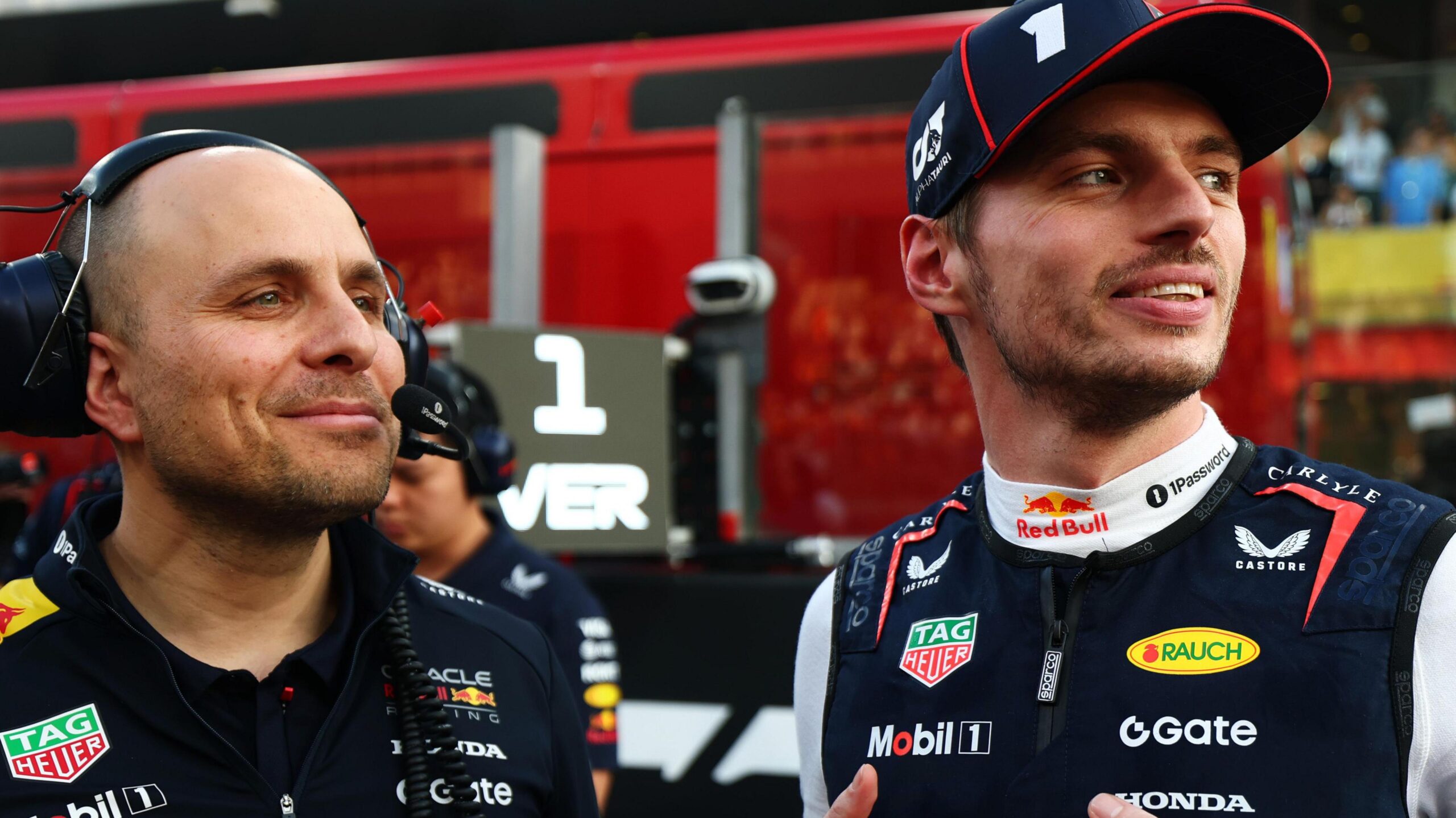
Red Bull Race Engineer Lambiase Moves to McLaren to Strengthen Race Operations
Gianpiero Lambiase, one of Red Bull Racing’s most experienced and respected engineers, has agreed to join McLaren from the start of the 2028 Formula 1 season. The Briton, best known as Max Verstappen’s long-time race engineer, will take on a senior role supporting McLaren team principal Andrea Stella, with the exact title and responsibilities still being finalised internally.
This move represents another significant loss for Red Bull and a strategic boost for McLaren as both teams navigate an increasingly complex and competitive Formula 1 landscape. For fans and observers following Formula 1 team news and engineering personnel changes, Lambiase’s departure highlights the intense battle for top technical talent across the grid.
Lambiase’s Prominent Role at Red Bull and Close Bond with Verstappen
Lambiase has been a central figure at Red Bull since joining the team in 2015. He has served as Max Verstappen’s race engineer since the Dutchman’s debut with the squad at the 2016 Spanish Grand Prix. Over the past decade, the pair have built one of the strongest driver-engineer partnerships in modern Formula 1, contributing to Verstappen’s four consecutive drivers’ championships from 2021 to 2024.
As Red Bull’s current head of race engineering, Lambiase has played a key part in the team’s operational success during their dominant hybrid-era period. His technical insight, calm communication style under pressure, and deep understanding of race strategy have been instrumental in many of Verstappen’s victories and Red Bull’s constructors’ title successes.
The move comes at a time of significant upheaval at Red Bull. Since the beginning of 2024, the team has lost several high-profile figures, including chief technical officer Adrian Newey and sporting director Jonathan Wheatley. Former team principal Christian Horner was dismissed in July 2025. Lambiase’s departure adds to the growing list of senior personnel exiting the Milton Keynes-based outfit.
McLaren’s Strategic Recruitment Drive Continues
McLaren has been actively strengthening its operational and technical structure in recent years. Lambiase will become the third senior Red Bull figure to join the team in a short period. Rob Marshall arrived as chief designer at the start of 2024, and former Red Bull head of race strategy Will Courtenay was appointed sporting director in January 2026.
Lambiase will integrate into McLaren’s existing race-operations support framework, which already includes Courtenay and racing director Randy Singh. His role is designed to ease the workload on team principal Andrea Stella, who currently balances leadership responsibilities with significant technical oversight. The team’s engineering structure features three technical directors — Peter Prodromou (aerodynamics), Mark Temple (performance), and Neil Houldey (engineering) — plus Marshall, all reporting to Stella on car design matters.
By bringing in Lambiase, McLaren aims to further professionalise its trackside and race operations. This recruitment reflects the team’s ambition to compete consistently at the front of the grid as Formula 1 evolves with new regulations and greater technical complexity.
Reports suggesting Lambiase’s arrival is a precursor to Stella departing for Ferrari have been dismissed by McLaren insiders as unfounded. The focus remains on building a robust internal structure capable of sustaining long-term success.
Implications for Both Teams and the Wider Formula 1 Landscape
For Red Bull, Lambiase’s exit represents another challenge to their operational stability. The team must now identify and develop a successor capable of maintaining the high standards set during their recent championship-winning years, particularly in supporting Max Verstappen.
Verstappen himself has spoken recently about his future in Formula 1, expressing some dissatisfaction with the direction of the sport and the characteristics of the current generation of cars. While he has not indicated any immediate departure, the loss of key personnel around him adds another layer of uncertainty to Red Bull’s long-term planning.
McLaren, meanwhile, continues to show clear intent to challenge at the very highest level. Under Stella’s leadership, the team has made significant strides in recent seasons, and targeted recruitment of proven talent like Lambiase signals a commitment to excellence across all areas of the operation. Strengthening race operations is particularly important as Formula 1 becomes ever more demanding in terms of strategy, data analysis, and real-time decision-making.
What Lambiase’s Move Means for the Future of Formula 1 Team Dynamics
Personnel movement between rival teams has always been part of Formula 1, but the current wave of departures from Red Bull to McLaren highlights the intense competition for expertise in an era of rapid technological advancement. As the sport prepares for new power unit regulations and evolving aerodynamic rules, experienced engineers like Lambiase are highly sought after for their ability to translate complex data into on-track performance.
For online readers interested in Formula 1 team news, Red Bull updates, and McLaren developments, this story illustrates the strategic importance of building a strong operational backbone. Success in modern Formula 1 depends not only on car design and driver talent but also on seamless coordination between engineering, strategy, and race execution.
Lambiase’s arrival at McLaren from 2028 will be watched closely. His proven track record alongside one of the sport’s finest drivers gives him valuable experience that could help elevate McLaren’s race-day performance. At the same time, Red Bull must adapt to further change as they seek to maintain their competitive edge.
The move adds an intriguing subplot to the 2026 season and beyond. As teams prepare for the next regulatory cycle, the battle for technical and operational talent is likely to intensify. Lambiase’s transition from Red Bull to McLaren is a significant chapter in that ongoing story, reflecting the fluid and highly competitive nature of Formula 1 team building.

