How much to stake: Kelly sizing for prediction markets, simply
Most traders who find a real edge still lose money for one reason: they put too much on a single idea. One bad run and the bankroll is gone before the edge has time to work. The fix is old and simple — size every trade to the edge.
The Kelly rule in one line
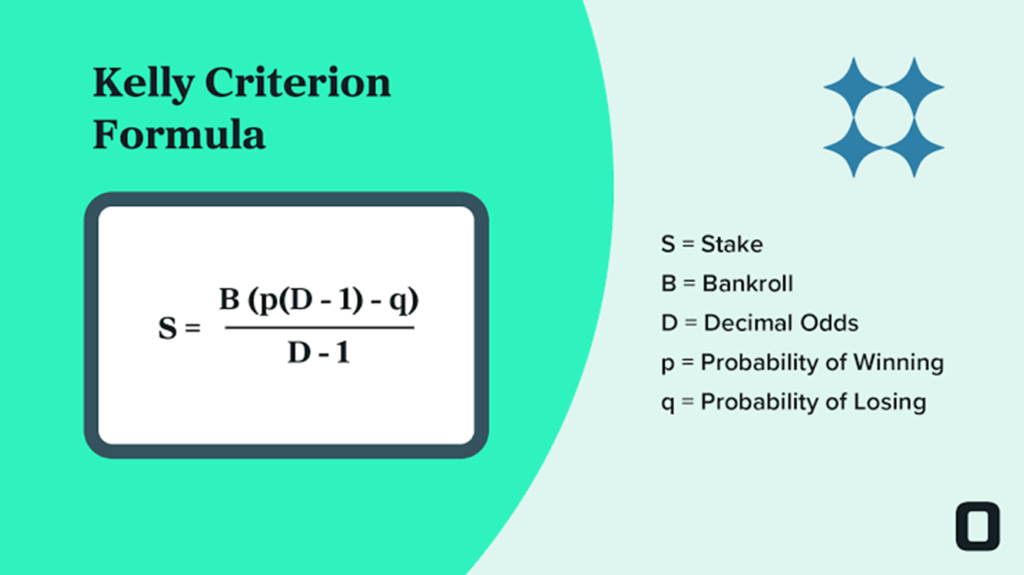
On a prediction market you buy a share at price c that pays $1 if the outcome happens. If you think the real probability is p, the Kelly rule says the share of your bankroll to put in is:
f = (p − c) ÷ (1 − c)
No edge (p equal to c) means f is zero — do not trade. A bigger edge or a cheaper price means a bigger stake.
A worked example
The market sells YES at 41¢. You think the real chance is 45%.
f = (0.45 − 0.41) ÷ (1 − 0.41) = 0.04 ÷ 0.59 ≈ 6.8%
Full Kelly says put 6.8% of your bankroll on it. With $2,000 that is about $136.
Why we never use full Kelly
Kelly assumes you know p exactly. You never do. If your 45% is really 42%, full Kelly is already far too big, and the swings are brutal even when you are right — halving your bankroll along the way is normal. Professionals use a fraction:
- Quarter Kelly keeps most of the long-run growth with a fraction of the swings. In the example: about 1.7%, or $34.
- Eighth Kelly for estimates you trust less — for example a model or an AI judgement rather than a liquid market price.
- A hard cap — no single trade above 5% of the bankroll, however good it looks.
Two more limits
- The order book. If the edge only holds for the first $300 of the book, a $500 stake buys the rest at fair value or worse. Stake the smaller of the two.
- Correlated trades. Three signals on the same match are one bet, not three. Size them together.
How DeeplyticAI does it
Where a signal has a probability behind it, the Before you trade block suggests a stake: a quarter of Kelly when the probability comes from sharp bookmakers or another exchange, an eighth when it comes from our AI estimate, never more than 5%. Enter your bankroll once and it shows the amount in dollars — capped by what the order book can actually fill. Signals without a probability, like whale moves, show liquidity only.
Analysis, not financial advice. Only trade money you can afford to lose.
Discover more from DeeplyticAI
Subscribe to get the latest posts sent to your email.