
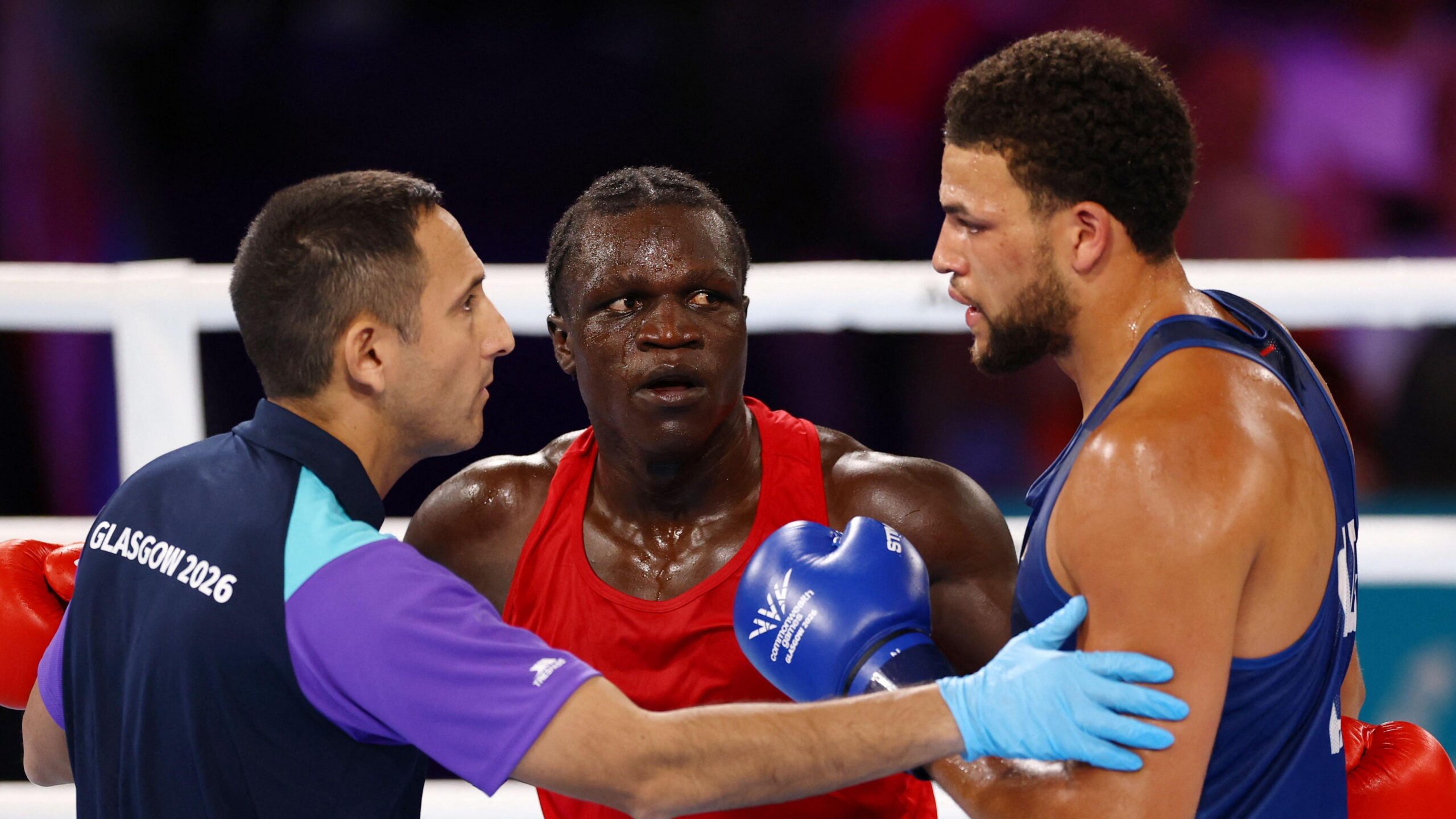
Ugandan boxer Aziz Abdul, the grandson of notorious dictator Idi Amin, was disqualified from his super-heavyweight bout at the Commonwealth Games in Glasgow after appearing to deliberately headbutt his English opponent Damar Thomas. The 25-year-old’s controversial exit from the ring was compounded by post-fight comments in which he alleged racial bias from the judges, claiming they were against him because he is a “black African.”
The Disqualification: What Happened in the Ring
A Third-Round Incident Ends Abdul’s Medal Hopes
The decisive moment came during the third round of the super-heavyweight contest, when Abdul lifted his head into Thomas’ chin as the pair grappled at close range. The referee immediately intervened, disqualifying the Ugandan and awarding the victory to his English opponent. Thomas is now guaranteed at least a bronze medal.
Crucially, the headbutt did not occur in isolation. Abdul had already received warnings in both of the preceding rounds and was trailing on all three judges’ scorecards at the time of the disqualification. He had been pursuing Uganda’s first Commonwealth boxing medal since the 1990 Games in Auckland—an achievement that would have been guaranteed had he defeated Thomas.
Abdul’s Defense and Allegations of Bias
In the aftermath, Abdul mounted a vigorous defense of his actions while simultaneously leveling serious accusations against the officiating panel. “All I can say about this is the decision is not right, I am not happy,” he stated. “He elbowed me. He caught me with the elbow. It was not intentional. I was trying to come back.”
Abdul further insisted: “How can I headbutt someone? I would not.” However, his most contentious remarks concerned what he perceived as systemic favoritism toward his opponent. “When you watch the previous fights of England, their boxers create a lot of fouls,” he argued. “I land a heavy punch on him, they never count. Instead of counting, they deduct me. I am black African. He is in homeland.”
He concluded with a bleak assessment: “He was the person they wanted to win. He was the winner before. I knew if I did not get a knockout, I could not win the fight.” BBC Sport has contacted Commonwealth Games organisers and World Boxing for a response to Abdul’s comments.
Thomas Responds with Grace
Looking Ahead to Friday’s Bout
For Damar Thomas, the manner of his victory brought little satisfaction. The Englishman acknowledged that the disqualification was “not the way” he wanted to win but demonstrated a forward-looking mindset. “I can’t change what happened today, but I can control how I box on Friday,” Thomas said, turning his attention to the next stage of the competition.
The Shadow of Idi Amin: A Controversial Legacy
“King of Scotland” and the Butcher of Uganda
Before the bout, Abdul had told the BBC that he aspired to become the new “King of Scotland”—a direct reference to his grandfather’s infamous self-proclamation in 1976. Idi Amin, who seized power in a military coup in 1971, presided over a brutal regime during which an estimated half a million people were killed. Widely known as the “Butcher of Uganda,” Amin also harbored a peculiar fascination with Scotland, developed after serving in the King’s African Rifles during his twenties.
At the height of his regime, Amin was fond of wearing a kilt and playing the bagpipes. His eccentric declarations and tyrannical rule later inspired the Oscar-winning film The Last King of Scotland, starring Forest Whitaker and James McAvoy. Amin was himself a boxer in his youth, a fact that adds an additional layer to his grandson’s presence in the sport.
Abdul’s Complex Relationship with His Heritage
Aziz Abdul, who never met his grandfather, has navigated a complicated public relationship with the Amin legacy. In a previous interview, he stated that he was “inspired” by Amin, though it remained unclear whether he was referring to his grandfather’s boxing exploits or other aspects of his life. When pressed by the BBC on whether he was proud to be the dictator’s grandson, Abdul declined to answer directly, though he did address how he feels when linked to someone with such a sinister historical reputation.
The Broader Context: Commonwealth Games Boxing
This incident adds a controversial chapter to the Commonwealth Games boxing competition in Glasgow, where the sport continues to grapple with questions around officiating consistency and athlete conduct. The disqualification ensures that Thomas advances, while Abdul returns home empty-handed, his medal ambitions unfulfilled and his public statements likely to draw further scrutiny from boxing’s governing bodies.
Whether Abdul’s allegations of bias will prompt any formal review remains to be seen, but the incident has undeniably overshadowed what should have been a straightforward sporting contest, drawing global attention for reasons that extend far beyond the boxing ring.
