
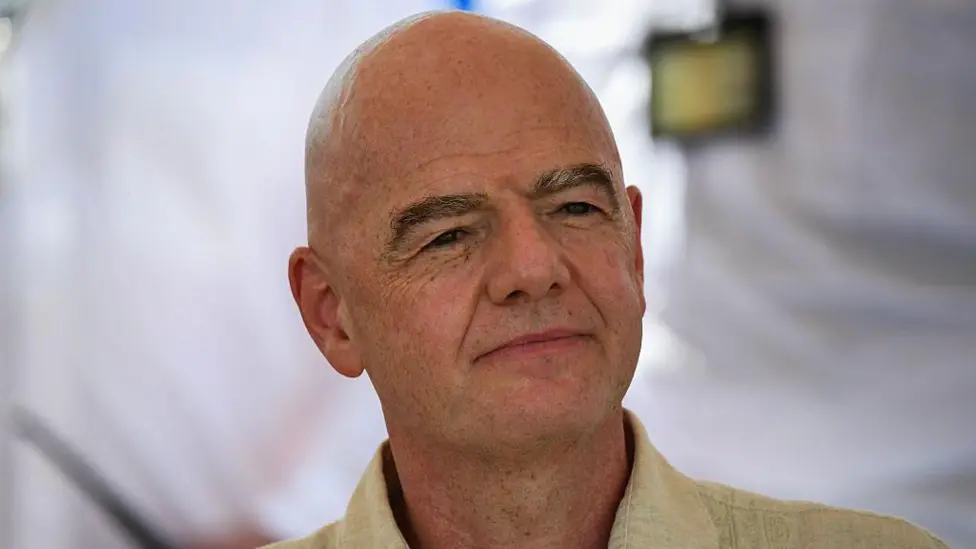
Gianni Infantino has strongly rejected allegations that UEFA made a severance payment to a woman said to have been in a relationship with him while he served as the organisation’s general secretary. The claims, reported by The Daily Telegraph, have added further pressure on the FIFA president at a time when he already faces significant challenges to his leadership. UEFA has confirmed that a departure payment and funding for an MBA course were provided to the individual in question, while insisting the arrangements complied with the rules in place at the time.
Details of the Allegations
According to the investigation, a female UEFA employee allegedly involved in a relationship with Infantino received a six-figure severance package after leaving the organisation. The report further claims that the woman was promoted to a senior management position during the alleged relationship, accompanied by a substantial pay increase. After her departure, UEFA is said to have covered the costs of an MBA programme at a local business school.
Sources cited in the reporting suggest that then-UEFA president Michel Platini confronted Infantino about the situation. The outcome, according to those accounts, was an agreement that the woman would leave with a financial settlement. Infantino is also alleged to have assisted her in securing subsequent employment in a related field, though these specific claims remain part of the contested narrative.
Infantino held senior roles at UEFA for 16 years, serving as general secretary from 2009 until early 2016, when he was elected FIFA president. The events in question are said to have occurred during his time in the European governing body.
Official Responses from FIFA and UEFA
A FIFA spokesperson issued a firm denial on Infantino’s behalf. “FIFA president Gianni Infantino strongly denies these allegations, and they are categorically untrue,” the statement read. “Any insinuation of inappropriate conduct or violation of statutes or regulations is defamatory. No employee at UEFA and FIFA has ever raised a complaint regarding Mr Infantino’s behaviour because there never was an incident where he was involved. All company actions related to employees, including any departure and severance packages, have always been approved by the appropriate directors in accordance with all applicable regulations.”
UEFA acknowledged awareness of the allegations and confirmed that a departure payment had been made, along with fees for the MBA course. “The payment was in line with the regulations that existed for departing staff at the time,” a UEFA spokesperson stated. The organisation added that staff regulations have been tightened since 2016 and now reflect standards expected of a modern, high-profile organisation. UEFA did not confirm the existence of a personal relationship between Infantino and the former employee, only that it was aware of such allegations.
Context of Heightened Scrutiny on Infantino
The timing of the revelations coincides with broader pressure on Infantino’s leadership at FIFA. He has faced criticism over various initiatives, including proposals related to the World Cup and other governance matters. UEFA itself has been among the bodies expressing concern about aspects of FIFA’s direction under his presidency. Against this backdrop, the new claims about events from his earlier career have intensified public and institutional attention.
Infantino’s defenders emphasise that no formal complaints were ever lodged against him by employees at either UEFA or FIFA. The FIFA statement stresses that all relevant personnel decisions followed established procedures and received proper internal approval. Critics, however, argue that the combination of an alleged personal relationship, a promotion, and a subsequent settlement raises questions about potential conflicts of interest and the adequacy of oversight at the time.
Evolution of Organisational Standards
UEFA’s reference to tightened regulations since 2016 points to changes in how football’s governing bodies manage workplace relationships and severance arrangements. High-profile organisations across many sectors have strengthened policies on conflicts of interest, disclosure requirements, and the handling of intimate relationships between senior managers and subordinates. The updated rules at UEFA are presented as aligning with contemporary best practice.
Whether the earlier arrangements fully complied with the standards then in force remains a matter of public discussion. UEFA maintains that the payments met the regulations applicable at the time. Independent verification of the precise amounts, the exact circumstances of the promotion, and the decision-making process has not been independently detailed beyond the organisational statements and the original investigation.
Implications for Governance and Public Trust
Football’s global governing bodies operate under intense public scrutiny. Allegations involving personal conduct, the use of institutional funds, and potential preferential treatment inevitably affect perceptions of integrity. Infantino’s categorical denial seeks to close the matter, while UEFA’s confirmation of the payments without endorsing the relational claims leaves certain questions open for further examination.
For observers of sports governance, the episode highlights ongoing challenges in ensuring transparency and accountability within powerful international organisations. Clear policies, independent oversight, and consistent application of rules are essential to maintaining confidence among member associations, sponsors, players, and fans.
As the story develops, both FIFA and UEFA are likely to face continued questions about past practices and current safeguards. Infantino’s position as FIFA president means that any substantiated concerns from his earlier career carry implications beyond the specific events alleged. At the same time, the absence of formal complaints and the strong official denials form a central part of the public record.
The coming days and weeks will determine whether the allegations prompt further internal reviews, external investigations, or simply remain a contested chapter in Infantino’s professional history. For now, the FIFA president stands by his denial, UEFA has confirmed the existence of payments while contextualising them within former regulations, and the football community continues to assess the significance of the reported events. Online readers interested in sports administration, FIFA leadership, and institutional accountability will find this a notable development in the ongoing examination of power and process at the highest levels of the game.
