
Brentford’s FA Cup hopes ended in heartbreak on March 9, 2026, as they fell 2-2 (5-3 on penalties) to West Ham United in the fifth-round tie at London Stadium. The decisive moment came in the shootout when forward Dango Ouattara attempted a Panenka—only for his weak chipped effort to be comfortably saved by Alphonse Areola. This miss proved the only failure from the spot, handing West Ham their first quarter-final appearance in a decade.
The match itself delivered end-to-end excitement. Jarrod Bowen scored twice for West Ham (19′ and 34′), while Brentford’s Igor Thiago responded with braces (28′ and 81′, the latter a penalty). Despite extra time yielding no further goals, the penalty drama sealed Brentford’s exit.
Ouattara’s Bold Choice and Immediate Fallout
Ouattara, the 24-year-old Burkina Faso international, stepped up confidently for Brentford’s second kick. He took his time, appeared composed, and opted for the audacious dink down the middle. Areola, anticipating or simply staying central, gathered the ball easily.
Pundits reacted swiftly. Joe Cole on TNT Sports noted: “He looked so confident… he took his time and looked in complete control and he did that—it’s unexplainable.” Glenn Hoddle added: “He took so long. I think he had a thousand thoughts going through his mind… The young lad will absolutely regret trying the Panenka at that time.”
Brentford interim boss Keith Andrews defended his player robustly. “No, I’m not annoyed at all,” he said. “When you miss a penalty it is a tough moment, but it is easier to not take a penalty than take a penalty. It takes serious courage to do that. He practises that technique a lot, if it goes in everyone’s raving about him.”
Andrews criticized the culture around such misses: “We’ve had it in the past when people have been persecuted and ridiculed for missing a penalty on the biggest stage and that’s ridiculous. He will have the utmost support from me and everyone around.”
The Panenka’s Origins and Enduring Appeal
The technique takes its name from Antonín Panenka, whose famous chipped penalty won the 1976 European Championship final for Czechoslovakia against West Germany. After Uli Hoeness blazed over, Panenka calmly floated the ball down the middle, deceiving Sepp Maier. Panenka had used it successfully a month earlier for Bohemians Prague, but the Euros triumph popularized it globally.
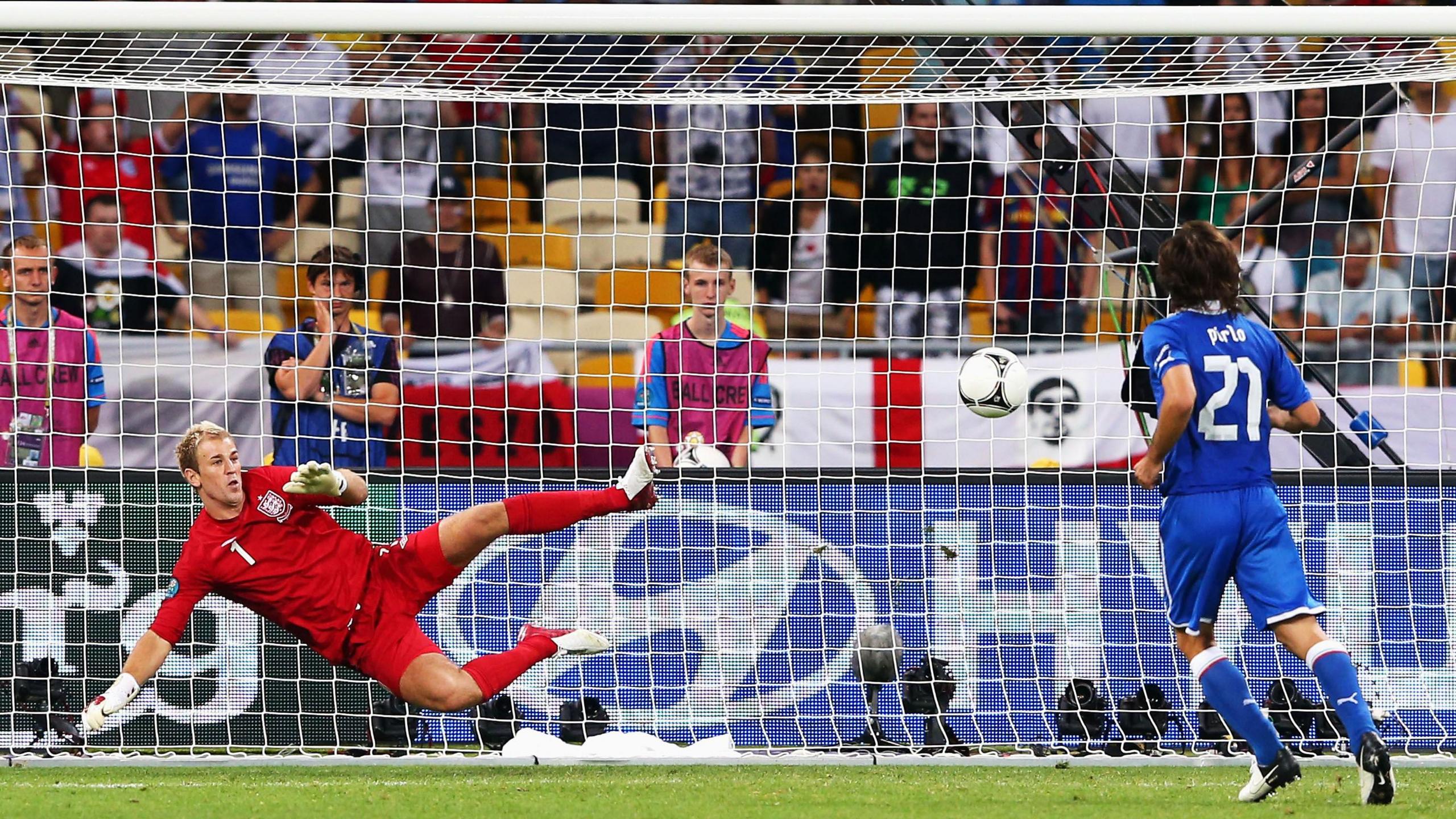
Since then, stars like Lionel Messi, Thierry Henry, Francesco Totti, and Zinedine Zidane (2006 World Cup final) have executed it successfully under pressure. Andrea Pirlo’s nonchalant chip against England in Euro 2012 shifted momentum, while Fabinho’s in the 2022 EFL Cup final neutralized Kepa Arrizabalaga’s gamesmanship.
However, failures draw harsher scrutiny. Gary Lineker fluffed one in 1992 against Brazil, Sergio Agüero was embarrassed by Edouard Mendy in 2021, and Brahim Díaz missed in the 2025 Africa Cup of Nations final.
When Is the Panenka a Smart Option?
Former striker Lee Trundle, known for flair, views it as “just another way to score a penalty.” He argues: “If you put it left or right and the keeper dives and guesses the right way and he saves it, that’s the same if you do a Panenka and he stays in the middle and saves it. If it goes in then everyone says how brilliant it is.”
Statistics support going central: 84% success rate at World Cups (since 1966) and Euros (since 1980), compared to 78% left and 74% right. Trundle suggests timing matters: “When I’ve done it, it’s been about how the game is going… Later on in the game… the keeper will usually dive.”
Ouattara reportedly practices the technique regularly, suggesting confidence in high-stakes moments. Yet, as Hoddle observed, overthinking during the run-up can prove fatal.
Lessons from the Shootout and Beyond
West Ham converted all five penalties—Bowen, Taty Castellanos, Callum Wilson, Tomáš Souček, and Konstantinos Mavropanos—securing progression to face Leeds United in the quarter-finals. Brentford’s wait for a first major cup final continues, their last quarter-final appearance dating to 1989.
Ouattara’s miss highlights the fine line between audacity and risk in penalty shootouts. While the Panenka can deliver iconic moments, it amplifies regret when it fails. Andrews’ support underscores the need for empathy—penalties demand bravery, and misses should not define a player’s character.
For Brentford, focus shifts to Premier League survival. For Ouattara, the memory lingers, but with club backing, he can move forward. In the FA Cup‘s unforgiving spotlight, such moments remind us: courage comes in many forms, but timing remains everything.

