
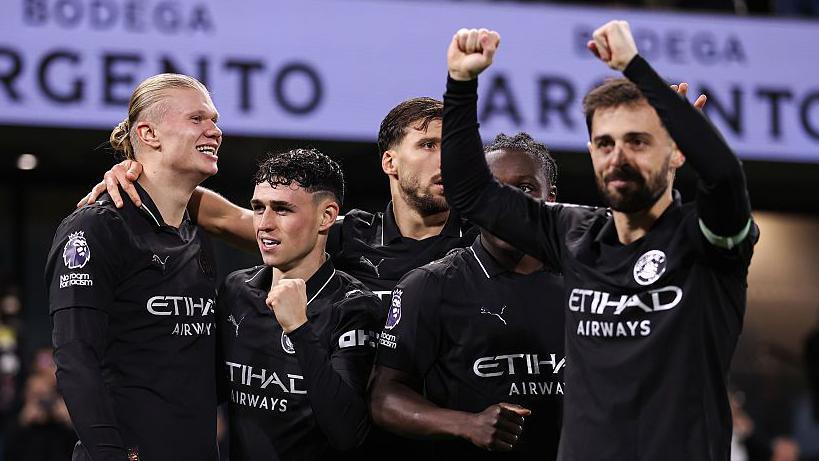
Manchester City, the epitome of tactical brilliance and relentless attacking flair under Pep Guardiola, delivered a rollercoaster of emotions in their latest Premier League clash. The 5-4 thriller against Fulham at Craven Cottage wasn’t just a match—it was a microcosm of their season’s highs and alarming lows. While Erling Haaland etched his name into history with his 100th Premier League goal, the real story lurks at the back: persistent Man City defensive issues that could sabotage their quest for yet another title. As City trail leaders Arsenal by two points—with the Gunners holding a game in hand—the question echoes through Etihad Stadium: Can Guardiola restore that ironclad backline before the title race slips away?
This chaotic encounter, played under the floodlights on December 2, 2025, showcased City’s firepower in dazzling fashion. Yet, what began as a masterclass devolved into a desperate scramble, highlighting vulnerabilities that have plagued Guardiola’s side in recent weeks. For online football fans craving edge-of-your-seat action, this game had it all: blistering goals, a near-miraculous comeback, and a nail-biting finish. But beneath the spectacle lies a sobering reality—Man City defensive problems demand urgent attention if they’re to outpace a ruthlessly efficient Arsenal.
The Nine-Goal Spectacle: From Domination to Desperation
Picture this: Manchester City storming into Craven Cottage, unleashing an offensive barrage that left Fulham reeling. The scoring opened in the 17th minute when Jeremy Doku’s precise cut-back found Haaland, who rifled home his landmark strike—his 15th league goal of the season and the fastest 100th in Premier League history, achieved in just 111 appearances. This shattered Alan Shearer’s long-standing record of 124 games, underscoring Haaland’s predatory instincts and City’s lethal edge.
Momentum snowballed. Tijjani Reijnders added a second in the 37th minute, capitalizing on Haaland’s visionary assist. Phil Foden, in scintillating form after a weekend brace against Leeds, curled in a beauty from distance just before halftime, making it 3-0. Fulham snatched a consolation through Emile Smith Rowe’s deft header from Harry Wilson’s chipped cross in stoppage time, but City appeared untouchable.
The second half amplified the drama. Foden struck again in the 48th minute, latching onto an inadvertent Haaland backheel to notch his second. Minutes later, in the 54th, Sander Berge’s unfortunate deflection off Doku’s effort ballooned City to a seemingly insurmountable 5-1 lead. The away fans roared, envisioning a cruise to three points and a step closer to Arsenal.
But football’s unpredictability struck hard. Substitute Samuel Chukwueze ignited Fulham’s improbable rally, drilling a long-range rocket in the 73rd minute to make it 5-2. Five minutes later, he struck again, this time from the edge of the box, pulling the score to 5-3 and sending shockwaves through the City bench. Alex Iwobi had earlier curled in a stunner from 20 yards in the 57th minute, adding to the chaos. As stoppage time ticked down, Fulham’s last-gasp effort was cleared off the line by Josko Gvardiol, sparing City’s blushes in what could have been one of the Premier League’s greatest upsets.
Haaland, whose two assists complemented his goal, captured the essence post-match: “I was close to scoring and then they went and made it 5-3, so that’s football, that’s the beauty of football. That’s why we love the game.” His words rang true for neutrals, but for City supporters, the beauty masked a brewing storm.
Unpacking the Stats: Why Man City Defensive Issues Stand Out
The numbers from this Man City vs Fulham showdown paint a vivid picture of imbalance. City netted five goals—their 41st such haul in 356 Premier League games under Guardiola—affirming their status as the league’s most potent attack. Their first four shots on target all bulged the net, a clinical efficiency that terrifies opponents.
Yet, the concessions tell a different tale. Allowing four goals in a victory is a rarity for City; it’s the first time they’ve won a league match while shipping that many since a 5-4 triumph over Sheffield Wednesday in December 1957 at Hillsborough. This historical outlier underscores a departure from Guardiola’s trademark control.
For Fulham, it was equally unprecedented. This marked their first top-flight outing with nine or more goals since a 7-2 defeat at West Ham in February 1968, and their first such home thriller since a 6-3 loss to Aston Villa in September 1965. City’s involvement amplified the openness, turning Craven Cottage into a cauldron of chaos.
Broader trends amplify the concern. This was the sixth Premier League game featuring Manchester City with at least nine goals—only Manchester United (seven) have more. While thrilling for viewers, it signals fragility. In their last four matches across all competitions, City have conceded 10 goals, a stark reversal from the three shipped in the prior four. Their season total stands at 16 goals against in 14 league games, more than double Arsenal’s miserly seven in 13 outings.
| Key Defensive Stats Comparison | Manchester City | Arsenal |
|---|---|---|
| Goals Conceded (PL Games) | 16 (14 games) | 7 (13 games) |
| Clean Sheets | 4 | 9 |
| Goals from Counters | 5 | 1 |
| xGA (Expected Goals Against) | 14.2 | 9.5 |
These figures highlight Man City defensive vulnerabilities. Arsenal’s backline, anchored by William Saliba and Gabriel, embodies solidity—conceding just 0.54 goals per game. In contrast, City’s permeability, especially to counters and set-pieces, has invited scrutiny. As former Premier League striker Clinton Morrison noted on BBC Radio 5 Live: “You can’t expect to win the Premier League when you defend like that. There’s a problem with Manchester City defensively. I’ve said it all season… they’d never see Arsenal be 5-1 up and end like that, so they have to sort that out.”
Morrison’s verdict resonates. In Guardiola’s six title-winning campaigns, only the 2023-24 season saw City concede this many at this stage. The deviation from their norm—where defenses were as impenetrable as their attacks were prolific—fuels title doubts.
Guardiola’s Philosophy: Turning Crisis into Catalyst
Pep Guardiola, the architect of modern football’s possession paradigm, isn’t one to panic. Post-match, he lightened the tension with trademark wit: “I’m so old, and the players don’t respect me! They don’t have to treat their manager in that way. It only happens in this league.” The quip masked deeper resolve. Acknowledging the scare, he added: “Of course I was concerned [Fulham could come back], but this will help us in future games. Every game is a new team for some players. You have to make a process to start to correct.”
Guardiola’s optimism stems from experience. He praised the “really positive things”—the five goals, first-half dominance, and ultimate resilience: “In the end, it was a question of character, resilience and defence. They did what they had to do.” Yet, he knows complacency is the enemy. City’s recent dip—10 goals conceded in four games—contrasts sharply with their pre-match form, where just three slipped in. Guardiola views this as a “learning curve,” a forge to sharpen focus and rebuild fundamentals.
The Catalan maestro’s track record supports his stance. Since 2016, he’s transformed City into a dynasty, blending artistry with grit. But this season’s Man City defensive issues test his adaptability. Injuries to key anchors like Rodri have exposed gaps, while tactical tweaks—higher lines leaving space behind—have been exploited. Guardiola’s response? Double down on basics: tighter marking, quicker recoveries, and midfield screens to shield the back four.
Arsenal’s Shadow: The Title Race Hinge
Arsenal loom large, their defense a fortress that City must breach. The Gunners’ seven goals conceded in 13 games isn’t just a stat—it’s a statement. Mikel Arteta, Guardiola’s protégé, has instilled a pragmatism blending flair with fortitude. City, by contrast, have shipped 16 in 14, a rate that, if unchecked, could widen the gap to five points should Arsenal win their postponed fixture.
“You’d never see Arsenal be 5-1 up and end like that,” Morrison emphasized, capturing the chasm. City’s attack remains championship-caliber—Haaland’s form (15 goals) and Foden’s emergence (double-digit contributions) ensure that. But titles are won in trenches, not just transition. For Guardiola’s side to reclaim supremacy, blending offensive verve with defensive steel is non-negotiable.
The coming fixtures—tough away tests at Newcastle and Liverpool—will probe these wounds. If City can channel this Fulham fright into fortification, their title ambitions endure. Fail, and Arsenal’s relentless march could leave them in the rearview.
The Road Ahead: Rebuilding the Blue Wall
Manchester City’s journey this season mirrors football’s essence: exhilarating yet unforgiving. The Man City vs Fulham epic was a wake-up call, blending joy with jeopardy. Guardiola’s squad boasts unparalleled talent, but Man City defensive issues threaten to undermine it. As Haaland chases Shearer’s all-time mark and Foden dazzles, the real battle rages at the back.
For fans and analysts alike, the intrigue is palpable. Can Guardiola, the master tactician, recalibrate his symphony? The Premier League’s unforgiving calendar will decide. One thing’s certain: in a race this tight, defensive discipline isn’t optional—it’s the title’s linchpin. Stay tuned; the Blue Moon’s glow could dim or dazzle anew.
