Miami Grand Prix 2026: Race Start Brought Forward Due to Storm Threat as Wet Conditions Loom
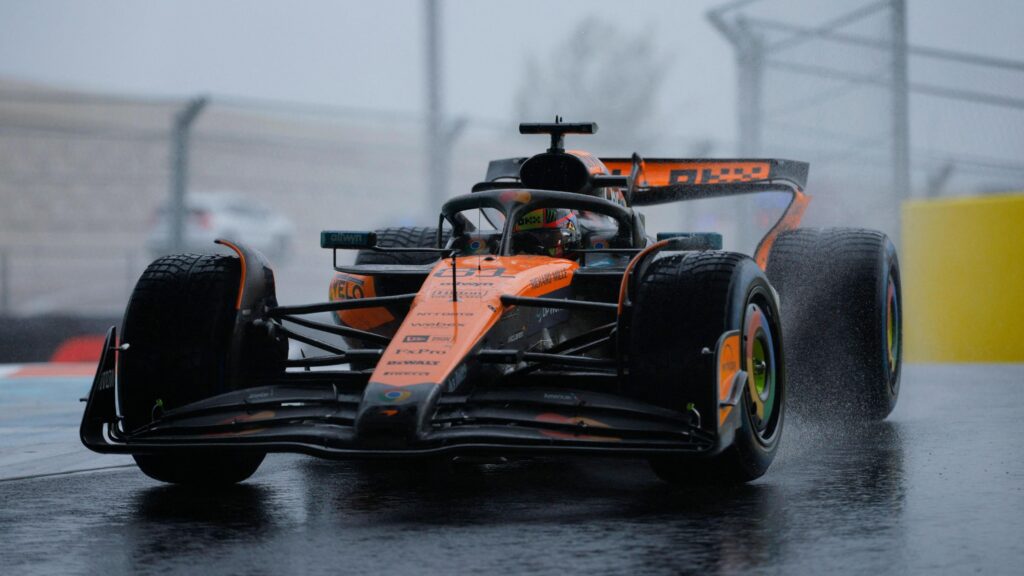
Formula 1 officials have rescheduled the start of the 2026 Miami Grand Prix by three hours to 18:00 BST (13:00 local time) because of the threat of thunderstorms. The decision aims to give the race the best chance of completing in manageable conditions and prioritising safety for drivers, fans, teams, and staff.
World champion Lando Norris acknowledged the challenge ahead, noting that most drivers have limited experience with the all-new 2026 cars in wet weather. The significant rule changes this season have introduced more electrical power and complexity, potentially leading to “a bit more chaos” in the rain, as Norris described it.
Why the Race Start Was Moved Forward
The move was announced on Saturday evening by Formula 1 and the FIA. Heavier rainstorms are forecast later in the afternoon, close to the original planned start time. Officials acted to maximise the window for completing the grand prix before the worst of the weather arrives, expected around 15:00 local time (20:00 BST).
Once the heavy rain begins, it is likely to persist for hours. Sticking with the original schedule risked the race being unable to run at all. By starting earlier, the event should still encounter wet conditions, but with a better opportunity to finish safely.
F1 cars can race in the rain, but visibility is often severely limited by spray, and aquaplaning becomes a major risk on a low-slung car if standing water accumulates. The decision reflects a pragmatic approach to balancing the spectacle with safety and practicality.
Drivers Brace for Wet-Weather Unknowns
Lando Norris qualified fourth behind Mercedes’ Kimi Antonelli, Red Bull’s Max Verstappen, and Ferrari’s Charles Leclerc. Speaking ahead of the race, Norris highlighted the lack of wet running for the new-generation cars.
“I don’t know how wet it’s going to be,” he said. “It’s going to be a big challenge on race day for everyone to perform, find the limit. Obviously, you can’t afford to make any mistakes. We’re thrown in the deep end, but that’s what we’re here to do.”
Norris’ McLaren team-mate Oscar Piastri echoed these sentiments. “It’s obviously going to be a voyage into the unknown for everybody,” Piastri noted. “When it rains here, it normally is pretty torrential, so it could be an interesting day.”
The new power units, with their massive electrical deployment, add another layer of unpredictability. Teams have already faced challenges managing this power consistently in dry conditions. In the wet, the margin for error shrinks dramatically, increasing the potential for incidents or unexpected performance variations.
An Unpredictable Weekend Gets Even More Complex
The Miami weekend has already been full of surprises. McLaren, Red Bull, and Ferrari brought major upgrades, while Mercedes opted for minimal changes, saving their bigger step for Canada. McLaren dominated the sprint with a Norris-Piastri one-two, yet both drivers fell back in grand prix qualifying.
Max Verstappen praised Red Bull’s progress after struggling in Japan. “It’s incredible,” he said of the team’s step forward. The fluctuating form book, combined with expected rain, makes Sunday’s race exceptionally difficult to predict.
Rain traditionally randomises results in Formula 1. It amplifies the importance of strategy, tyre management, and driver skill in slippery conditions. With the new 2026 regulations still relatively fresh, teams and drivers have minimal data on how the cars will behave when the track is wet.
Safety and Spectacle: The Balancing Act
Moving the start time demonstrates Formula 1’s commitment to safety without unnecessarily compromising the event. The sport has made significant strides in recent years to improve decision-making around weather-affected races, learning from past experiences where races were delayed or abandoned.
Fans can still expect a thrilling spectacle. Wet races often produce some of the most memorable moments in Formula 1 history, rewarding bold strategy and exceptional driving. However, the priority remains completing the grand prix safely.
The decision also protects the broader event schedule. Miami is a high-profile weekend with significant commercial and fan interest. Ensuring the race can run, even if wet, maintains the show while mitigating risks.
What to Expect on Race Day
With the earlier start, the race is likely to begin in damp or wet conditions. Drivers will need to adapt quickly to the changed grip levels and the behaviour of the 2026 cars in the rain. Pit-stop strategy, tyre choices (particularly the intermediate and full wet compounds), and visibility management will be crucial.
For the championship contenders, every point matters. Norris will look to capitalise on his strong recent form, while rivals like Antonelli, Verstappen, and Leclerc will seek to exploit any wet-weather opportunities.
The 2026 season has already delivered excitement through its major technical overhaul. Adding genuine wet-weather uncertainty to the Miami Grand Prix only increases the anticipation for what promises to be a dramatic afternoon in Florida.
As the cars line up for the earlier start, all eyes will be on how the field handles the challenging conditions. Whether the race stays dry enough for slicks or forces a full wet contest, the rescheduled Miami Grand Prix is set to provide compelling viewing for fans around the world.
The threat of storms may have forced a schedule change, but it has also added an extra layer of intrigue to an already unpredictable weekend. Formula 1’s ability to adapt while prioritising safety ensures the show goes on, even when Mother Nature has other ideas.
Follow for real-time match analysis!
Discover more from DeeplyticAI
Subscribe to get the latest posts sent to your email.