Mourinho Confirms He Agreed to Replace Ferguson at Manchester United Before Emotional U-Turn
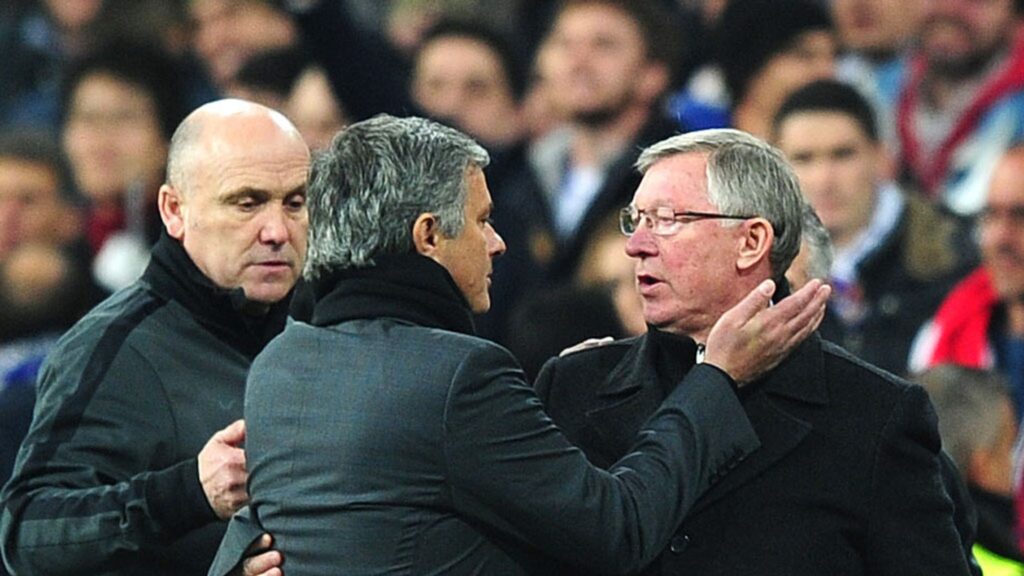
Jose Mourinho has revealed that he agreed to succeed Sir Alex Ferguson as Manchester United manager in 2013, only to reverse the decision within hours and return to Chelsea instead. The Portuguese coach made the disclosure in a new Netflix documentary series about his career, with Ferguson himself confirming key details of the episode.
A Deal Struck After Real Madrid
Mourinho left Real Madrid at the end of the 2012-13 season. According to his account in the documentary, he reached an agreement to take over at Old Trafford once Ferguson stepped down. “When I left Real Madrid, I signed to go to Manchester United after Sir Alex,” Mourinho stated.
Ferguson, who retired after winning a 13th Premier League title in 2013 following 26 years in charge, corroborated the sequence. “He was offered the job, yes,” the former United manager said. “I sat him down and explained the situation. As far as I was concerned, he was accepting. And then, within hours, it changed.”
The change came in the form of an emotional telephone call. Ferguson recalled that Mourinho phoned him that same evening in tears. “He says, ‘Alex, I can’t take it. I’ve given my word to Chelsea and I’m not going to break my word.’” Ferguson added that he understood the reasoning but was left disappointed.
Loyalty to Chelsea Proves Decisive
Mourinho’s decision was driven by his deep connection to Chelsea. He had enjoyed enormous success during his first spell at Stamford Bridge between 2004 and 2007, delivering two Premier League titles, an FA Cup and two League Cups. After a difficult final period at Real Madrid, he felt a strong personal pull to return to a club where he had previously felt valued.
“I was, of course, very flattered, because Manchester United has an incredible appeal,” Mourinho explained. “When I say Real Madrid are the biggest club in the world, I have to say that Manchester United are very, very close. But one thing is love for football, another thing is love for a certain club. I think this is more powerful than love for football and, fundamentally, after Real Madrid, I needed to feel that I’m loved.”
He described the choice as dramatic. Losing the opportunity to become the coach who succeeded Ferguson carried significant weight. Yet Mourinho has stated that he does not regret the decision because it was made with his heart.
What Followed at Old Trafford
Manchester United ultimately appointed David Moyes as Ferguson’s successor. Moyes’ tenure lasted less than a year before he was dismissed. Louis van Gaal then took charge and delivered an FA Cup before departing in 2016. Mourinho eventually arrived at Old Trafford that summer, spending two and a half seasons at the club and winning the Europa League, League Cup and Community Shield.
The 2013 episode remained largely private for more than a decade. Its public confirmation in the documentary adds a new layer to one of the most significant managerial transitions in modern Premier League history. Ferguson’s endorsement of Mourinho at the time underscores the mutual respect between the two men, even if circumstances prevented the partnership from materialising three years earlier than it eventually did.
Context of a Pivotal Summer
The summer of 2013 represented a major crossroads for several elite clubs and coaches. Ferguson’s retirement ended an era of sustained dominance at United. Mourinho’s availability after Real Madrid created intense speculation about his next destination. While many observers linked him with Old Trafford, he had consistently signalled his desire to return to Chelsea when the opportunity arose.
The documentary provides the clearest account yet of how close the United appointment came. Both participants agree on the essential facts: an offer was made and initially accepted, only for Mourinho’s prior commitment and emotional attachment to Chelsea to intervene. The tearful phone call remains one of the more human moments in a high-stakes world of elite football management.
Reflections on Career Choices
Mourinho’s career has been defined by bold moves, strong personalities and high expectations. The 2013 decision illustrates the tension that can exist between professional opportunity and personal loyalty. Manchester United represented the chance to follow one of the greatest managers in British football history. Chelsea represented a return to a familiar environment where he had previously thrived and felt a sense of belonging.
He went on to win another Premier League title with Chelsea in 2015 before his second spell at the club ended. His later time at United produced silverware but also periods of tension. Now back at Real Madrid for a second spell, Mourinho continues to occupy a central place in European football’s managerial landscape.
For online readers interested in Premier League history, managerial careers or the inner workings of elite clubs, the revelation offers valuable insight. It humanises two of the most successful figures of their generation and clarifies a long-standing point of speculation. The agreement that nearly brought Mourinho to Old Trafford in 2013 ultimately redirected the paths of both Manchester United and Chelsea in ways that shaped the years that followed.
Follow for real-time match analysis!🚀
Discover more from DeeplyticAI
Subscribe to get the latest posts sent to your email.