
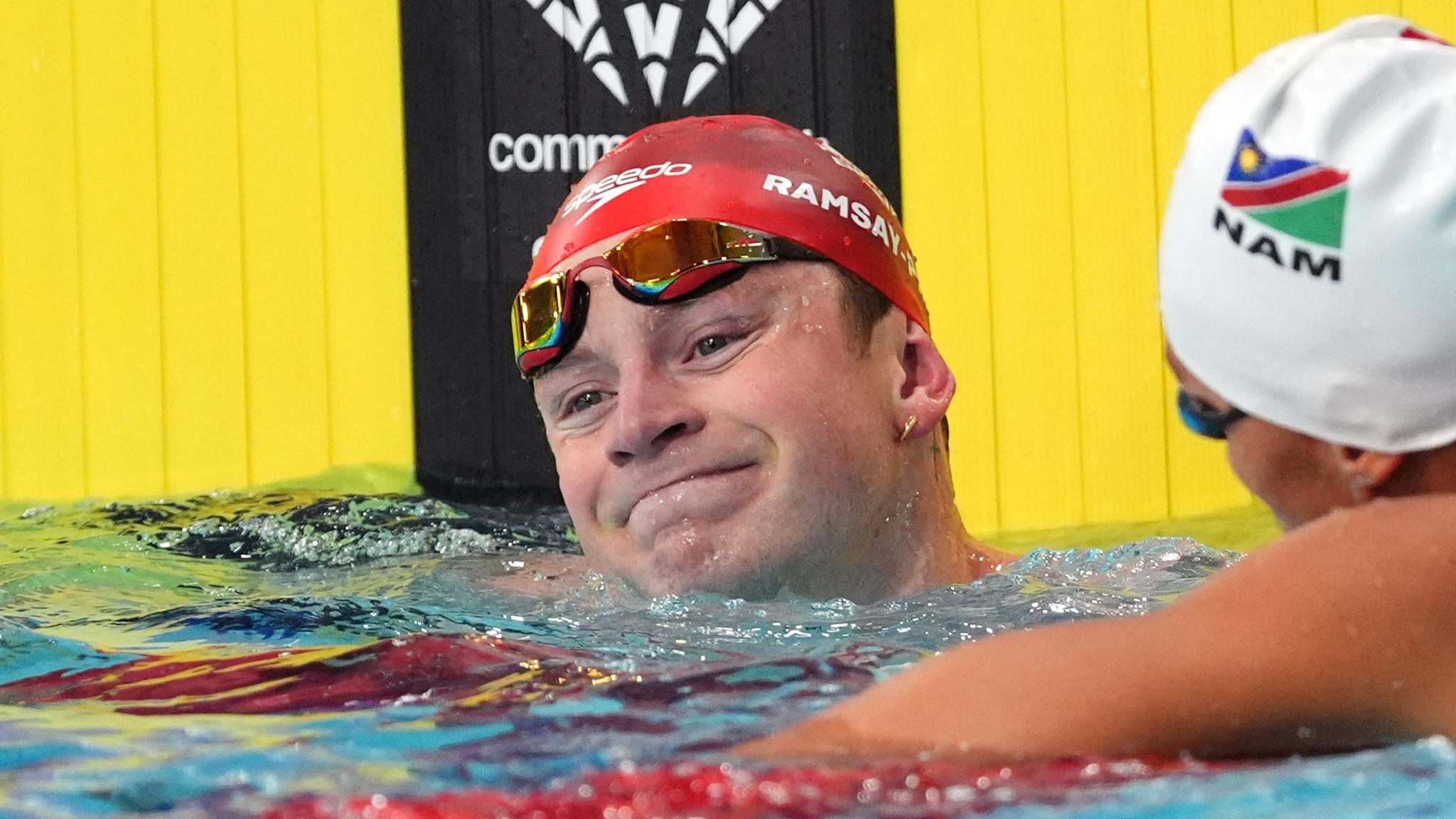
Three-time Olympic champion Adam Ramsay-Peaty expressed bewilderment after claiming his second bronze medal of the Commonwealth Games in Glasgow, admitting that “nothing makes sense” following another disappointing performance in the pool. The 31-year-old Englishman, widely regarded as the greatest breaststroker in swimming history, was unable to match the pace of Australia’s Sam Williamson, who secured his second gold medal of the Games with victory in the 50m breaststroke final.
A Frustrating Week for the World Record Holder
Back-to-Back Bronze Medals
Ramsay-Peaty’s Commonwealth Games campaign has fallen well short of expectations. After finishing third in the 100m breaststroke on Saturday—a result that left him tearful and visibly distraught—the defending 50m champion was again unable to deliver the times that defined his extraordinary career. This time, however, his reaction was more measured, though no less perplexed.
“I am working way too hard,” Ramsay-Peaty told BBC Sport. “If those results were how much I am working then they would be a lot better. I need to look at that and adjust course because we are sailing in some rough seas right now and it is not sustainable.”
The Englishman clocked 26.94 seconds in the 50m final, finishing 0.44 seconds behind Williamson. While the margin may appear modest, for a swimmer who holds the world records in both the 50m and 100m breaststroke and went eight years unbeaten in the longer distance, the performance represented a significant gap from his peak standards.
Searching for Answers
“I thought I could have done better there,” Ramsay-Peaty reflected. “It is quite disappointing in terms of the time, and, as we know, times equal medals. I felt I could have been a little quicker, but I need to look at it and see what is going on because nothing makes sense this week to be honest.”
Despite the frustration, Ramsay-Peaty demonstrated the resilience that has characterized his career. “I have come back from worse and we will see where we end up,” he added, signaling his determination to rediscover his competitive edge.
Coaching Changes and the Road to Los Angeles 2028
A Period of Transition
Ramsay-Peaty’s recent struggles coincide with significant changes in his training environment. He dominated breaststroke events for nearly a decade under the guidance of coach Mel Marshall, who relocated to Australia in 2024. Following the Paris 2024 Olympics, Ramsay-Peaty began training at Repton in Derbyshire before ultimately moving back to London to work under the tutelage of Lisa Bates.
“I am very, very happy, couldn’t be happier with where I am training now,” Ramsay-Peaty insisted. “It is hard work, but we need to make sure that hard work is going in the right place. These things don’t happen in three months; they happen in two years and we need to make sure we keep investing.”
The Olympic Motivation
The 31-year-old’s decision to continue competing was driven by the addition of the 50m breaststroke to the 2028 Olympic programme in Los Angeles. Ramsay-Peaty has suggested that the shorter distance offers his best opportunity for Olympic medal success given his age. However, his performances in Glasgow raise questions about whether he can bridge the gap to the sport’s current leaders within the two-year timeframe remaining before the Games.
Williamson’s Dominance and England’s Broader Success
Australia’s Breaststroke Star
Sam Williamson’s victory in Glasgow marked his second gold medal of the Commonwealth Games, cementing his status as the premier breaststroke sprinter in world swimming. The Australian’s ability to consistently outpace Ramsay-Peaty signals a potential generational shift in the event, though the Englishman’s vast experience and proven capacity for reinvention should not be discounted.
England’s Swimming Highlights
Beyond Ramsay-Peaty’s races, England enjoyed success across multiple events at the Glasgow Games. Brock Whiston claimed gold in the women’s 200m breaststroke SB8 final, while 15-year-old teammate Iona Winnifrith earned bronze in the same event, showcasing the depth of emerging English talent.
Additionally, 16-year-old Amalie Smith secured silver in the women’s 200m individual medley final, demonstrating remarkable composure at such a young age on a major international stage. The England quartet of Freya Colbert, Abbie Wood, Leah Schlosshan, and Freya Anderson also delivered an impressive performance to claim silver in the women’s 4x200m freestyle relay.
Looking Ahead: Can Ramsay-Peaty Rediscover His Best?
For a swimmer whose career has been defined by unprecedented dominance, two bronze medals at the Commonwealth Games represent a challenging reality. Nevertheless, Ramsay-Peaty’s history of overcoming adversity suggests that writing off his prospects for Los Angeles 2028 would be premature. The coming months will be critical as he and coach Lisa Bates work to identify the adjustments needed to transform his immense work ethic into competitive results.
As Ramsay-Peaty himself acknowledged, the path back to the top requires patience and strategic investment. Whether the greatest breaststroker of all time can navigate these “rough seas” and reclaim his throne remains one of swimming’s most compelling storylines heading into the next Olympic cycle.
