
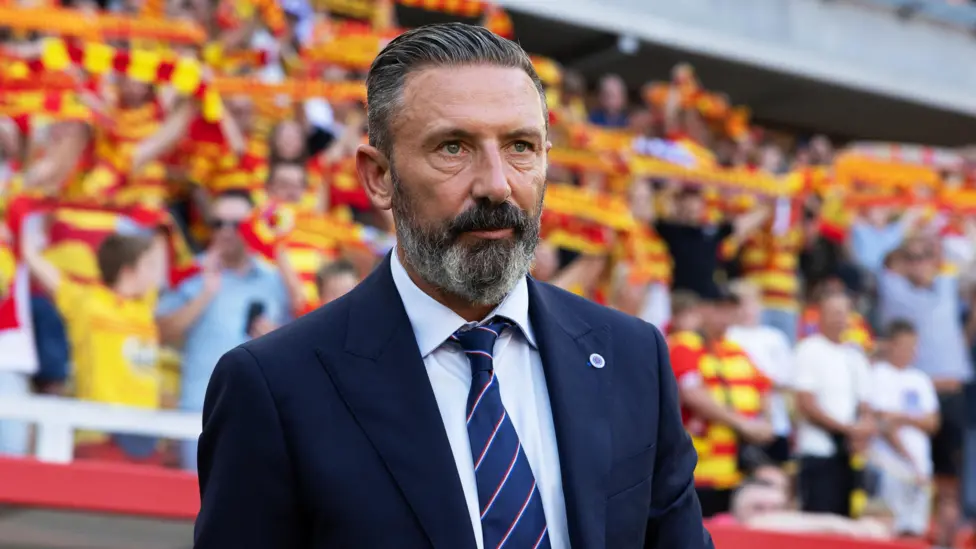
Derek McInnes has endured a difficult start to life as Rangers manager. Two competitive matches have produced no victories, leaving the new Ibrox boss searching for solutions to familiar problems. A 1-1 draw at Dundee United in the Scottish Premiership opener was followed by a 2-1 first-leg defeat away to Jagiellonia Bialystok in the Europa League third qualifying round. The results have highlighted defensive frailties that continue to undermine progress.
A Challenging Opening to the New Era
McInnes took charge in June on a three-year contract after Danny Röhl departed for RB Salzburg. The former Hearts manager, a boyhood Rangers supporter and former player, arrived with high expectations. Supporters hoped his appointment would mark a genuine reset following underwhelming campaigns under previous coaches. Nine new signings have already arrived this summer, with further additions anticipated before the transfer window closes.
Yet early performances have echoed last season’s shortcomings. McInnes himself acknowledged the continuity of issues after the defeat in Poland. “We’ve seen a lot tonight of what I thought Rangers were last season,” he said. The comment carried weight coming from a manager who understands the standards demanded at Ibrox.
Defensive Softness Remains a Concern
The central theme linking both results has been a lack of defensive solidity. At Tannadice, Rangers fell behind to Lachlan Rose’s first-half goal before recovering through Thelo Aasgaard’s equaliser. They created opportunities after the break but failed to impose control and were fortunate not to concede a late winner.
In Poland the pattern repeated. Rangers took an early lead when a Tuur Rommens cross was turned into his own net by a home defender. However, Kajetan Szmyt equalised and then scored a second as defensive errors gifted the Polish side the initiative. McInnes later admitted his team “beat themselves” by conceding soft chances and losing control of the game.
“I thought we gave up too many chances and gave teams too much encouragement,” the 55-year-old explained. “We have to be far more stingy.” The assessment points to a recurring problem that neither Russell Martin nor Danny Röhl managed to eradicate during their respective tenures.
Positive Signs Mixed with Familiar Frustrations
There were encouraging moments. Rangers improved after half-time substitutions in both matches. Against Jagiellonia, the introductions of Cammy Devlin, Nicolas Raskin and Findlay Curtis added energy and structure. Curtis, a 20-year-old who impressed on loan at Kilmarnock last season, struck the post late on and offered a glimpse of attacking threat.
New signings have begun to feature, yet cohesion remains a work in progress. Integrating multiple arrivals while addressing defensive organisation is a significant early challenge. McInnes has stressed that the squad is still taking shape and that further recruitment will help refine the balance.
Context of Recent Managerial Changes
Rangers finished third in the previous Premiership season, well off the pace set by Celtic. The rapid turnover of managers reflected growing impatience among supporters and the board. McInnes was viewed as a steadying influence with deep knowledge of the Scottish game and a clear understanding of the club’s culture. His successful spell at Hearts, where he guided the side to a strong league position, strengthened his credentials.
Nevertheless, the early results demonstrate that reputation alone cannot transform a squad overnight. Last season’s soft underbelly has not disappeared simply because a new coach has taken charge. Addressing that vulnerability will define the opening months of the McInnes era.
Looking Ahead to Critical Fixtures
The second leg against Jagiellonia Bialystok at Ibrox represents an immediate opportunity to reverse the deficit and progress in Europe. A strong home performance would provide both a result and a much-needed confidence boost. Beyond that, the Premiership campaign demands consistency if Rangers are to challenge seriously for the title.
McInnes has been measured in his public comments, emphasising process over panic. He has called for greater trust in the team’s methods and sharper execution of basic principles. Supporters will expect visible improvement in the coming weeks as the squad settles and additional reinforcements arrive.
The Broader Picture for Rangers
The club’s ambition remains clear. Ownership changes and renewed investment have raised expectations once again. McInnes inherits a squad capable of better performances, yet the early evidence suggests that old habits around defensive concentration and game management still linger. Eradicating those habits will require time, clear coaching messages, and the right personnel.
For online readers following Scottish football, Rangers’ season, or managerial transitions at major clubs, the opening chapter of the McInnes tenure offers a familiar narrative. Hope mixed with frustration, new faces alongside persistent problems, and a manager determined to impose higher standards. Whether he can accelerate the necessary changes will determine how quickly Rangers can move beyond the shadow of last season.
Two matches do not define a managerial reign. They do, however, set a tone. McInnes has already identified the core issues. The task now is to ensure that the next performances show genuine progress rather than further echoes of past failings. Rangers supporters will be watching closely to see whether the new era can finally break free from old habits.
