
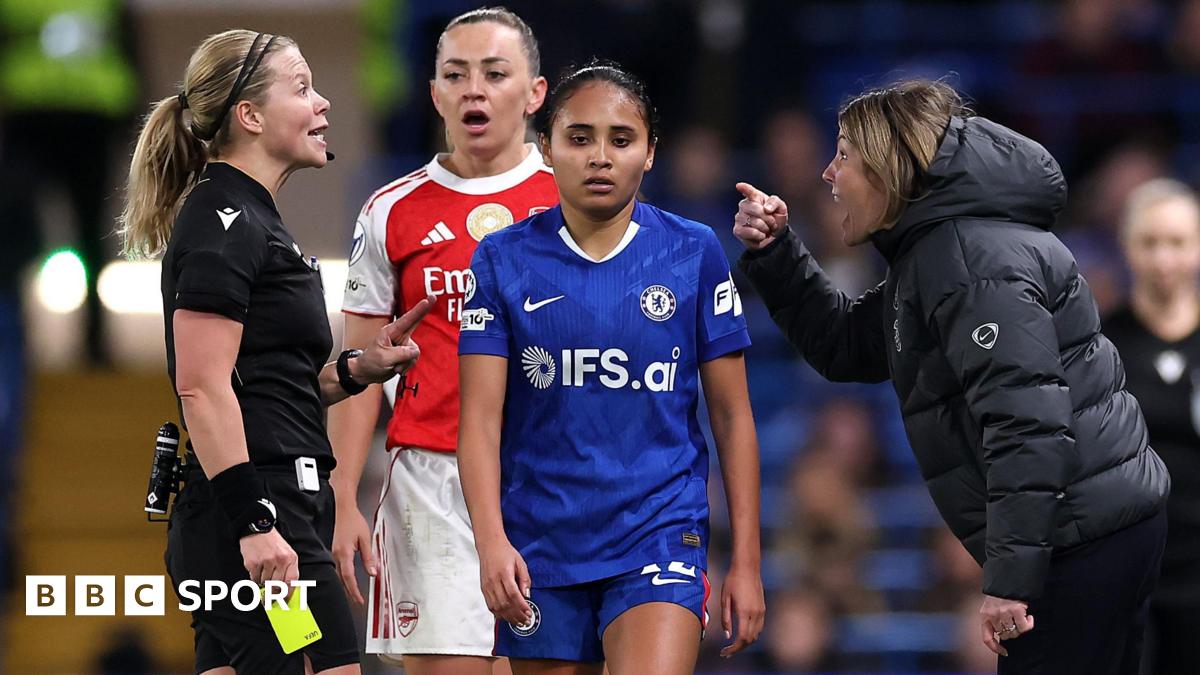
Chelsea Manager Voices Frustration Over Refereeing in Dramatic Arsenal Quarter-Final
Sonia Bompastor expressed deep anger with the standard of officiating after Chelsea’s elimination from the 2025-26 UEFA Women’s Champions League. The Blues fell to a 3-2 aggregate defeat against Arsenal despite winning the second leg 1-0 at Stamford Bridge on 1 April 2026. A late controversial incident involving Arsenal’s Katie McCabe and Chelsea’s Alyssa Thompson dominated post-match discussions and highlighted ongoing concerns about VAR in the women’s game.
With Chelsea chasing a late equaliser to force extra time, Thompson broke forward in stoppage time. McCabe reached out and tugged the American winger’s hair, bringing her to the ground. Referee Frida Mia Klarlund awarded a free-kick but issued no card. Crucially, the video assistant referee did not intervene or recommend a review. Bompastor, visibly furious on the touchline, received a yellow card for protesting and was subsequently sent off. Even after the red card, she refused to leave the technical area as Arsenal held firm to advance to the semi-finals.
This moment capped a tense evening and continued a pattern of refereeing grievances for the Chelsea manager, who had already criticised officials after the first leg at the Emirates Stadium.
Bompastor’s Strong Reaction and Call for Better VAR Standards
In a passionate post-match interview, Bompastor made her position clear while holding up her mobile phone to show the replay. “For me, it is clearly a red card for the Arsenal player. She’s pulling Alyssa Thompson’s hair,” she stated. “If the VAR is not able to check that situation, I don’t know why we have the VAR.”
Bompastor argued that her players “do not deserve that level of refereeing,” especially after giving everything across both legs. She noted that Thompson was left “crying and emotional” afterwards, describing the hair pull as painful and unacceptable in football. The French coach emphasised the broader impact: “Everyone needs to understand that’s the difference between being qualified and not being qualified. It has a big impact on players.”
Her frustration extended to the personal cost of the red card. “I’m the one getting a red card when I think the Arsenal player should be the one getting a red card,” she added. Bompastor had previously called for “more respect” in the women’s game following disallowed goals in the first leg, and this latest episode reinforced her view that officiating standards require urgent improvement.
McCabe’s Response and Perspectives from Both Sides
Katie McCabe quickly addressed the incident on social media. She clarified that she was “genuinely reaching for the shirt” and insisted she “wouldn’t ever want to pull someone’s hair,” while expressing full respect for Thompson. On the pitch, McCabe appeared to apologise immediately after the challenge.
Arsenal manager Renee Slegers offered a measured view. “I didn’t see the incident on the pitch when it was happening but I did see Katie going to Alyssa to apologise,” she said. “My assumption is it’s not intentional but it is of course unlucky.”
Former England captain Steph Houghton, providing analysis, remarked: “It doesn’t look great, does it? Chelsea had just scored, Thompson was driving with the ball. It is really, really cynical and it doesn’t look great.” Brighton midfielder Fran Kirby also expressed surprise that VAR did not review the moment, though she believed McCabe intended to grab the shirt rather than the hair.
These differing interpretations added layers to the debate, yet the absence of a VAR check left many observers questioning the system’s effectiveness in high-stakes women’s Champions League matches.
Context of Chelsea’s Exit and Broader Officiating Concerns
Chelsea dominated large portions of the second leg and created several clear chances, including a fine save from Arsenal goalkeeper Daphne van Domselaar to deny Sam Kerr. Sjoeke Nüsken’s stoppage-time goal gave the Blues hope, but it ultimately proved insufficient to overturn the 3-1 deficit from the first leg. Arsenal, the defending champions, showed resilience to progress 3-2 on aggregate and reach the semi-finals.
Bompastor praised her players’ effort and commitment despite the disappointing outcome. However, she stressed that repeated discussions about refereeing decisions detract from the quality on the pitch. The incident occurred at a critical juncture, when momentum had shifted towards Chelsea, making the lack of intervention even more significant.
This is not the first time VAR has come under scrutiny in the women’s game. Bompastor’s back-to-back criticisms across the two legs highlight calls for greater consistency, clearer communication, and more decisive use of technology to support on-field officials.
Implications for Women’s Football and Future Standards
The heated scenes at Stamford Bridge underscore the passion and intensity of modern women’s club football. As the UEFA Women’s Champions League continues to grow in profile and competitiveness, incidents like the McCabe-Thompson challenge test the robustness of officiating protocols.
Bompastor’s willingness to speak out reflects a desire for progress rather than personal grievance. By highlighting how poor decisions can influence qualification and player welfare, she contributes to an important conversation about elevating standards across all levels of the women’s game.
For online readers interested in women’s Champions League news, Chelsea FC updates, and discussions around VAR and refereeing, this tie provided a compelling case study. While Arsenal advance with momentum, Chelsea must channel their disappointment into domestic performances as they defend their Women’s Super League title.
Ultimately, the focus returns to the players and the football. Both teams demonstrated high quality across the quarter-final, yet the late controversy ensured the tie will be remembered as much for its officiating debate as for the action on the pitch. As the competition moves into the semi-finals, improving technological support and referee training could help prevent similar flashpoints in future high-profile matches.

