
A Historic Surge at SW19 That Redefined National Expectations
In the summer of 2016, British tennis reached an unprecedented zenith. Amidst a year that saw Leicester City defy odds to win the Premier League and England retain the Ashes, the All England Club became the stage for a domestic sporting revolution. For the first time since 1937, home players secured two of the five traditional Wimbledon trophies, contributing to a record haul of five titles across all categories in a single weekend. At the center of this whirlwind was Sir Andy Murray, whose second men’s singles title cemented his legacy and inspired a generation. Today, as Murray returns to SW19 in a coaching capacity for Jack Draper, the ripple effects of that historic week continue to shape the landscape of British tennis.
Breaking Barriers on Court 17 and Centre Court
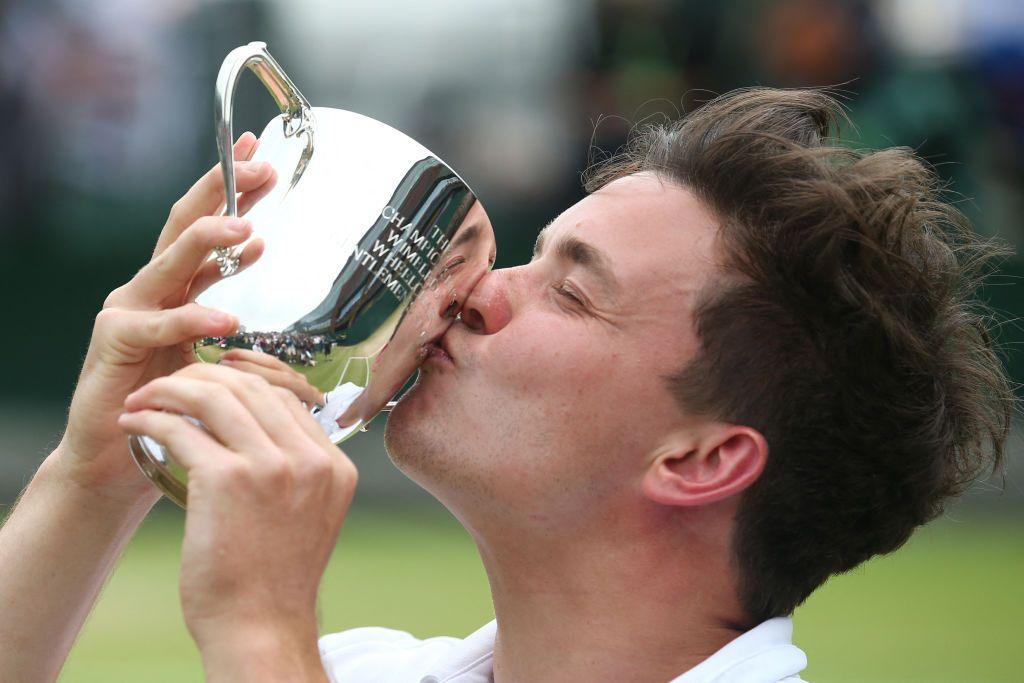
The celebrations began earlier than expected, not on the hallowed turf of Centre Court, but on the intimate surroundings of Court 17. Gordon Reid made history by winning the inaugural wheelchair singles final, defeating Sweden’s Stefan Olsson 6-1, 6-4. This victory, coupled with Jordanne Whiley and Yui Kamiji’s third consecutive women’s wheelchair doubles title, set a tone of relentless British success. Reid recalls a palpable “buzz” around the British contingent, a positivity that permeated the entire tournament. These early wins were not merely footnotes; they signaled a deepening talent pool and a shift in perception regarding disability sport within the national consciousness.
However, the crescendo arrived on Centre Court. Andy Murray, having navigated a draw depleted by the early exits of Novak Djokovic and Roger Federer, faced Milos Raonic in the final. Despite being the favorite, the pressure of ending a 77-year drought for a second time remained immense. Murray delivered a masterclass in composure, winning 6-4, 7-6, 7-6. His emotional celebration—hugging the trophy and weeping into his towel—contrasted sharply with his usual stoicism. Even his coach, Ivan Lendl, was moved to tears. Murray’s understated response to Sue Barker’s post-match interview (“Feel good? Er, yeah”) became iconic, masking the profound relief and joy of a career-defining achievement.
Heather Watson’s Mixed Doubles Triumph Completes the Set
While Murray basked in the glory, Heather Watson was preparing for her own moment in history. Partnering with Finland’s Henri Kontinen, Watson won the mixed doubles title, becoming the first British woman to lift a Grand Slam trophy since Jo Durie in 1991. Watson described an unshakeable confidence on the day, stating she woke up knowing she would win. Her victory marked the fifth British title of the weekend, completing a clean sweep that included Jamie Murray’s men’s doubles win. The collective success sparked legendary celebrations, with players partying until dawn at the Champions’ Ball, symbolizing a new era of camaraderie and confidence among British athletes.
The Long-Term Legacy: Participation, Investment, and Depth
The ‘Murray Effect’ on Grassroots and Infrastructure
The impact of that golden weekend extended far beyond the trophy cabinet. The “Murray effect” catalyzed a surge in grassroots participation, with the Lawn Tennis Association (LTA) reporting record figures of 5.8 million adults and four million children playing tennis annually. To support this growth, the LTA injected £250 million over the subsequent decade into public court refurbishments, increasing the availability of covered and floodlit facilities. This infrastructure investment ensured that the inspiration generated by Murray and his peers could be translated into accessible opportunities for aspiring players across the UK.
Furthermore, the depth of British talent has expanded significantly. In 2016, only three British men ranked in the top 200; today, that number has grown to eight. The success in doubles has been particularly notable, with Britons winning 20 Grand Slam doubles titles in the decade following 2016, compared to just two in the preceding ten years. This statistical growth underscores a systemic improvement in coaching, development pathways, and competitive exposure.
Elevating Wheelchair Tennis and Future Stars
Perhaps one of the most visible transformations has occurred in wheelchair tennis. What was once a niche event on Court 17 has evolved into a marquee attraction on Court One, drawing thousands of spectators. This elevation reflects a broader cultural shift toward inclusivity and recognition of para-sports. Meanwhile, the current generation of players, including Jack Draper and Emma Raducanu—who ended Britain’s 44-year wait for a female singles major in 2021—stand on the shoulders of the 2016 cohort. Murray’s ongoing mentorship, both formal and informal, continues to provide invaluable guidance, ensuring that the standards set during that historic weekend remain the benchmark for future success.
Looking Ahead: Sustaining the Momentum
As Wimbledon 2026 approaches, with 21 British players in the main singles draws, the question remains whether another golden weekend is possible. While replicating the sheer volume of 2016 may be difficult, the structural foundations laid during that period ensure British tennis is more robust than ever. From grassroots courts to elite coaching, the legacy of Murray, Watson, Reid, and their peers is embedded in the sport’s DNA. For online readers and fans alike, the story of 2016 serves as a reminder that moments of brilliance can ignite decades of progress. The trophies may gather dust, but the inspiration they provided continues to drive British tennis forward.
