Thomas Tuchel Takes Full Responsibility as England Processes Heartbreaking World Cup Semi-Final Exit
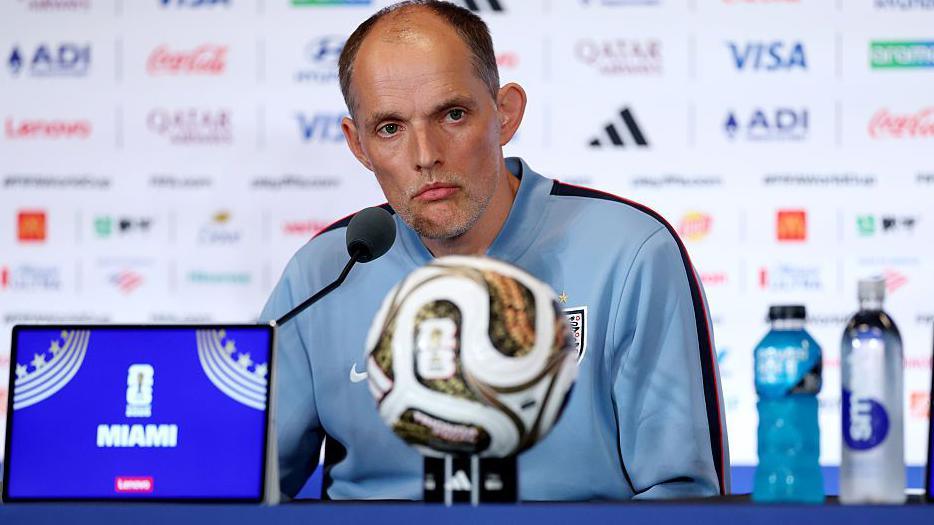
England head coach Thomas Tuchel has firmly defended his tactical decisions following the Three Lions’ agonizing 2-1 World Cup semi-final defeat to Argentina. Addressing the media in Miami ahead of Saturday’s third-place play-off against France, the German manager delivered a passionate, emotionally charged press conference, refusing to shift the blame onto his players.
Instead, Tuchel chose to shoulder the burden of the late collapse, acknowledging the profound disappointment of falling just short of England’s first men’s World Cup final in 60 years.
“The Scar We Carry Now”: A Manager’s Accountability
The narrative of the semi-final was one of fleeting hope followed by crushing reality. England held a deserved 1-0 lead through Anthony Gordon’s 55th-minute strike, only to concede late equalizing and winning goals to Enzo Fernandez and Lautaro Martinez, both assisted by the brilliance of Lionel Messi.
When pressed on his management of the final 35 minutes, Tuchel was unequivocal in his accountability. “If you need someone to blame, I take the responsibility,” he stated firmly. “I’m the head coach.”
While he admitted that the team became “too passive” as the match wore on, Tuchel insisted he had no regrets about the choices he made in the heat of the moment. He explained that his substitutions and tactical shifts were driven by instinct, experience, and a genuine desire to help the team secure the result. “I would regret if I didn’t help. I would regret if we didn’t react,” Tuchel noted, emphasizing that the pain of the defeat is something he and his squad feel more acutely than anyone else. “It is our scar that we carry now,” he added, describing the profound emotional weight of the loss.
Addressing the Tactical Retreat and Kane’s Role
A significant portion of the post-match scrutiny has focused on England’s defensive retreat and the positioning of captain Harry Kane. Critics questioned why the nation’s record goalscorer was deployed so deep during the closing stages of the match.
Tuchel addressed this directly, explaining the mechanics of a low defensive block. “Why we defended in a deep block? Well, that’s what you do if you defend in a block,” he reasoned. He pointed out that Argentina generated immense momentum following England’s goal, making aggressive offensive substitutions that overwhelmed the English defense.
“We could not stop the crosses, and we could not stop the runners into the box,” Tuchel analyzed. “So we decided to play a back five, to have more width in the field, to be closer to the guys who cross.” Although the strategy ultimately failed to hold the lead, Tuchel maintained that reacting to the shifting momentum was the only viable option at the time.
The Physical Toll and the Reality of the “Gap”
Beyond tactics, Tuchel also addressed concerns regarding the squad’s physical output. When confronted with data suggesting England’s physical performance levels dipped significantly against Argentina compared to their earlier group-stage match against DR Congo in the same stadium, the manager offered a candid explanation.
He cited the grueling nature of the knockout rounds, specifically the 3-2 victory over co-hosts Mexico while playing with ten men in the high altitude of the Azteca Stadium, followed by the intense, searing heat of the quarter-final against Norway in Miami. Tuchel argued that these fixtures “cost us more than we maybe thought.”
“The players literally gave everything physically in every single match,” he explained. “If you see this data drop, there must be a reason behind it, because the motivation was through the roof.”
Furthermore, Tuchel used the defeat as a moment of stark realism. He acknowledged that a tangible “gap to close” remains between England and the absolute elite of international football. “France, Spain, Argentina are almost there on that level that they expect to win,” he observed. “We are not there yet. And this is what we will do from tomorrow. We will not stop chasing. We will not stop hunting.”
Looking Ahead: The Third-Place Play-off Against France
Despite the stinging criticism from supporters and pundits, Tuchel has retained the backing of key football figures. Former England captain Wayne Rooney recently suggested the FA should stick with Tuchel unless a manager of Pep Guardiola’s caliber becomes available, while Alan Shearer echoed that the manager’s time with the national team is certainly not up.
Now, Tuchel must rally his squad for the bronze-medal match against France in Miami. While it is not the grand finale in New Jersey that the team had dreamed of, Tuchel was quick to remind the media of the broader perspective. “If we win the game tomorrow, we have the best results of a World Cup in 60 years,” he stated, framing the upcoming fixture as an opportunity to end the tournament on a high note.
Ultimately, Tuchel fronted up to a barrage of uncomfortable questions with remarkable composure. The pain was etched across his face, but his refusal to shirk responsibility demonstrated the exact leadership qualities required to guide this talented England squad forward. The scar of this semi-final defeat will remain, but Tuchel’s defiant message is clear: the hunt for World Cup glory is far from over.
Follow for real-time match analysis!🚀
Discover more from DeeplyticAI
Subscribe to get the latest posts sent to your email.