Uefa Chief Ceferin Rules Out Fifa Presidency Bid
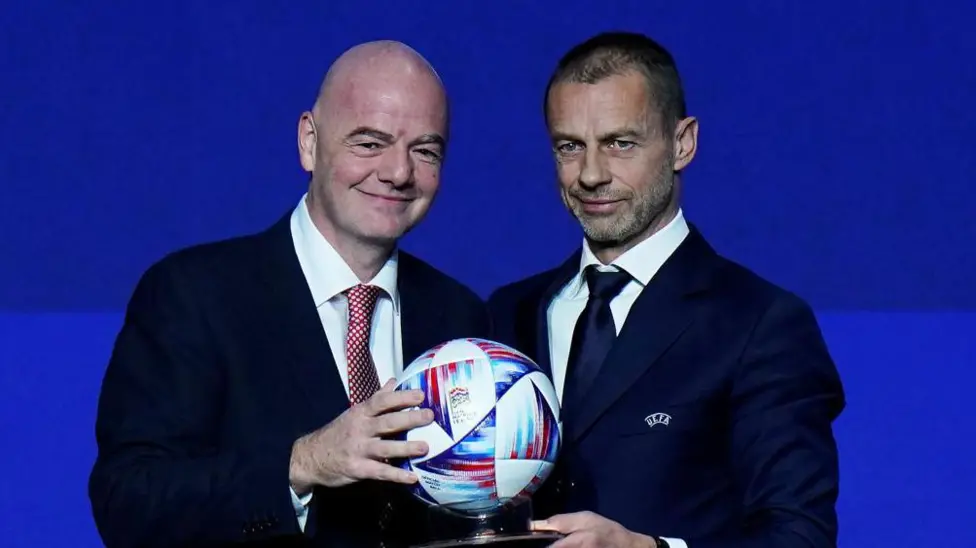
UEFA president Aleksander Ceferin has confirmed that he will not pursue the FIFA presidency, ending speculation that he might challenge Gianni Infantino. In a recent interview, the Slovenian official made clear that he remains committed to European football’s governing body and sees greater value in staying outside any leadership contest at world level. The statement comes amid ongoing tension between UEFA and FIFA following controversy over a proposed private investment plan for major tournaments.
Ceferin’s decision removes one of the most frequently mentioned potential rivals to Infantino. However, he also delivered a pointed assessment of the current FIFA president’s position, suggesting that Infantino may still face significant opposition if he seeks another term.
Why Ceferin Chose Not to Run
Ceferin outlined two principal reasons for ruling himself out. First, he expressed genuine attachment to his current role. “I love UEFA and I love working here,” he said, adding that there comes a point when one should also enjoy life more fully. Second, he argued that remaining outside the race actually strengthens his standing. His credibility, he noted, is higher when he is not seen as a candidate for the top FIFA job.
The comments were made in an interview for the podcast The Rest Is Politics: Leading. By distancing himself from any personal ambition for the FIFA presidency, Ceferin positions himself as a critic motivated by principle rather than career advancement. As a result, his continued scrutiny of FIFA’s direction carries additional weight within the wider football community.
Context of the Private Investment Controversy
The backdrop to Ceferin’s remarks is the widespread backlash against a plan, now abandoned, under which FIFA would have sought private investment linked to its major competitions, including the men’s and women’s World Cups. The proposal triggered strong resistance from UEFA and several continental confederations. Critics accused the process of lacking transparency, and some federations threatened to withdraw cooperation with FIFA events.
Ceferin has been among the most vocal opponents. He has described the initiative as more damaging in principle than the European Super League project that UEFA helped defeat several years earlier. In his view, the plan risked placing core elements of the global game under commercial influence that many stakeholders found unacceptable. Smaller European associations, as well as larger ones, expressed opposition, reinforcing the breadth of concern.
Infantino’s Position and the Road to the Next Election
Despite ruling out his own candidacy, Ceferin offered a clear assessment of Infantino’s prospects. He identified two possible paths. One is that the FIFA president recognises he no longer commands sufficient support across the football community—including fans, players, coaches and federations—and steps aside. The alternative is that Infantino proceeds to the election scheduled for the FIFA Congress in Morocco in March 2027 and faces a challenger.
Ceferin indicated he does not yet know who that challenger might be. Nevertheless, he believes the political landscape has shifted. Support that once appeared solid has become more fragile following the investment controversy. In addition, he confirmed that he has had no direct contact with Infantino since the dispute intensified.
The election timetable includes a nomination deadline later in 2026. Until that point, speculation about alternative candidates is likely to continue. Ceferin’s decision not to stand himself narrows the field of high-profile European options, yet it does not eliminate the possibility of opposition from other confederations or national associations.
Implications for UEFA and European Football
By remaining at UEFA, Ceferin provides continuity for European competitions and governance. He is expected to seek another term as UEFA president in the near future, maintaining stability at a time when relations with FIFA remain strained. The organisation has already demonstrated its willingness to protect what it sees as the integrity of the calendar and the commercial model of the game.
Moreover, Ceferin’s stance allows UEFA to continue criticising FIFA policy without the complication of one of its leaders being viewed as a rival for the top global post. This separation of roles may help sustain pressure on FIFA while avoiding accusations of personal ambition. European clubs, leagues and national associations will watch closely to see whether the current friction leads to lasting changes in how major tournaments are structured and financed.
Key Takeaways
- Aleksander Ceferin has definitively ruled out a bid for the FIFA presidency.
- He cited loyalty to UEFA and the desire to preserve his credibility as the main reasons.
- The controversy centres on a now-abandoned FIFA plan involving private investment in World Cup-related rights.
- Ceferin believes Infantino must either resign or expect a challenger at the 2027 election.
- No communication has taken place between the two leaders since the dispute escalated.
- The outcome will influence governance and commercial direction in world football for years ahead.
What Happens Next
Attention now turns to the coming months. FIFA’s nomination process will clarify whether any serious challenger emerges. Infantino retains the advantages of incumbency and long-standing relationships across many confederations. However, the scale of recent criticism has altered the atmosphere around the presidency.
Ceferin, meanwhile, continues his work at UEFA. His decision to stay focused on European football removes one source of uncertainty while keeping the spotlight on the broader questions of accountability and stakeholder support within FIFA. The coming election cycle will test whether the current leadership can restore confidence or whether the calls for change gather further momentum.
In the meantime, the football world has received a clear signal. The UEFA chief has chosen not to pursue the FIFA presidency. That choice sharpens the focus on the incumbent and on the choices that lie ahead for the global game.
Follow for real-time match analysis!🚀
Discover more from DeeplyticAI
Subscribe to get the latest posts sent to your email.