What’s Going On at Cadillac and Haas? F1 Mid-Season Analysis
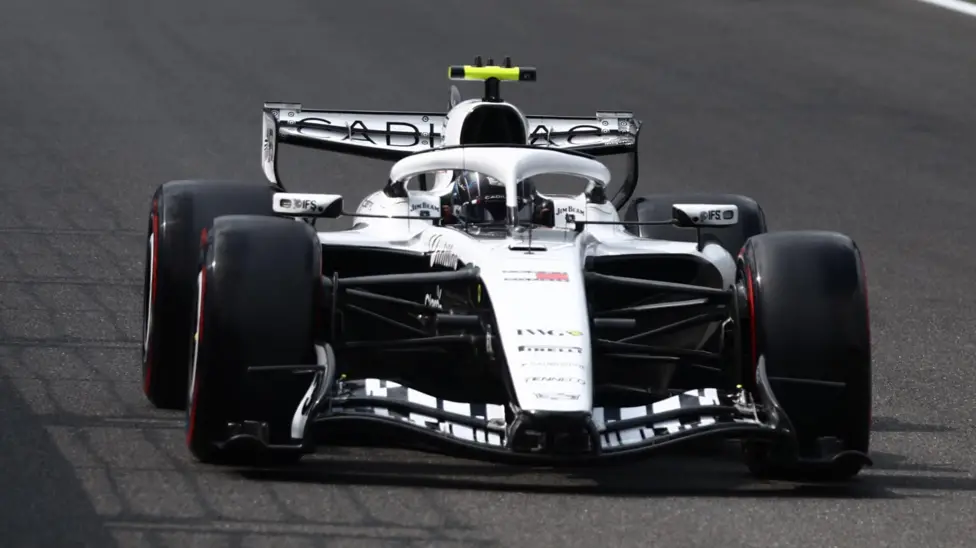
As Formula 1 prepares to resume after the summer break with the Dutch Grand Prix, attention has turned to two American teams facing distinct challenges. Cadillac, the grid’s newest entrant, remains the only outfit yet to score a point in 2026. Haas, meanwhile, has slipped in the competitive order despite a solid start to the season. Both stories raise important questions about progress under the new regulations, leadership decisions and long-term potential.
This mid-season review examines the key developments at Cadillac and Haas, drawing on the latest verified information from the first 11 races and recent personnel changes.
Cadillac’s Debut Season: Leadership Change and Persistent Struggles
Cadillac entered Formula 1 in 2026 as the first fully new independent constructor since Haas a decade earlier. Backed by General Motors and TWG Motorsports, the team fielded experienced drivers Sergio Pérez and Valtteri Bottas in a Ferrari-powered car. Expectations were measured from the outset. Building a competitive organisation from scratch under complex new technical rules was always going to take time.
Yet the reality has been stark. After 11 races, Cadillac sits at the bottom of the constructors’ championship with zero points. Performance data shows the team has been, on average, around 1.2 seconds off the next-slowest squad, Williams. Reliability issues, particularly overheating brakes, have compounded the difficulty of extracting consistent results.
Why Graeme Lowdon Was Replaced
On 12 August 2026, Cadillac announced that founding team principal Graeme Lowdon had been replaced by Marcin Budkowski. Lowdon had overseen the entire project from its early planning stages through to the team’s arrival on the grid. CEO Dan Towriss described the change as a planned transition rather than a reaction to results. He stated that he had always envisaged a point at which Lowdon’s role in the initial build phase would give way to different leadership focused on ongoing development.
Budkowski, a 49-year-old engineer with previous experience at Alpine, the FIA, McLaren, Ferrari and Prost, takes charge immediately. His first race weekend will be at Zandvoort. Towriss emphasised that the summer break provided the ideal moment for the switch, allowing the new team principal to assess the organisation before the second half of the season and the planning for the 2027 car.
Critics have questioned whether the move came too early in a debut campaign. Towriss maintains the decision was about aligning leadership with the next phase of growth rather than short-term performance pressure. Budkowski has already outlined his priority as maximising development within the cost cap and ensuring every department is oriented toward competitive progress.
Haas: From Early Promise to Midfield Pressure
Haas began the 2026 season in relatively strong form. At one stage the team ranked as the sixth-fastest on average in qualifying and currently sits seventh in the constructors’ championship at the mid-point of the year. That position reflects points gathered during the opening races, when the competitive order was still settling under the new regulations.
However, the picture has shifted. Haas has dropped to eighth in the recent performance rankings, overtaken by Racing Bulls and Audi. Team principal Ayao Komatsu has acknowledged that other teams have introduced upgrades and adapted more effectively to the 2026 rules. Haas introduced its own package in Canada, featuring a new floor, bodywork and rear suspension. The updates coincided with the discovery of a fundamental weakness: a lack of high-speed downforce that has limited progress.
Budget Cap and Facility Challenges
Uniquely among the 11 teams, Haas is not fully utilising the cost cap. Owner Gene Haas has historically taken a cautious approach to investment in facilities. A new simulator, funded through the team’s partnership with Toyota, is due to come online soon and is expected to improve correlation and development efficiency. Whether this resource arrives in time to reverse the current slide remains to be seen.
Drivers Esteban Ocon and Oliver Bearman have delivered consistent efforts, yet the car’s limitations have become more apparent as rivals have moved forward. The midfield battle is typically tight, and Haas now finds itself under pressure to respond if it is to protect its championship position in the remaining races.
Shared Themes and Contrasting Paths
Both Cadillac and Haas operate as American-owned teams with Ferrari power units, yet their trajectories differ markedly. Cadillac is still establishing basic competitiveness and organisational processes in its first season. The leadership change signals a deliberate shift toward a development-focused culture after the intense effort of simply getting on the grid.
Haas, by contrast, is an established team that has slipped relative to its early 2026 form. Its challenges centre on extracting more performance from the current car and addressing structural limitations in facilities and spending. The Toyota partnership offers longer-term technical support, but short-term results depend on how quickly the team can resolve its high-speed aerodynamic issues.
Reliability, upgrade effectiveness and the ability to operate efficiently within the cost cap will remain central themes for both outfits through the second half of the season. Cadillac’s priority is simply to start scoring points and close the large gap to the rest of the field. Haas must arrest its decline and convert its early points tally into a more secure midfield standing.
Looking Ahead to the Rest of 2026
The Dutch Grand Prix marks the restart of the championship after the summer break. For Cadillac, Budkowski’s arrival brings fresh perspective at a critical juncture. For Haas, the coming races will test whether the Canada upgrades and forthcoming simulator can deliver measurable gains.
Formula 1’s 2026 regulations have created a more open competitive landscape in some areas, yet they have also exposed the difficulties of building and refining a team under tight financial and technical constraints. Cadillac’s struggles and Haas’s mid-season dip illustrate those pressures clearly. How both organisations respond in the remaining grands prix will shape their trajectories not only this year but into 2027 and beyond.
The coming months will reveal whether Cadillac can take its first steps toward respectability and whether Haas can stabilise and climb again. In a tightly contested championship, every point and every tenth of a second matters.
Follow for real-time match analysis!🚀
Discover more from DeeplyticAI
Subscribe to get the latest posts sent to your email.