
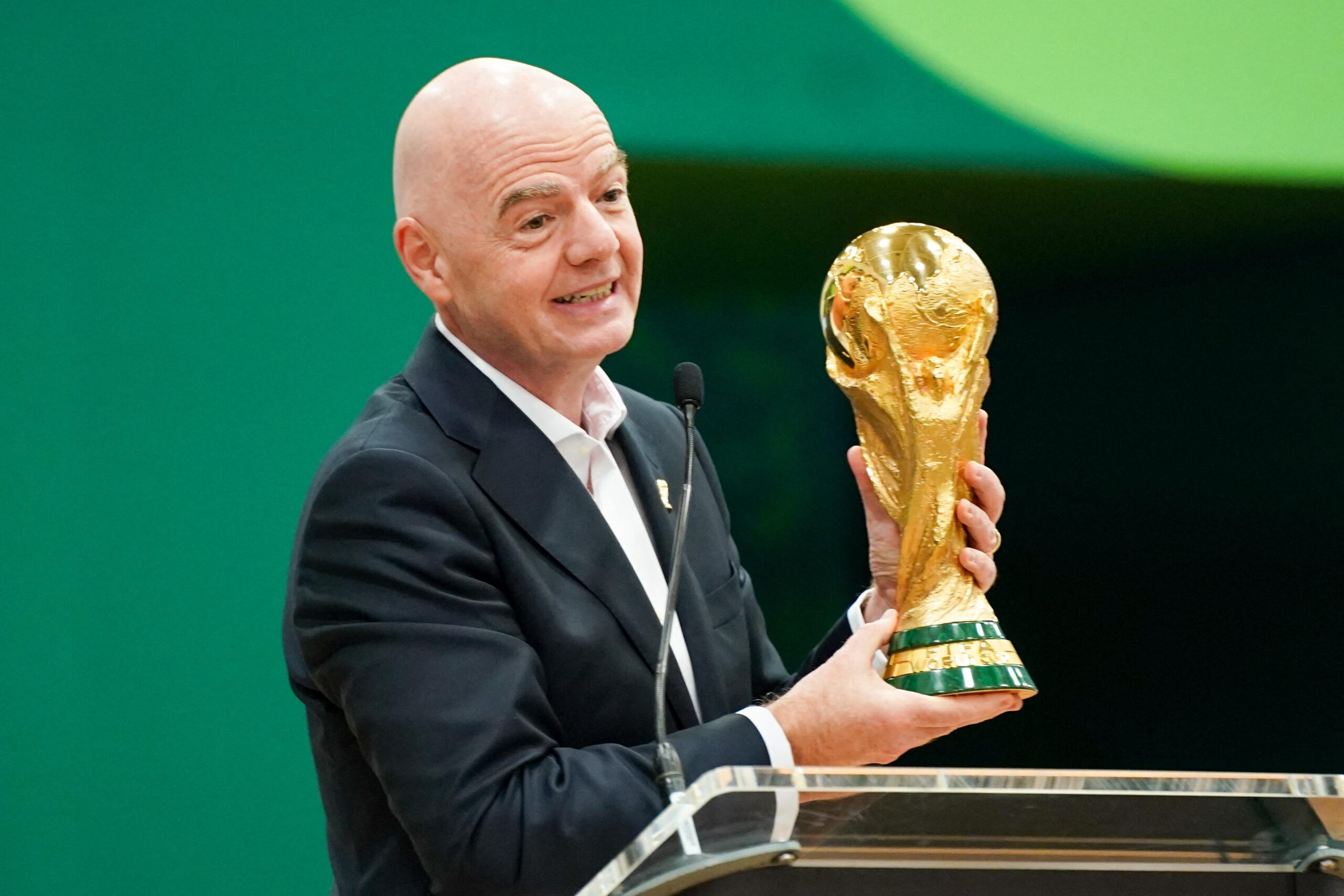
Gianni Infantino’s leadership of FIFA faces intense scrutiny in mid-2026 following a major controversy over proposed commercial reforms. On Polymarket, traders are actively pricing the likelihood that the Swiss-Italian official will no longer serve as FIFA president by the end of the year. The market currently assigns roughly a 35 percent probability to him stepping down or being removed by December 31, reflecting both the scale of recent backlash and the structural hurdles to an immediate change.
This prediction market has drawn meaningful volume as soccer stakeholders debate governance, commercial strategy, and the future direction of world football’s governing body.
Background on Infantino’s Presidency
Gianni Infantino has led FIFA since 2016. He succeeded Sepp Blatter and secured re-elections in 2019 and 2023, both largely unopposed. His current term runs through 2027. Earlier in 2026 he publicly confirmed his intention to seek a further term at the March 2027 congress, and reports indicated formal endorsements from more than 200 of FIFA’s 211 member associations.
Under his tenure FIFA has expanded the World Cup, grown commercial revenues, and pursued various development initiatives. At the same time, critics have repeatedly questioned transparency, decision-making processes, and the concentration of authority. These long-standing debates form the backdrop for the latest crisis.
The World Cup Stake Sale Controversy
In late July 2026 a proposal to create a new commercial vehicle and sell stakes in future World Cup-related rights to private investors triggered widespread opposition. The plan, sometimes referred to in connection with the FIFA Forward Enterprise concept, faced sharp criticism from UEFA, CONCACAF, senior internal officials, and multiple national associations.
Key developments included the resignation of senior adviser Carlos Cordeiro in protest and public statements from FIFA’s chief operating officer describing staff as having been deceived and characterizing the project as the initiative of one person rather than an institutional effort. UEFA declared it had lost confidence in Infantino’s leadership and indicated willingness to support a vote of no confidence if necessary.
Faced with the backlash and threats of boycotts or further escalation, Infantino announced that the proposal would not proceed. He cited the divisions it had created as no longer serving the original objectives. The reversal calmed some immediate commercial concerns but did not fully restore confidence among critics.
Polymarket Pricing and Market Dynamics
Polymarket’s market on whether Gianni Infantino will be out as FIFA president by December 31 resolves to “Yes” if he resigns, is removed, or an announcement of such an outcome occurs before the deadline. Temporary suspensions do not count. As of early August 2026 the implied probability for Yes stood near 35 percent, with the complementary No outcome around 65 percent. Trading volume has exceeded $125,000, indicating sustained interest from participants following the story.
Odds have moved in response to the intensity of public statements, internal dissent, and the formal processes required for any leadership change. Traders weigh the difficulty of securing the necessary support for a no-confidence motion against the political cost of prolonged conflict.
Paths to a Potential Departure
Removing a sitting FIFA president requires formal mechanisms under the organization’s statutes. A significant number of member associations would need to initiate and support a challenge, and any vote would occur in a structured setting. Infantino retains substantial backing across several confederations, which complicates rapid removal.
Resignation remains another route. Pressure from major confederations, continued internal criticism, or further governance disputes could influence personal calculations. At present no formal resignation has been announced, and Infantino has not indicated an intention to leave before the natural end of his term.
The March 2027 election cycle offers a more conventional avenue for change. Candidates must meet nomination deadlines, and broad existing endorsements provide a baseline of support that any challenger would need to overcome.
Implications for FIFA and World Football
Leadership uncertainty arrives at a sensitive moment. Preparations for future World Cups, commercial negotiations, and relations with continental confederations all depend on stable governance. A prolonged dispute risks distracting from sporting priorities and complicating relationships with sponsors and member associations.
Conversely, a swift resolution—whether through restored confidence or an orderly transition—could allow the organization to refocus on development programs, competition calendars, and financial sustainability. Stakeholders across the soccer ecosystem are monitoring developments closely, as the outcome will shape decision-making for years ahead.
Broader Context for Prediction Markets and Fans
Markets such as the one on Polymarket translate complex institutional politics into clear probability assessments. They attract participants interested in FIFA governance, the balance of power among confederations, and the personal trajectory of high-profile administrators. For online readers following soccer administration, these prices offer a concise summary of collective expectations while remaining subject to rapid revision as new information emerges.
The current episode illustrates how commercial initiatives can intersect with questions of process and accountability. Supporters of Infantino emphasize continuity and past commercial growth. Critics focus on consultation, transparency, and the concentration of initiative. Both perspectives continue to influence public discussion and market pricing.
Looking Toward Year-End
As of early August 2026, Gianni Infantino remains FIFA president. The controversial stake-sale proposal has been withdrawn, yet residual distrust and formal expressions of lost confidence persist. Whether these pressures produce a departure by December 31 depends on further negotiations, internal alignments, and the willingness of member associations to pursue institutional remedies.
Prediction markets will continue to update as statements, meetings, and potential votes unfold. For observers of world football, the coming months will clarify whether the present turbulence leads to leadership change or stabilizes under the existing structure. The interplay of politics, commerce, and governance ensures that attention on this question will remain high through the remainder of the year.
