
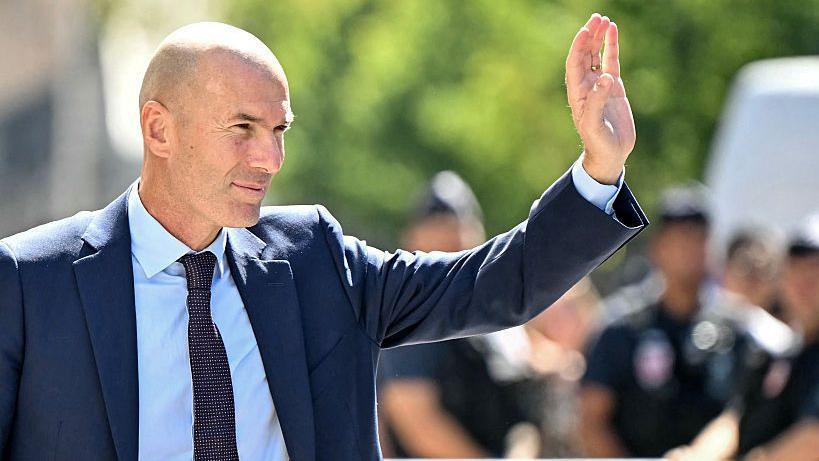
In September, the France national team will present a new face on the touchline for the first time in 14 years. Zinedine Zidane’s appointment as successor to Didier Deschamps, officially announced on Tuesday morning, had long been an open secret in French football. Yet the confirmation still carried enormous emotional weight, marking the culmination of a years-long wait by one of the sport’s most iconic figures to manage his country.
A Dream Realized After Years of Patience
The Long Road to the French Dugout
Talks between Zidane and French football authorities began as early as February 2025, shortly after Deschamps—Zidane’s former teammate and fellow 1998 World Cup winner—announced he would step down following the 2026 World Cup. The formal unveiling in Paris revealed a deeply emotional man who had sacrificed numerous opportunities to wait for this singular moment.
“I had several offers in the last four or five years, but I turned them all down,” Zidane said at his press conference. “The national team is the only thing I wanted.”
The 54-year-old has spent five years away from management, with Real Madrid representing the only other senior coaching role of his career. This extended hiatus inevitably raises questions about whether the appointment constitutes a gamble. Zidane himself acknowledged that leading a national team would be “an entirely new proposition,” but insisted: “It’s new to me, but I’m not scared. This is what I wanted.”
Tactical Philosophy: Continuity with a Creative Edge
Building on Deschamps’ Foundations
While Zidane’s enthusiasm was the defining theme of Tuesday’s news conference, he offered limited tactical specifics. Questions regarding Kylian Mbappe’s captaincy were deflected, with Zidane noting: “The most important thing for him now is to rest, we’ll have the chance to speak in September.” Similarly, when pressed on his preferred style of play, he declined to elaborate in detail.
“I can’t explain to you in just a couple of words how we’re going to win,” Zidane stated. “I have to arrive, meet with the players, and explain my plans to them. After that, it’ll be up to me to keep this team winning.”
Nevertheless, Zidane confirmed his intention “to do things differently” while signaling a degree of “continuation” from Deschamps’ work, which he made sure to praise. “I’m going to try to do what I know how to, but it won’t be a complete break either,” he added.
An Attacking Instinct
Given the shared pragmatism between Zidane and Deschamps—both products of France’s golden 1998 generation—it stands to reason that the laissez-faire attacking approach Deschamps embraced during the recent World Cup will persist. France scored 20 goals in North America, laying formidable foundations for Zidane’s tenure.
“I was a number 10 as a player,” Zidane revealed, hinting that he would retain the creative role in which Michael Olise thrived throughout the summer. “What motivates me is the game, it’s scoring goals.”
Star Power Meets Star Management
The Ideal Man for Big Egos
The reaction among players and fans has been almost unanimously positive. Zidane was met by crowds carrying flares and banners as he departed the French Football Federation’s headquarters, while Mbappe simply wrote “Welcome home” on Instagram.
Former France and Bordeaux teammate Bixente Lizarazu captured the national mood: “It’s a great day for French football. He is more than fit to manage Les Bleus, given what he did at Real Madrid with great players and big egos.”
The respect Zidane commands in a dressing room represents perhaps his greatest managerial asset. Even more than Deschamps, Zidane is a figure who can rival—or even overshadow—his own players in terms of star power. This unique quality may prove essential in extracting maximum performance from an attack featuring Mbappe, Ousmane Dembele, Desire Doue, and Olise.
What Lies Ahead: The Nations League Challenge
A Demanding Introduction
Zidane’s four-year deal begins next month, with his full coaching team to be announced in the coming weeks. His introduction to international management will come through four Nations League fixtures spread across three weeks—a crash course in the rhythms of national team football.
His first match involves a trip to Turkey, followed by two encounters against Belgium and a home fixture against Italy at the Stade de France. That Parisian homecoming against the Azzurri, arriving approximately two months from now, represents an ideal fixture to launch the new era before a passionate French audience.
Unprecedented Goodwill
Given his iconic status within French football and on the wider national stage, Zidane will enjoy an unprecedented degree of goodwill regardless of his initial results. Whether he uses that leeway to experiment tactically and integrate new faces remains to be seen. What is certain, however, is that French football has entered a chapter its supporters have dreamed of for years. The question now is whether Zidane can translate his legendary playing career and Champions League-winning managerial pedigree into sustained success with Les Bleus.
