Tom Watson’s Call for Lifetime Bans Highlights Deep Divisions in Golf’s Power Struggle
PGA Tour Loyalist Voices Strong Opposition to LIV Defectors’ Return
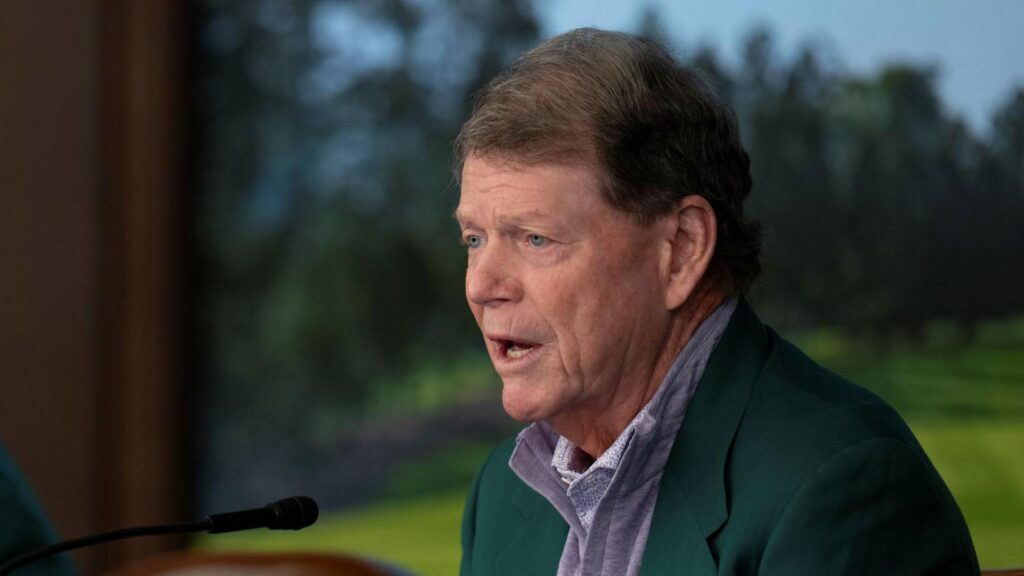
Tom Watson, an eight-time major winner and one of the PGA Tour’s most respected figures, has reignited debate over golf’s fractured landscape by calling for lifetime bans on players who defected to the Saudi-backed LIV Golf series. The 76-year-old American made his position clear in the lead-up to the 2026 Masters, arguing that those who left the PGA Tour for substantial financial incentives should face permanent exclusion.
Watson’s comments surfaced shortly after Patrick Reed, a LIV player and 2018 Masters champion, made a strong start at Augusta National. They reflect ongoing tensions that began in 2022 when LIV Golf launched with lucrative contracts designed to attract top talent away from the established tours. For fans following PGA Tour news and golf governance developments, Watson’s stance underscores how the sport’s so-called civil war continues to influence attitudes and decision-making at the highest level.
The Background to Golf’s Civil War and Player Movements
The emergence of LIV Golf in 2022 dramatically altered professional golf. Backed by Saudi Arabia’s Public Investment Fund, the breakaway league offered enormous signing fees and prize purses that lured several high-profile players, including Brooks Koepka and Patrick Reed. The PGA Tour and DP World Tour responded by suspending defectors, citing breaches of regulations designed to protect sponsors and the traditional tour structure.
In 2023, the PGA Tour and DP World Tour announced a framework agreement with the Public Investment Fund aimed at unifying the sport. While a full merger has yet to materialise, the landscape has gradually shifted. Several players have been allowed to return under specific programmes, reflecting a pragmatic approach to reconciliation. However, Watson remains firmly opposed to this direction.
The veteran golfer believes the PGA Tour reneged on promises made to loyal players who stayed during the upheaval. “When the players left, they violated the number one rule, which is to protect the sponsors,” he said. “Sponsors need players. They need the names to be able to promote their tournaments.” Watson argues that financial temptation should not override loyalty to the tour’s ecosystem, and he would impose lifetime bans if he were in charge.
Specific Cases of Koepka and Reed Fuel the Debate
Brooks Koepka and Patrick Reed have become focal points in the discussion. Koepka, a five-time major champion, successfully applied for reinstatement under the PGA Tour’s “Returning Member Programme,” which applies to players who won a major or The Players Championship since 2022. He also paid substantial fines, reportedly around £63 million, to facilitate his return.
Reed, the 2018 Masters winner, does not meet the same criteria and will not regain full membership until January 2027. However, he becomes eligible to compete on the PGA Tour again from August 2026, one year after his final LIV appearance. His presence at the 2026 Masters, where he featured prominently on the leaderboard early in the first round, brought Watson’s criticism into sharp focus.
Watson views these reinstatements as undermining the integrity of the PGA Tour. He maintains that players who chose to leave for LIV made a conscious decision that should carry lasting consequences. “They chose to go for the money, which is fine,” he said. “To return to the Tour, I thought, was a nonstarter. Apparently it’s not.”
Watson’s Perspective Rooted in Tradition and Loyalty
As a two-time Masters champion (1977 and 1981) and a PGA Tour loyalist throughout his career, Watson’s opinion carries significant weight. His comments highlight a generational and philosophical divide within golf. For Watson and others who remained committed to the traditional tour structure, the arrival of LIV represented more than a business decision — it was seen as a threat to the sport’s established order and sponsor relationships.
The veteran’s call for lifetime bans contrasts with the PGA Tour’s more conciliatory approach in recent years. While full unification remains elusive, incremental steps toward reconciliation have been taken, including the readmission of certain high-profile players. Watson’s position serves as a reminder that not all stakeholders view these developments positively, and deep scars from the initial split persist.
Broader Implications for Golf’s Future Unity
The ongoing debate around player reinstatements illustrates the complexity of healing golf’s divisions. The 2023 framework agreement between the PGA Tour, DP World Tour, and the Public Investment Fund was intended to bring stability, yet progress toward a complete merger has been slow. In the meantime, individual cases like those of Koepka and Reed continue to test loyalties and spark discussion about fairness, accountability, and the sport’s long-term direction.
For online readers interested in PGA Tour news, LIV Golf developments, and golf governance issues, Watson’s comments provide valuable context to the sport’s evolving landscape. They highlight the tension between commercial opportunities and traditional values that has defined professional golf since 2022.
As the 2026 Masters unfolds and the golf calendar progresses, the conversation around player eligibility and tour unity is likely to remain prominent. Whether golf can fully reconcile its factions or whether figures like Watson continue to advocate for stricter measures will shape the sport’s narrative for years to come. The scars of the civil war may fade with time, but for now, they remain clearly visible in the opinions of some of the game’s most respected voices.
Follow for real-time match analysis!
Discover more from DeeplyticAI
Subscribe to get the latest posts sent to your email.