
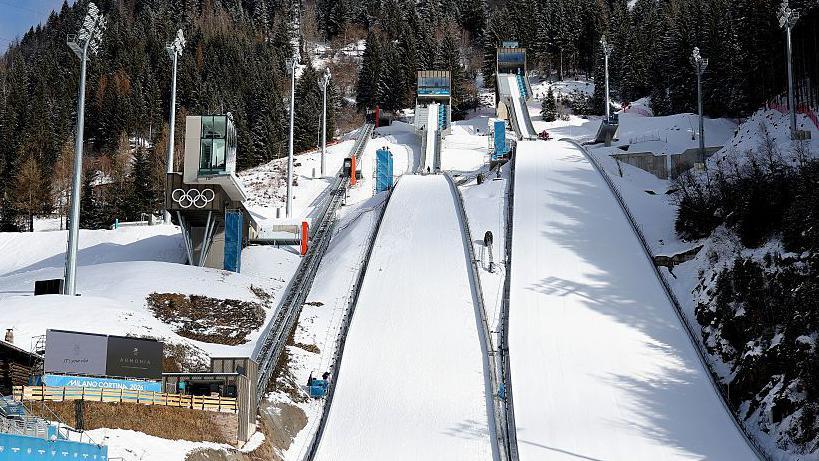
The Milano-Cortina 2026 Winter Olympics, opening on February 6, have already delivered an unexpected headline-grabber before the first events. Dubbed “Penisgate” by media outlets, allegations surfaced in January that some male ski jumpers were injecting hyaluronic acid into their penises to enhance performance. While lacking evidence and firmly denied by governing bodies, the claims have ignited global conversation about innovation, ethics, and the lengths athletes might go to gain an edge in this precision-driven sport.
How the Allegations Emerged
The story broke via German tabloid Bild, which reported insiders claiming jumpers used hyaluronic acid—a common cosmetic filler—to temporarily increase penile girth by one to two centimeters. Injections, lasting up to 18 months, allegedly occurred before mandatory pre-season measurements.
Ski jumping suits are custom-fitted with strict tolerances (2-4 cm overall), measured via 3D body scanners while athletes wear only elastic underwear. Crotch height receives particular scrutiny, with men’s suits allowed an additional 3 cm beyond natural measurement. A slight girth increase could theoretically expand suit surface area in the crotch region, improving aerodynamics.
FIS men’s race director Sandro Pertile explained the science: “Every extra centimeter on a suit counts. If your suit has a 5% bigger surface area, you fly further.” This underscores why even marginal gains matter in a discipline where distances are measured to the half-meter.
Responses from WADA and FIS
At a Milan-Cortina press conference, World Anti-Doping Agency (WADA) director general Olivier Niggli addressed the reports cautiously: “If anything was to come to the surface, we would look at it and see if it is doping-related.” Hyaluronic acid itself is not prohibited, as it poses no direct health or fairness risk under current bans.
WADA president Witold Banka, noting ski jumping’s popularity in Poland, added humorously: “I promise you I’m going to look at it.” FIS communications director Bruno Sassi was unequivocal: “There has never been any indication, let alone evidence, that any competitor has ever made use of a hyaluronic acid injection to attempt to gain a competitive advantage.”
No formal investigation has launched, reflecting the absence of proof amid speculation.
Historical Context: Ski Jumping’s Suit Obsession
Ski jumping has a history of suit-related controversies, where material and fit innovations push regulatory boundaries.
| Year | Incident | Outcome |
|---|---|---|
| 2025 | Norwegian jumpers Marius Lindvik and Johann André Forfang involved in suit tampering (reinforced threads) at World Championships | Three-month suspensions; athletes unaware, but team penalized |
| Ongoing | Strict FIS measurements and tolerances | Suits checked pre-competition; violations lead to disqualification |
| 2026 | Hyaluronic acid allegations | No evidence; WADA monitoring |
These incidents highlight perpetual tension between technological advancement and equity. Past manipulations involved materials or undergarments; the latest claims venture into personal anatomy—though remain unsubstantiated.
Implications for the Sport and Olympics
Men’s ski jumping events begin February 9, 2026, amid heightened attention. While entertaining headlines dominate, the controversy spotlights ski jumping’s unique demands: balancing body control, equipment precision, and physics.
Critics question whether non-banned enhancements like this fall into gray areas, potentially prompting future rule tweaks. Supporters argue absent evidence, the focus should remain on competition.
As athletes prepare in Milano-Cortina, “Penisgate” serves as a quirky reminder of sports’ endless quest for advantage. With no confirmed cases, it may fade quickly—but not before adding colorful lore to Winter Olympics history.
The Games promise thrilling jumps regardless, showcasing skill where millimeters matter most.

