
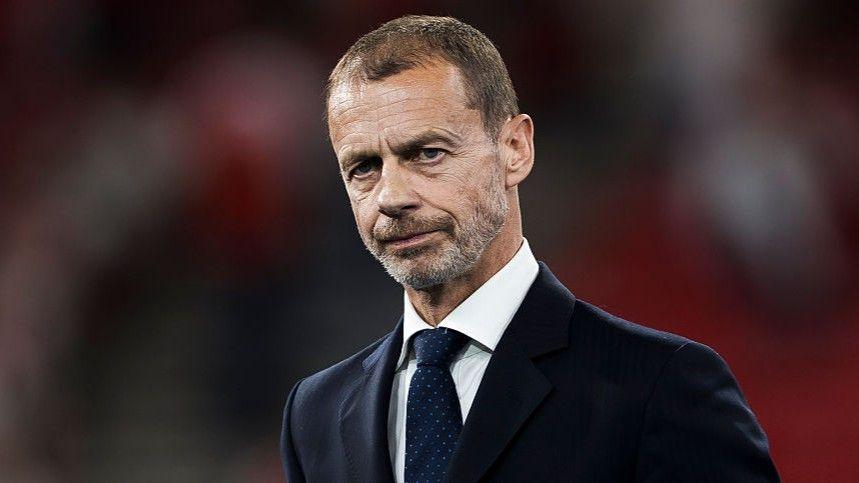
European football’s governing body UEFA will convene an emergency meeting on Thursday afternoon to coordinate its response to FIFA’s deeply controversial proposal to sell a 20% stake in World Cup competitions to private investors. The virtual gathering represents a significant escalation in the growing conflict between UEFA and FIFA president Gianni Infantino, whose plans have drawn widespread condemnation from confederations, leagues, players’ unions, and national associations worldwide.
The Deadline That Intensified the Crisis
FIFA’s Ultimatum to Member Associations
The emergency meeting was triggered after it emerged that FIFA had sent a letter to all 211 member associations, giving them until 19 September to decide whether to accept the deal. Under the terms, nations who agree would receive the first $20 million (£15.05m) of an initial $40 million (£30m) payout. Those who decline would have the one-off offer withdrawn entirely.
“We have learned of FIFA’s deadline to associations to support their proposals or have the one-off payout offer withdrawn,” UEFA stated. “This says everything you need to know about this plan.” This marked UEFA’s second public statement on the issue, following an earlier declaration that FIFA had “crossed a line.”
Fury Over Lack of Consultation
Many associations, including the Football Association, expressed outrage at learning of the proposal through media reports rather than official channels. FA chairwoman Debbie Hewitt was among the FIFA vice-presidents who received no advance warning. The unease has extended well beyond Europe, with the Asian, South American, and North and Central American Confederations all echoing UEFA’s concerns about both the substance and the process.
The investment vehicle at the center of the controversy is Thrive Eternal, owned by Joshua Kushner, the brother-in-law of Donald Trump’s daughter Ivanka. This political connection has added an additional layer of sensitivity to an already fraught situation.
FIFA’s Defense: Development and Democracy
Infantino’s Justification
Following widespread condemnation, FIFA released an eight-page document on Wednesday evening outlining its rationale. The governing body argued that “too little of football’s growing commercial value has reached the parts of the game that need it most.” In an accompanying video, Infantino characterized the proposals as “an offer, not an obligation” and “a golden opportunity to turbocharge the development of the game globally.”
FIFA pointed to the first-time World Cup qualifications of Cape Verde, Curacao, Jordan, and Uzbekistan as evidence of its developmental impact, though critics noted this was partly attributable to the tournament’s expansion to 48 teams. The organization also cited Formula 1, La Liga, Ligue 1, and the Bundesliga as examples of sporting bodies utilizing “dedicated commercial operations,” while insisting that private investors would “absolutely not” have any influence over the World Cup itself.
However, questions have been raised about the auditing of funds FIFA already distributes in certain regions, with some noting that the sums discussed exceed what certain member associations spend annually.
Global Condemnation from Football’s Stakeholders
Leagues, Unions, and National Federations Unite
The reaction from across the football world was swift and overwhelmingly negative. The European Leagues organisation described FIFA’s proposals as “a reckless and divisive development for world football,” adding: “The World Cup should not be for sale. It is not the FIFA president’s private equity asset.”
Global players’ union FIFPro called on FIFA to “reconsider its proposal without further delay,” expressing “deep concern” at the plan to “transform the World Cup and other FIFA competitions into investable assets for private capital.” FIFPro warned that such a move “would fundamentally and irreversibly reshape the incentives underpinning the competitions” and found it “particularly troubling that a project of this magnitude has been developed largely behind closed doors.”
Tebas and Watzke Lead Personal Attacks on Infantino
La Liga president Javier Tebas delivered perhaps the most pointed criticism, accusing Infantino of attempting to purchase votes ahead of the next FIFA congress in March. “It doesn’t seem like a reform. It seems like an electoral campaign financed with the future of football,” Tebas declared. “Development cannot be used to buy votes or silences. The competitions and commercial rights of FIFA are not the personal patrimony of Infantino.”
Hans-Joachim Watzke, vice-president of the German Football Association and president of Borussia Dortmund, told Kicker magazine that FIFA’s plans constitute an “absolute attack on football,” adding: “A line has been crossed here. If European football stands united against these plans, that carries a great deal of weight.”
The Nuclear Option and Divided Loyalties
UEFA’s Leverage and Internal Tensions
Three of the 2026 World Cup semi-finalists are among UEFA’s 55 members, giving the confederation significant leverage. The theoretical “nuclear option” of European nations withdrawing from the tournament would severely damage the financial viability of Infantino’s concept. However, this remains very much the outer edge of what is considered possible, particularly as not all UEFA members share the same opposition.
Czech Republic FA president David Trunda offered a contrasting perspective, stating: “We can see the pragmatic benefits for Czech football.” This division within UEFA’s membership complicates any unified response and may influence the outcome of Thursday’s emergency discussions.
As the 19 September deadline approaches, the standoff between FIFA and its critics shows no signs of resolution. Whether Thursday’s meeting produces a coordinated strategy or merely further statements of opposition, the fundamental question remains: can football’s governing bodies find common ground before the sport’s most prestigious competition becomes, in the words of its critics, an asset for private capital?
